Select Language:
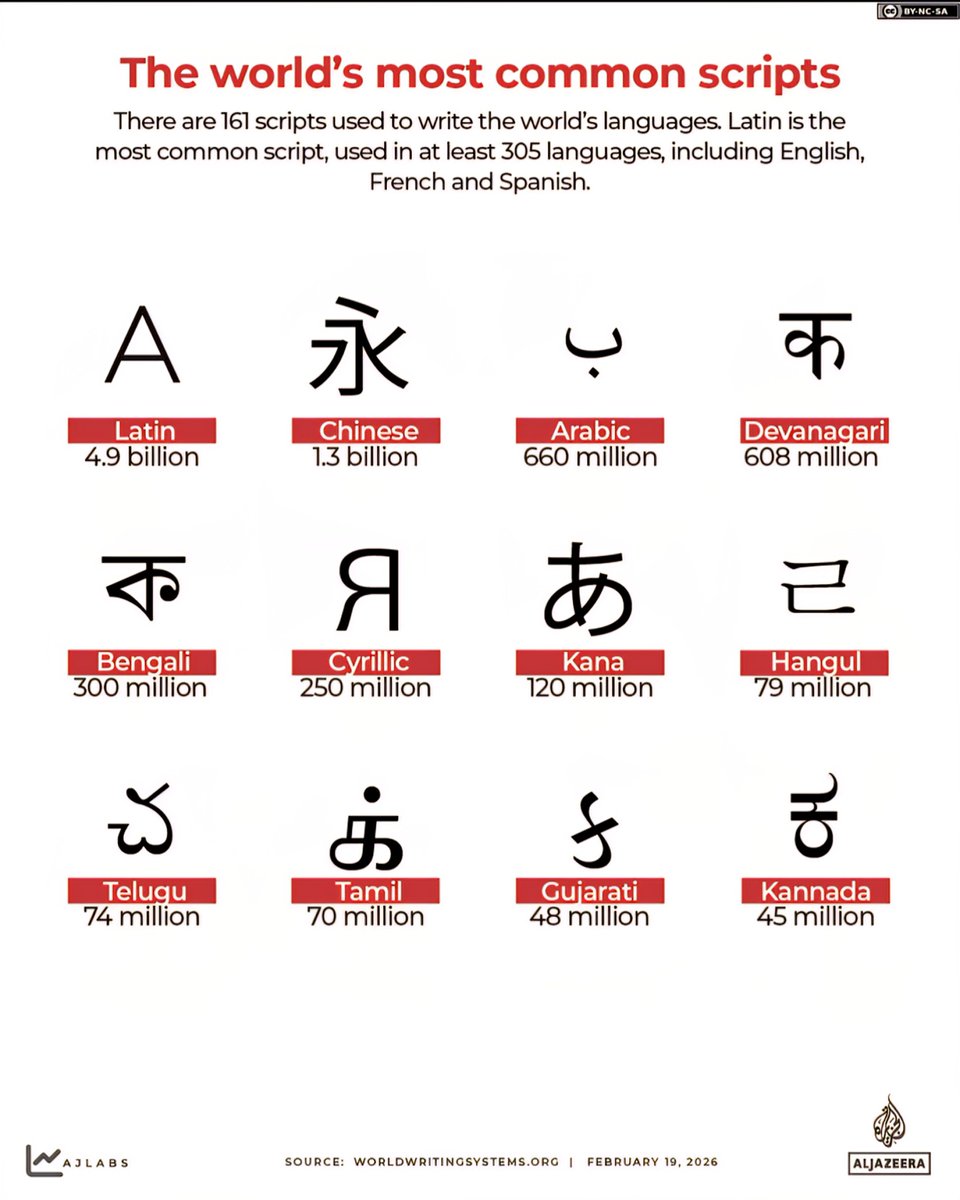
Top 12 Most Widely Used Writing Scripts in 2025
1. Latin Script: The Global Standard
The Latin script remains the most dominant writing system in the world, with approximately 305 languages utilizing it—spanning from English and French to Spanish and beyond. Its widespread adoption is driven by colonization, globalization, and the influence of Western media, making it a central part of international communication and digital technology.
2. Chinese Characters: The Ancient Logograms
Chinese script, exemplified by the character 永 (meaning “eternal”), is essential for billions in China and neighboring countries like Japan and Korea. Its complex logograms carry deep cultural and historical significance. Despite its complexity, modern digital tools have made Chinese characters more accessible worldwide.
3. Arabic Script: Widespread in the Middle East and North Africa
Arabic, represented by the distinctive ب (ba), is not only the liturgical language of Islam but also the lingua franca across numerous Middle Eastern and North African nations. Its cursive, flowing style influences calligraphy and modern typography, maintaining cultural relevance in 2025.
4. Devanagari Script: India’s Multilingual Foundation
Devanagari, used for languages like Hindi and Marathi, is characterized by a distinctive horizontal line running along the top of the letters, such as क (ka). With over a billion speakers, it’s a crucial part of India’s linguistic identity and cultural expression.
5. Bengali Script: The Heart of Bangladesh and West Bengal
Represented by ক (ka), Bengali script is used in Bangladesh and the Indian state of West Bengal. Its unique alphabet forms the basis of a rich literary tradition, and in recent years, its digital encoding has boosted global visibility.
6. Cyrillic Script: Europe’s Eastern Script
Я (ya) symbolizes Cyrillic, the alphabet extensively used in Russia, Ukraine, and Balkan countries. Its historically Slavic roots now play a vital role in modern geopolitics and cultural exchange, with continual updates to support digital communication in 2025.
7. Kana Syllabaries: Japan’s Phonetic System
Japanese employs two syllabaries—Hiragana and Katakana—represented here by あ (a). These scripts facilitate pronunciation and are integral for native literacy, alongside Kanji characters, illustrating Japan’s rich linguistic tapestry.
8. Hangul: Korea’s Unique Alphabet
The Korean script, Hangul, with the character 큰 (large), was designed to be simple yet efficient. Its scientific structure allows for easy learning, making Korean literacy accessible and boosting the script’s global prominence in recent years.
9. Telugu Script: South India’s Classical Language
The character అ (a) is part of the Telugu script, which is used for an ancient Dravidian language spoken primarily in Andhra Pradesh and Telangana. Efforts to digitize Telugu have enhanced its presence on the internet and in multimedia platforms.
10. Tamil Script: The Oldest Living Language
Tamil, with կ (ka), is one of the world’s longest-surviving classical languages. Its script continues to flourish digitally, supported by a dedicated linguistic community and government initiatives fostering its use.
11. Gujarati Script: Western India’s Script
The letter અ (a) signifies the Gujarati script, used primarily in Gujarat state and diaspora communities. Increased digital inclusion has preserved and expanded its use among younger generations.
12. Kannada Script: Southern India’s Literary Language
The Kannada script’s ಅ (a) is vital for Karnataka’s language and literature. Technological advancements have empowered Kannada speakers to connect globally while maintaining their linguistic heritage.
Over 160 Writing Systems Worldwide
According to World Writing Systems.org, there are approximately 161 scripts used globally, each serving diverse languages and communities. While Latin remains the most widespread, others like Chinese characters, Arabic, Devanagari, and Cyrillic showcase the rich tapestry of human language.
Key Takeaway:
Despite globalization trends in 2025, many scripts continue to thrive, evolving with technology and cultural shifts. Understanding these writing systems illuminates the diversity of human expression and the importance of preserving linguistic heritage for future generations.
 ChatGPT
 Perplexity
 Gemini AI
 Grok AI