Select Language:
Top 30 Nations Leading U.S. Oil Imports in 2025
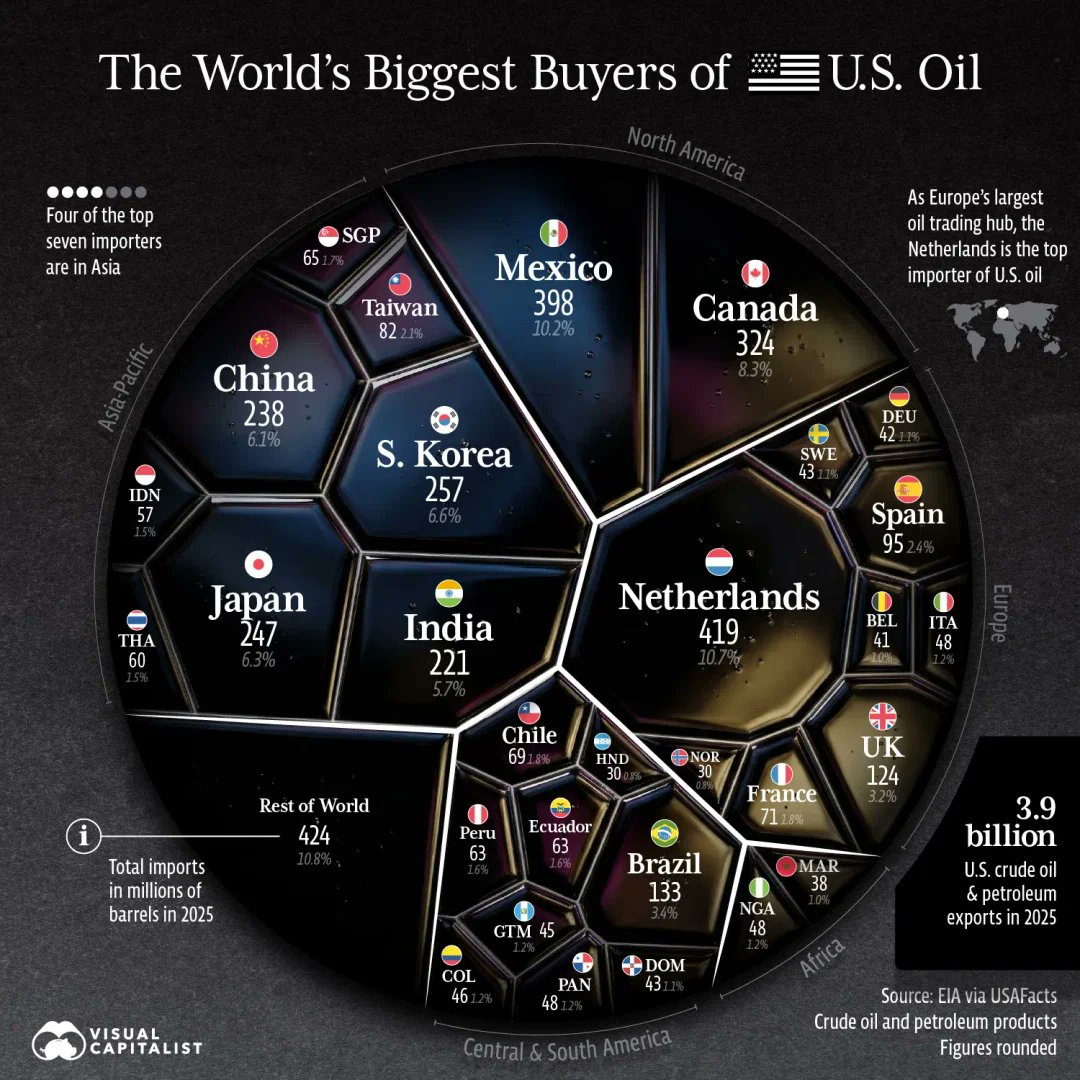
The year 2025 marks a crucial milestone in global energy dynamics, with the United States maintaining a significant role as a key oil supplier. As international demand surges, a detailed look at who the biggest importers are reveals shifts in geopolitical and economic ties over the last few years. Here’s a comprehensive list of the top 30 countries that have been the largest buyers of U.S. oil in 2025, highlighting key trends and regional insights.
1. Netherlands: The Leading European Consumer
The Netherlands has firmly maintained its position as the top importer of U.S. crude oil, purchasing approximately 419 million barrels this year. This reflects Europe’s ongoing reliance on U.S. energy exports to meet its refining needs, especially as traditional suppliers diversify or reduce exports amid geopolitical tensions.
2. Mexico: America’s Nearest Neighbor
With a close relationship in energy trade, Mexico remains the second-largest U.S. oil importer by a broad margin, importing nearly 398 million barrels in 2025. The country’s strategic geographic proximity facilitates quick delivery and integrated energy markets across North America, underpinning strong economic ties.
3. Canada: North America’s Oil Powerhouse
Canada continues to be a vital U.S. oil partner, with imports reaching approximately 324 million barrels. The extensive cross-border pipeline networks and shared energy infrastructure reinforce Canada’s role as a key supplier amid ongoing discussions about energy independence and grid resilience.
4. South Korea: Asia’s Major Consumer
South Korea’s oil imports from the U.S. hit an estimated 257 million barrels this year. As Asia’s industrial drive accelerates, South Korea’s strategic import volume underscores its position as a critical player in the regional energy landscape, particularly in refining and manufacturing sectors.
5. Japan: A Consistent Buyer
Japan maintains its prominence in U.S. oil imports, purchasing about 247 million barrels in 2025. The nation’s aging energy infrastructure and efforts to diversify energy sources make U.S. crude a vital component of its energy mix.
6. China: A Growing Market
China continues to increase its U.S. oil imports, reaching approximately 238 million barrels. The country’s efforts to secure energy resources amid its rapid economic growth have made it one of the top U.S. oil customers, despite geopolitical considerations.
7. India: Rising Demand
India’s thirst for energy is reflected in its import volume of around 221 million barrels. As the world’s third-largest economy accelerates industrialization, U.S. oil remains a critical component of its energy strategy.
8. Brazil: The South American Leader
Brazil’s imports from the U.S. totaled nearly 133 million barrels, showcasing its importance as a regional energy partner in South America, especially amid efforts to reduce reliance on traditional suppliers like Venezuela and Nigeria.
9. United Kingdom: Europe’s Significant Consumer
The UK’s oil imports from the U.S. stand at about 124 million barrels. Its maritime infrastructure allows for efficient distribution and highlights ongoing transatlantic energy ties.
10. Spain: A Key European Energy Player
Spending roughly 95 million barrels, Spain continues to rely heavily on U.S. crude, aiding its domestic refining capacity and energy diversification efforts within the European Union.
11. Taiwan: Strategic Energy Buffer
Taiwan’s import volume of approximately 82 million barrels underscores its strategic importance in the Indo-Pacific, balancing regional energy security needs amidst rising geopolitical tensions.
12. France: Strong European Energy Ties
France imported about 71 million barrels from the U.S., aligning with its nuclear and renewable energy transition goals while maintaining traditional energy import partnerships.
13. Chile and 14. Singapore: South American and Southeast Asian Consumers
Chile’s imports of 69 million barrels and Singapore’s 65 million reflect diversified energy sourcing strategies, emphasizing regional stability and economic growth.
15-20. Remaining Top Buyers: A Mix of Continents and Strategic Forces
Countries like Ecuador, Peru, Thailand, Indonesia, and Panama have notable import volumes, ranging from 63 to 48 million barrels. Their diverse economies and energy needs drive these figures, highlighting the global reach of U.S. energy exports.
21-30. Other Noteworthy Importers
Nigeria, Colombia, Guatemala, and others in this category show how emerging economies and regional players are increasingly integrated into the global oil trade, each with import volumes from 30 to 48 million barrels.
The Rest of the World
Apart from these top nations, the collective rest of the world accounts for approximately 424 million barrels of U.S. oil imports, emphasizing the extensive reach of American energy in global markets.
Key Takeaways
- The dominance of European and Asian markets in US oil exports continues, driven by strategic geographical and economic factors.
- North American trade remains robust, with Canada and Mexico as core partners.
- Emerging markets in South and Southeast Asia show rising import volumes, reflecting their growing economic demand.
- The global oil trade landscape remains dynamic, responding to geopolitical shifts, energy policies, and technological innovations.
As 2025 unfolds, the intricate web of U.S. oil exports underscores the enduring importance of American energy in shaping global markets, fostering geopolitical alliances, and supporting economic growth worldwide.
Source: EIA via USAFacts — Figures rounded for clarity.
 ChatGPT
 Perplexity
 Gemini AI
 Grok AI