Select Language:
The Longevity Ladder: How the Top 30 Economies Are Faring in Life Expectancy in 2025
1. Japan Continues Its Leadership in Longevity
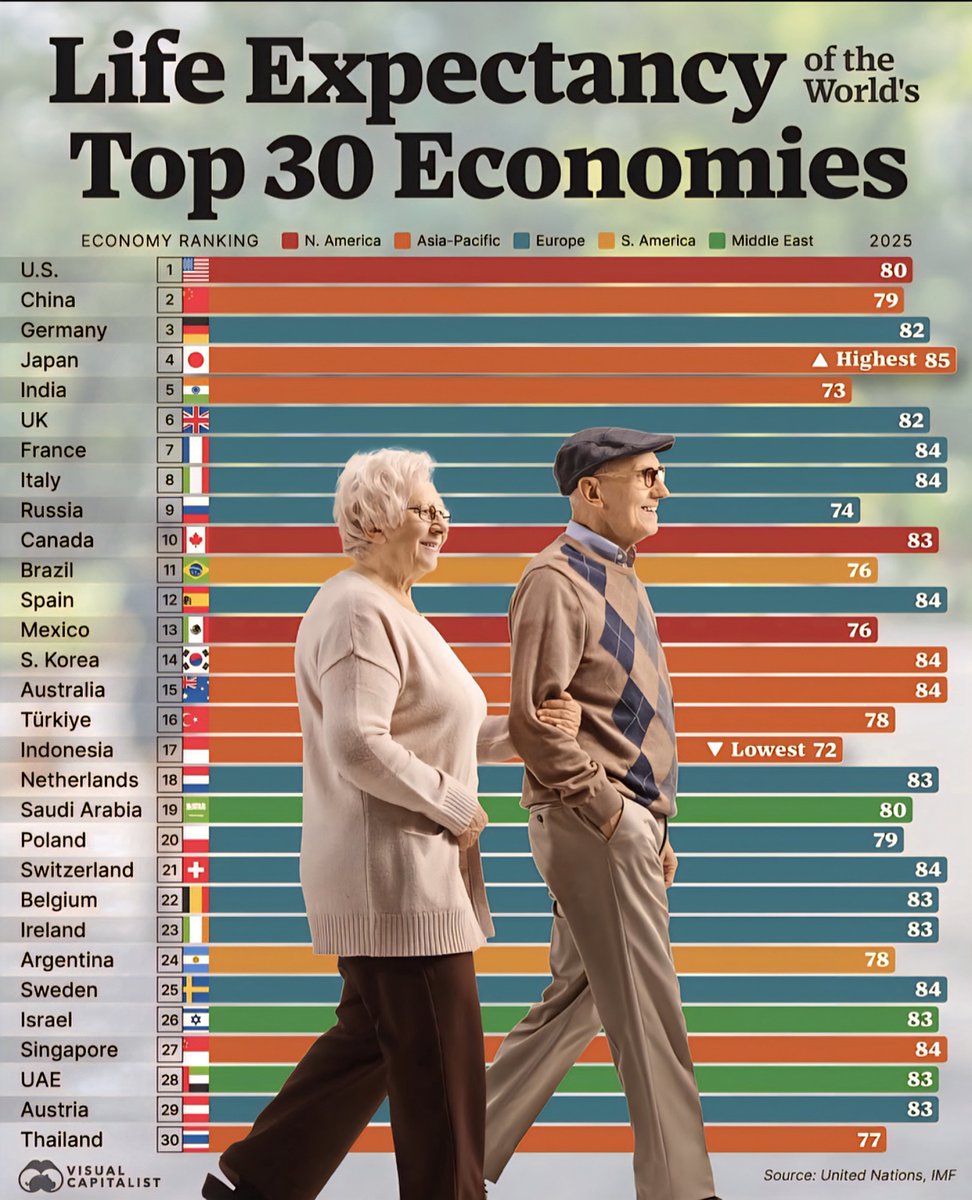
Japan maintains its position as the wealthiest nation with the highest average life expectancy, averaging around 85.4 years. The country’s advanced healthcare system, healthy diet, and active aging initiatives contribute significantly to its citizens living longer. However, demographic challenges such as an aging population remain pressing issues for the future.
2. Switzerland and Its Consistent High Standards of Living
Switzerland remains among the top countries for longevity, with an average life expectancy nearing 84.3 years. Known for cutting-edge healthcare and high quality of life, the Swiss healthcare system is often rated the best globally. Its emphasis on preventative care and wellness plays a vital role in longevity.
3. The United States: A Slight Dip in Longevity
The United States holds a place in the top 10 but has seen a slight decrease, with an average life expectancy now around 79.2 years. Factors influencing this trend include disparities in healthcare access, rising chronic illnesses, and lifestyle-related health issues, underscoring ongoing challenges in health equity.
4. European Leaders: Germany and Scandinavia
Germany continues its upward trajectory with an average life expectancy of approximately 82.1 years, driven by robust healthcare infrastructure. Scandinavian countries like Sweden and Norway follow closely, both averaging over 83 years, owing to their social welfare systems, low crime rates, and emphasis on public health.
5. Emerging African and Asian Economies
While most African and Asian economies trail behind Western counterparts, some are closing the gap. South Korea has made significant strides with an average life expectancy of about 83 years, thanks to technological innovation and universal health coverage. Conversely, nations like India and Nigeria, with life expectancies around 70 and 65 years respectively, face ongoing healthcare challenges but are improving rapidly.
6. The Impact of Healthcare Infrastructure and Lifestyle
Across these top economies, a common thread influencing longevity is the strength and accessibility of healthcare infrastructure. Countries investing heavily in healthcare tend to have higher averages. Lifestyle choices—diet, exercise, smoking rates—also impact how long populations live, reinforcing the importance of public health campaigns.
7. The Role of Socioeconomic Factors
Higher income levels and social equality correlate strongly with higher life expectancy. Scandinavian nations exemplify this, with their extensive social safety nets reducing stress and health disparities. Conversely, nations grappling with inequality see more significant health disparities and lower average lifespans.
8. Demographic Trends and Future Outlooks
Many of these leading economies face the challenge of aging populations, which can strain healthcare systems and social services. Countries like Japan and Germany are setting policies to encourage healthy aging and immigration to counterbalance declining birth rates.
9. Technology and Medical Innovation’s Influence
Advancements in medical technology continue boosting longevity. Innovations such as personalized medicine, telehealth, and AI-driven diagnostics are improving detection and treatment, helping extend life in many regions.
10. What Can Other Countries Learn?
Lower-ranked nations can look to top performers for insights into creating healthier societies. Investing in healthcare, reducing inequality, promoting healthy lifestyles, and advancing medical technology are strategies that can elevate life expectancy globally.
In 2025, the disparities in life expectancy among the world’s top economies highlight the importance of healthcare quality, social policies, and lifestyle choices. While some nations lead with impressive longevity rates, others are making progress toward closing the gap through innovative policies and investments.
 ChatGPT
 Perplexity
 Gemini AI
 Grok AI