Select Language:
Top 30 Economies and Their Aging Populations in 2025: A Closer Look
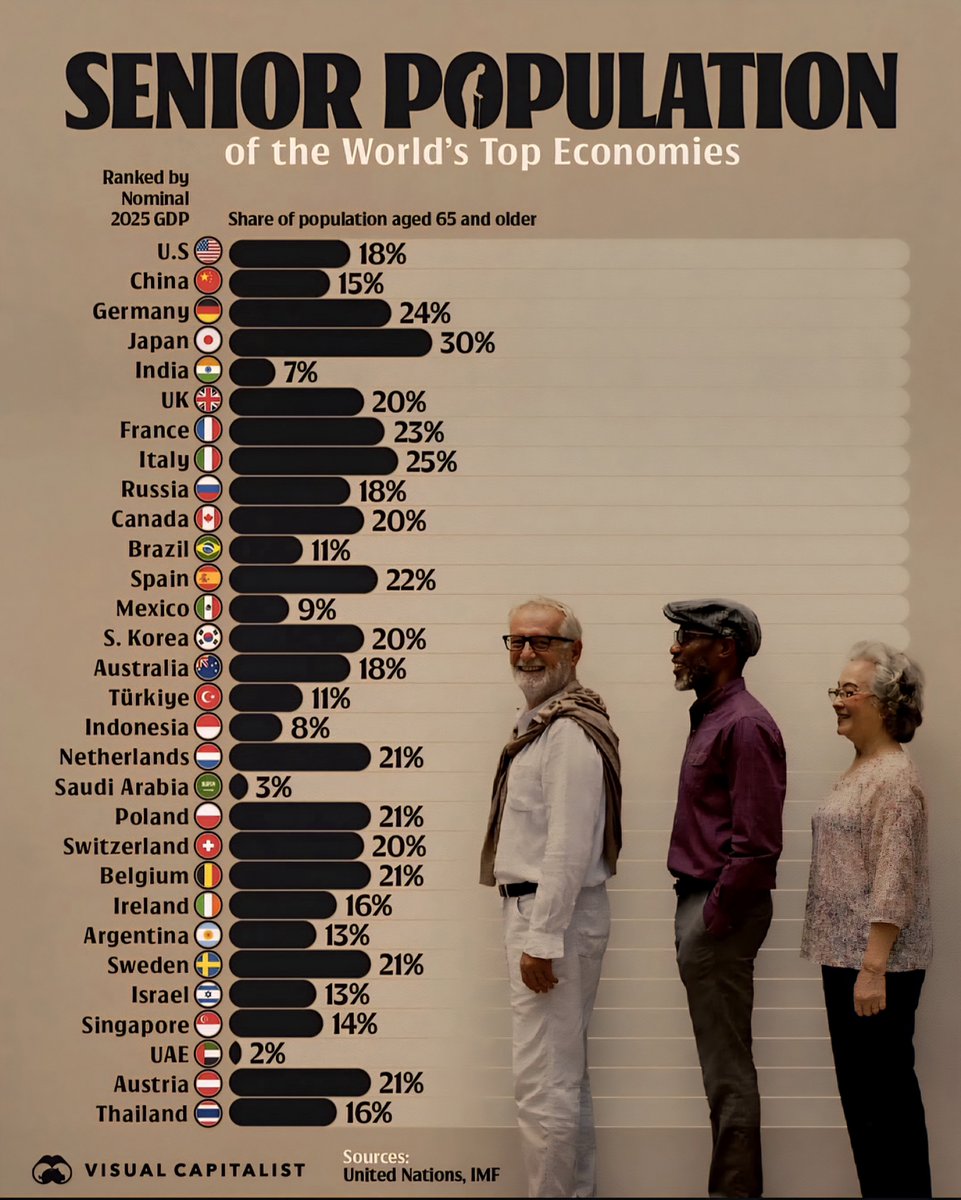
1. The United States: Leading with an 18% Senior Population
The U.S. continues to experience steady aging demographics, with approximately 18% of its population aged 65 and older. This demographic shift influences healthcare, social security, and labor market policies, prompting discussions about sustainable aging strategies and workforce adaptation.
2. China: A Significant 15% of Citizens Are Senior Citizens
China’s large population means that 15% of its citizens are 65 or older as of 2025. The rapid aging trend presents challenges for healthcare provisioning, pension systems, and economic growth, urging reforms to accommodate an aging workforce.
3. Germany: The Highest Among Major Economies at 24%
Germany leads in its senior population share, with nearly a quarter of its residents aged 65 and older. The country faces increasing demand for elderly care services and infrastructure adjustments to support its aging population.
4. Japan: The Aging Leader with 30% of Its Population Over 65
Japan’s aging phenomenon is unmatched, with nearly a third of its population aged 65 and above. This has profound effects on its economy, healthcare system, and social structure, serving as a benchmark for aging societies worldwide.
5. India: Still Young with Only 7% Seniors
Despite being the second-most populous country, India has a relatively low senior demographic at 7%, but this percentage is expected to increase significantly over the coming decades, influencing future policy planning.
6. The United Kingdom: 20% of Its Population Is Senior
The UK reports that one in five residents are aged 65 or older, prompting modernization of elderly care facilities and pension system reforms to keep pace with demographic changes.
7. France and Italy: Aging Countries with 23% and 25% Seniors Respectively
Both France and Italy face similar demographic challenges. France is adapting its healthcare and pension policies, while Italy’s aging population contributes to economic pressures and social care needs.
8. Russia: 18% Senior Population
Russia’s aging trend sits at 18%, which impacts its healthcare infrastructure and workforce, prompting state initiatives to bolster elder support systems.
9. Canada: 20% Aged 65 and Older
With a fifth of its population in the senior category, Canada is investing in elder-friendly urban planning and healthcare services to ensure quality aging experiences.
10. Brazil: An 11% Senior Population
While Brazil’s aging population is currently smaller, projections indicate steady growth, urging early policy measures to prepare for future demographic shifts.
11. Spain and South Korea: 22% and 20% Seniors
Spain’s aging trend influences its pension sustainability, while South Korea’s rapid elderly growth affects healthcare and workforce participation.
12. Mexico, Indonesia, and Turkey: Growing Senior Demographics
Mexico (9%), Indonesia (8%), and Turkey (11%) have relatively lower senior populations but are expected to see increases, emphasizing the need for proactive health and social policies.
13. Australia, Poland, Switzerland, Belgium, Sweden, and Austria: Around 20-21% Seniors
These developed nations show similar aging patterns, with ongoing reforms in their healthcare systems and social services to support aging populations.
14. Saudi Arabia and the UAE: Youngest Near the List
Saudi Arabia (3%) and the UAE (2%) currently have minimal elderly populations, but with rapid development and increased life expectancy, these figures are expected to rise in the coming decades.
15. Argentina, Israel, Singapore, and Thailand: Mid-Range Senior Percentages
Argentina (13%), Israel (13%), Singapore (14%), and Thailand (16%) exhibit diverse aging trends, with urbanization and health improvements influencing demographic changes.
Conclusion
The global landscape in 2025 reveals diverse aging patterns across economies ranked by nominal GDP. While some nations confront significant challenges due to high senior populations, others are at the cusp of demographic shifts that will shape future policies. Preparing for the aging wave requires innovative healthcare solutions, pension reforms, and inclusive economic planning.
Source: United Nations, IMF via Visual Capitalist
 ChatGPT
 Perplexity
 Gemini AI
 Grok AI