Select Language:
International Quality of Life Rankings: A 2025 Perspective
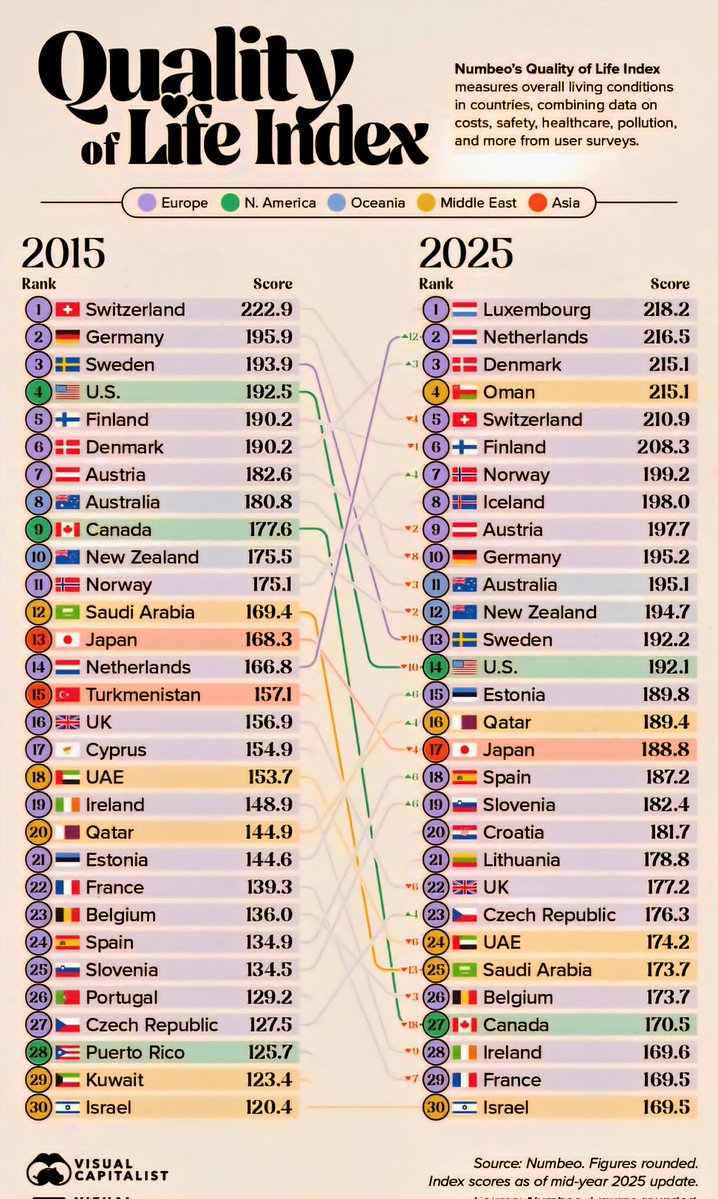
1. Norway Continues Its Reign at the Top
Norway has maintained its position as the country offering the highest quality of life in 2025. The nation’s robust healthcare system, excellent education, and high standard of living contribute to its top ranking. Norwegian residents benefit from a balanced work-life culture, stunning natural landscapes, and progressive social policies that promote equality and well-being.
2. Switzerland’s Consistent Excellence in Healthcare and Safety
Switzerland remains in the second spot owing to its world-class healthcare, high safety standards, and overall economic stability. Its picturesque scenery and high-income levels help sustain a quality of life that remains attractive to residents and expatriates alike.
3. Denmark’s Continued Commitment to Sustainability and Welfare
Denmark has solidified its position in the top three countries, thanks to its emphasis on renewable energy, social equality, and innovative urban planning. Danish citizens enjoy a high degree of social trust, a strong social safety net, and a reputation for being among the happiest people globally.
4. Singapore Shows Resilience Amidst Urban Challenges
In 2025, Singapore advances further in the rankings thanks to its focus on technological innovation, efficient infrastructure, and proactive health policies. Despite being a small city-state, Singapore offers an exceptional quality of life, making it a leading Asian hub for both lifestyle and economic opportunity.
5. Sweden’s Persistent Focus on Work-Life Balance
Sweden has consistently been a top contender, with policies that promote parental leave, environmental sustainability, and a healthy work-life balance. Its expansive green spaces, extensive public transportation, and high safety standards attract residents seeking holistic well-being.
6. Australia’s Natural Environment Boosts Its Rank
Australia’s stunning coastlines, outdoor lifestyle, and healthcare quality propel it into the top ten. Urban centers like Sydney and Melbourne offer both cultural diversity and access to pristine wilderness, appealing to those seeking a balanced geography.
7. The United States Fares Well in Economic and Educational Aspects
While varying by state, overall, the U.S. climbs slightly higher in the 2025 rankings thanks to technological innovation, top-tier universities, and diverse job opportunities. Areas that prioritize sustainability and health equity are seeing notable improvements in residents’ quality of life.
8. The Netherlands Maintains Its Reputation for Innovation and Social Equity
Known for progressive social policies, excellent healthcare, and bike-friendly cities, the Netherlands remains a preferred destination. Its emphasis on renewable energy and urban sustainability ensures a high standard of living throughout the country.
9. New Zealand’s Green Spaces and Outdoor Lifestyle
New Zealand continues to shine with its clean environment, outdoor recreational opportunities, and friendly communities. Its focus on environmental quality and indigenous social inclusion enhances residents’ overall happiness.
10. Canada’s Quality of Multicultural Living
Canada’s diverse population, high safety standards, and excellent universal healthcare system contribute to a high quality of life. Cities like Toronto, Vancouver, and Montreal consistently rank among the best places to live due to their inclusive societies and vibrant cultural scenes.
Additional Notable Countries in the Top 30:
Germany remains a leader through its innovation-driven economy and strong social support systems; Austria retains its high ranking through safety and quality healthcare; Japan continues to prioritize technological advancement and public safety; and Finland’s innovative education system and focus on societal well-being keep it among the global top contenders.
Global Trends for 2025:
The overarching trend shows an increasing emphasis on sustainability, digital infrastructure, and social equity. Countries investing heavily in renewable energy, smart cities, and universal healthcare are seeing their residents’ lives improve markedly. Conversely, nations with political instability or economic downturns have experienced dips in ranking, highlighting the importance of stability in fostering quality of life.
These rankings reveal not just economic prosperity but also national priorities on health, environment, and social cohesion, shaping the future of global living standards.
 ChatGPT
 Perplexity
 Gemini AI
 Grok AI