Select Language:
The Surprising Concentration of Global Wealth in a Small Land Area
1. A Tiny Land Area Holds the Majority of Global Wealth
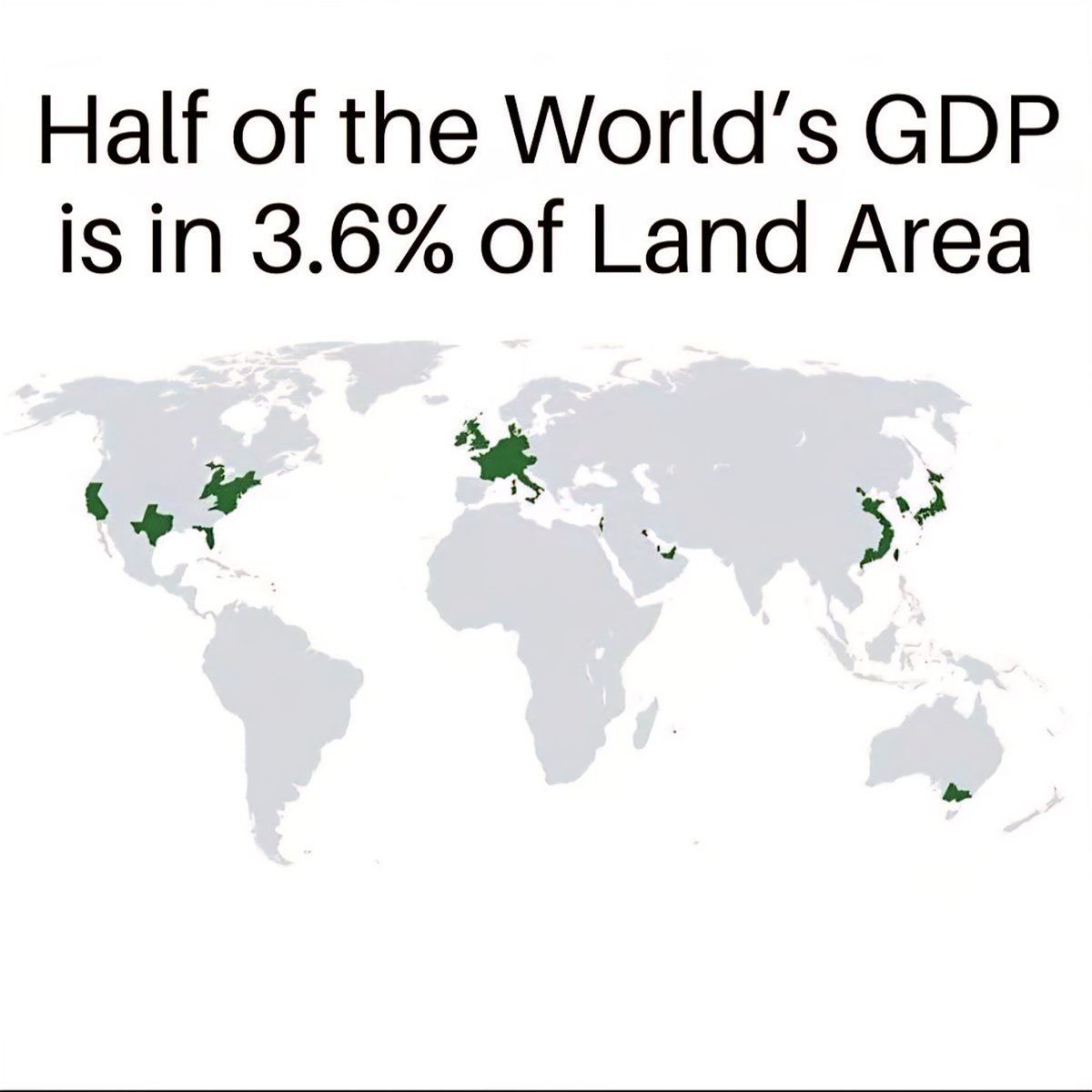
In 2025, recent studies reveal that just 3.6% of Earth’s land is responsible for nearly half of the world’s Gross Domestic Product (GDP). This astonishing statistic highlights the significant disparity between where wealth is concentrated and where it is dispersed geographically. Major cities and economic hubs like New York, Tokyo, London, and Shanghai significantly dominate global economic output, making this small region an economic powerhouse.
2. The Urban-rural Divide Is Widening
Most of the world’s wealth residing within a small land area underscores the ongoing urbanization trend. Metropolitan areas such as Manhattan, Central London, and parts of Tokyo generate a tremendous share of national and global income, leaving rural and less-developed regions with a drastically smaller economic footprint. The concentrated growth in cities fuels innovation, commerce, and finance, but also exacerbates economic inequality across continents.
3. Why So Little Land Creates So Much Wealth
This small land area encompasses some of the world’s wealthiest countries and cities, which have cultivated dense networks of industries, technology hubs, and financial services. Infrastructure investments, globally connected markets, and highly skilled workforces make these regions highly productive. For example, downtown Manhattan alone contributes a staggering portion of the United States’ GDP, illustrating how concentrated economic power can be geographically limited yet globally influential.
4. The Impact on Global Inequality
The concentration of wealth in such a limited area is fueling widening gaps between rich and poor worldwide. Developing countries, often with vast land areas, are struggling to keep pace with the economic output of these tiny, dense regions. This disparity creates increased migration pressures, economic imbalances, and political challenges on a global scale.
5. The Role of Technology and Innovation
Technology has played a crucial role in this redistribution of wealth. Advanced communication and transportation infrastructure enable businesses to thrive in specific urban centers, turning local economies into global giants. Silicon Valley, for example, has become a global tech hub located in a relatively small area within California, exemplifying how innovation centers concentrate wealth.
6. What This Means for the Future
With ongoing advancements, such as remote work, decentralized finance, and digital economies, there’s potential to democratize wealth distribution in the future. However, current trends suggest that the global economy might remain heavily weighted toward select regions for years to come, emphasizing the importance of sustainable development policies that promote growth outside traditional hubs.
7. Urban Planning and Sustainable Growth
As cities continue to be epicenters of wealth, urban planners are challenged to manage growth sustainably. Smart city initiatives, green infrastructure, and equitable resource distribution will be essential in ensuring that these concentrated hubs do not become overly congested or environmentally degraded while continuing to foster economic prosperity.
8. The Global Economic Outlook
Despite the concentration of wealth in small geographic areas, global efforts are underway to boost economic development in underrepresented regions. Initiatives like international trade agreements, technological transfer programs, and infrastructure investments aim to balance economic growth across different parts of the world.
The staggering reality that a mere 3.6% of land accounts for nearly half of global GDP underscores the complexity of modern economies. While cities and regions dominate wealth creation, the challenge moving forward will be to harness this concentration for equitable and sustainable global growth.
 ChatGPT
 Perplexity
 Gemini AI
 Grok AI