Select Language:
Top 25 Most Populous Countries in 2025: A Global Perspective
1. India Continues Its Demographic Rise
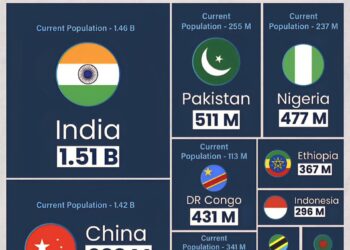
India tops the list with a staggering 1.46 billion residents, cementing its position as the world’s most populous country. The nation’s rapid population growth fuels its burgeoning economy but also presents challenges related to infrastructure, healthcare, and resource management.

2. China Maintains Its Presence
Despite recent demographic declines, China remains home to approximately 1.42 billion people. Population control policies and urbanization continue to shape its demographic landscape, influencing global economics and geopolitics.
3. The United States Rises to Third Place
With a population nearing 347 million, the U.S. ranks third. Its diverse society and economic power make it a major player on the world stage, with population growth driven by domestic births and international migration.
4. Indonesia’s Population Surpasses 286 Million
As Southeast Asia’s most populous country, Indonesia has around 286 million residents. Urban centers like Jakarta face the challenges of overpopulation, while rural areas see slow population growth.
5. Pakistan’s Population Reaches 255 Million
Pakistan continues to grow swiftly, with over a quarter-billion people. Population density and resource distribution remain critical issues for policymakers.
6. Nigeria’s Population Approaches 238 Million
Sub-Saharan Africa’s largest country by population, Nigeria, has around 238 million inhabitants. Youthful demographics and urbanization are key trends shaping its future.
7. Brazil’s Population Tops 213 Million
South America’s largest nation has a population of approximately 213 million, with vibrant cities like São Paulo and Rio de Janeiro driving economic activity.
8. Bangladesh’s Population Rises to 176 Million
Dense urban areas and rural communities coexist in Bangladesh, whose population exceeds 176 million, posing challenges for infrastructure and environmental sustainability.
9. Russia Holds Steady at Nearly 144 Million
Russia’s population remains around 144 million, with aging demographics and urban migration influencing its social and economic policies.
10. Ethiopia Continues Rapid Growth
Ethiopia’s population reaches 135 million, reflecting substantial growth and urban expansion despite economic and environmental hurdles.
11. Mexico’s Population Nearly Touches 132 Million
Mexico maintains a significant population, fostering complex urban environments alongside rural communities.
12. Japan’s Population Stabilizes at About 123 Million
Japan faces aging society issues, with a declining birthrate contributing to a stable population around 123 million.
13. Egypt’s Population Crosses 118 Million
Egypt’s population growth impacts urban centers like Cairo, with infrastructure development struggling to keep pace.
14. Philippines’ Population Surpasses 117 Million
The Philippines’ vibrant communities face challenges related to urban congestion but benefit from a youthful workforce.
15. Democratic Republic of Congo Approaches 113 Million
DR Congo’s population growth underscores the need for improved health and development initiatives in Central Africa.
16. Vietnam’s Population Tops 102 Million
Vietnam remains dynamic, with rapid urbanization supporting its economic transformation.
17. Iran’s Population Holds at 92 Million
Iran maintains a substantial population amidst ongoing socio-political shifts and demographic changes.
18. Turkey Approaches 88 Million
Turkey’s strategic location and population growth influence regional geopolitics and economic development.
19. Germany’s Population Stabilizes at 84 Million
While experiencing slow growth, Germany grapples with aging demographics and migration policies.
20. Thailand’s Population Reaches 72 Million
Thailand balances urban growth in Bangkok with rural communities, facing economic and environmental challenges.
21. Tanzania Turns 71 Million
Tanzania’s population growth fuels its ambitions for economic development, despite resource constraints.
22. United Kingdom Nears 70 Million
UK’s steady population growth impacts urban planning and social services amid Brexit-era uncertainties.
23. France Approaching 67 Million
France’s population remains relatively stable, with immigration playing a key role.
24. South Africa’s Population Approximates 65 Million
South Africa’s demographic trends influence its economic outlook and social cohesion.
25. Italy’s Population Tops 59 Million
Italy faces demographic decline, with aging and low birthrates impacting its future economy.
Global Population Dynamics in 2025
The world’s total population has now topped approximately 8.1 billion, with growth slowing compared to previous decades. Cities are expanding rapidly, with over 57% of people living in urban settings—a figure projected to reach 68% by 2050, transforming societies and economies worldwide.
Aging and Fertility Trends
The median age globally has risen to 31, highlighting a growing aging population, especially in countries like Japan and parts of Europe. Meanwhile, fertility rates are declining, averaging about 2.3 children per woman worldwide, falling below replacement levels in many regions, including parts of Asia and Europe. This shift could have long-term implications for workforce and economic growth.
Source: World Population Review 2025
Note: Image included depicts the flags of the top three most populous countries to visualize global demographics.
 ChatGPT
 Perplexity
 Gemini AI
 Grok AI