Select Language:
Countries With the Largest Senior Populations in 2025
The global landscape is experiencing a remarkable demographic shift, with mature populations taking center stage in many countries. By 2025, certain nations are already seeing a significant rise in their elderly populations. Here’s an in-depth look at the countries leading this demographic change and projections for future years.
1. Japan: The Matureest Nation
Japan continues to hold the top spot as the country with the highest percentage of seniors in 2025. With over 28% of its population aged 65 and older, the island nation faces ongoing challenges related to healthcare, pension sustainability, and workforce shortages. Its advanced healthcare system and high life expectancy contribute to this aging trend.
2. Italy: Europe’s Elderly Stronghold
Italy remains among the most senior-populated countries, with approximately 24% of its residents aged 65 and above. The country’s declining birth rates and increased longevity have resulted in a rapidly aging population, impacting its economy and social services.
3. Germany: An Aging Powerhouse
Germany’s population continues to age, with roughly 22% of its residents in the senior age bracket. The nation’s robust healthcare infrastructure supports its elderly, but demographic shifts pose concerns for future labor markets and pension systems.
4. South Korea: Rapidly Aging Society
South Korea’s aging population is accelerating, with an estimated 19% of its population aged 65 or older as of 2025. The nation is working to address their needs through social policies and healthcare reforms amid urbanization and low fertility rates.
5. Spain: A Growing Elderly Population
Spain has seen its senior population grow to around 20% in 2025. The aging trend affects social services and healthcare, prompting government initiatives to ensure quality of life for older citizens.
6. United States: The Land of Aging Boomers
While the U.S. has a younger median age compared to other developed nations, its senior population is expanding rapidly, with approximately 17% aged 65 or above. The aging of the Baby Boomer generation continues to shape healthcare, retirement, and social security policies.
7. France: Europe’s Aging Trends
With about 20% of its population over 65, France faces similar demographic shifts as its European counterparts, requiring policies to adapt to an aging society.
8. China: The Largest Elderly Population
China’s elderly population surpasses 15% in 2025, driven by decades of one-child policies and increasing life expectancy. The government is focusing on elderly care services and pension reforms to manage the demographic transition.
9. Canada: Growing Senior Demographic
Approximately 18% of Canadians are seniors as of 2025. An aging population prompts increased investments in healthcare infrastructure and senior-focused community services.
10. Australia: An Aging Outback
Around 16% of Australia’s population is aged 65 or older. The country’s healthcare and retirement systems are adjusting to meet the needs of its senior residents.
The Outlook for 2050
By 2050, the senior populations in these nations are expected to grow even more. Japan, for example, could see upwards of 35% of its population over 65. European countries like Italy and Germany are projected to experience similar increases, intensifying existing social and economic challenges.
Future Projections for 2075
Looking further ahead to 2075, the trend of aging populations is set to deepen. Many advanced economies might see seniors comprise over half of their populations. Countries like Japan and Italy could face existential questions around workforce sustainability, healthcare, and intergenerational support systems.
2100 and Beyond: Demographic Transitions
The demographic shifts predicted for 2100 suggest some countries will have populations where seniors nearly dominate, with complexities around migration, birth rates, and technology-driven healthcare solutions playing crucial roles in shaping societies.
Visual Representation of Aging Countries
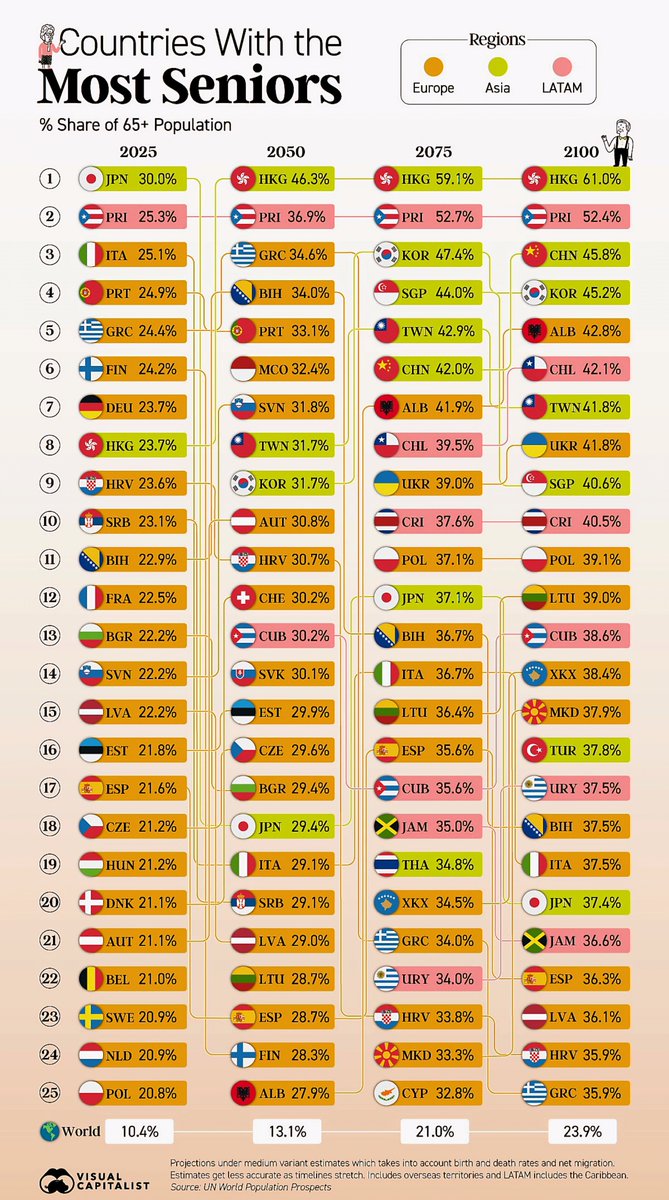
As the world navigates these demographic transformations, policymakers, healthcare providers, and communities will need to innovate and collaborate to ensure aging populations are supported, healthy, and active members of society. The next decades will be pivotal in shaping how countries adapt to this inevitable shift toward older demographics.
 ChatGPT
 Perplexity
 Gemini AI
 Grok AI