Select Language:
The 20 Countries with the Lowest Fertility Rates in 2024
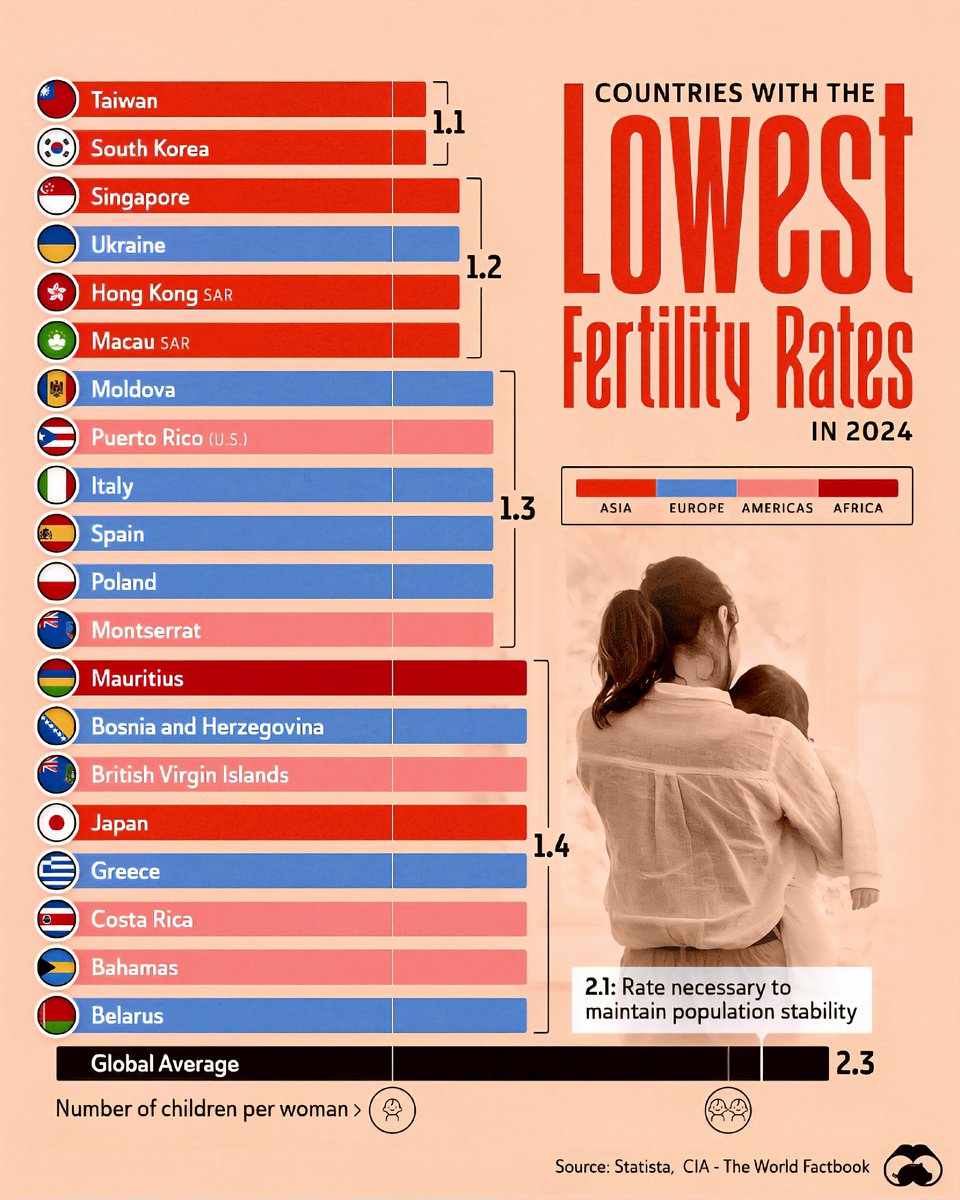
As the global population continues to evolve, some nations are experiencing a significant decline in birth rates, raising critical economic, social, and policy questions. Here’s a detailed look at the 20 countries with the lowest fertility rates in 2024, highlighting the factors influencing these trends and what they could mean for the future.
1. Singapore: Facing Demographic Challenges
Singapore maintains one of the lowest fertility rates worldwide, hovering around 1.02 children per woman. The country’s high living costs, limited space for large families, and shifting cultural attitudes towards marriage and parenthood are key contributors. Government initiatives have attempted to promote childbirth through financial incentives, yet uptake remains sluggish.
2. South Korea: A Societal Shift and Economic Pressures
South Korea’s fertility rate has fallen to approximately 0.78—one of the lowest globally. Young adults are delaying marriage and childbirth, citing economic instability, housing affordability, and intense academic and work pressures. These factors collectively hinder the country’s population growth and strain its social support systems.
3. Taiwan: Population Concerns in an Aging Society
With a fertility rate around 0.86, Taiwan faces similar demographic challenges. Increased urbanization and employment insecurity discourage young couples from expanding their families. The government continues to develop policies aiming to elevate birth rates, but cultural and economic barriers persist.
4. Japan: An Aging Nation with Low Birth Numbers
Japan’s fertility rate has now stagnated at roughly 1.3, contributing to a rapidly aging population. The country is confronting shrinking workforces and rising healthcare costs for the elderly. Despite generous family support programs, societal attitudes and career pressures deter many from having children.
5. Hong Kong: High Cost of Living Impacting Birth Rates
Hong Kong’s fertility rate stands at approximately 0.9. The region’s exorbitant housing prices and high living expenses are cited as primary reasons for delayed or avoided pregnancies. The government has introduced various measures, but overcoming economic barriers remains a challenge.
6. Macau: Small but Demographically Declining
Macau’s birth rate has declined sharply, with a fertility rate of about 0.82. Its small population and high dependency on tourism influenced by economic shifts have led to demographic concerns, prompting policy considerations for family support.
7. Portugal: Europe’s Slow Decline
Portugal’s fertility rate has dipped below 1.3, with cultural shifts and economic uncertainties acting as deterrents for young families. Ageing populations are increasingly common, posing social welfare dilemmas.
8. Greece: Economic Ties to Low Birth Rates
Greece continues to grapple with a low fertility rate around 1.3. Years of economic hardship have impacted family planning decisions, with many young adults prioritizing financial stability over parenthood.
9. Spain: Balancing Tradition and Modernity
With a fertility rate near 1.3, Spain faces demographic aging. Despite efforts to support working parents, high youth unemployment and housing costs keep birth rates low.
10. Italy: An Aging Society
Italy’s birth rate is approximately 1.2, reflecting longstanding demographic trends. Cultural preferences, economic factors, and career considerations influence reproductive choices, contributing to a shrinking population.
11. Germany: Policy Attempts to Boost Fertility
Germany records a fertility rate around 1.4. The country has implemented family-focused policies, including parental leave and child benefits, but societal shifts still hinder significant increases in birth rates.
12. Austria: Facing Population Decline
Austria’s fertility rate hovers near 1.4. While supportive measures exist, economic and social factors continue to impact young couples’ decisions on having children.
13. Switzerland: Balancing Prosperity and Fertility
Switzerland maintains a fertility rate of about 1.5. High living standards are offset by career demands and high costs of raising children, leading to cautious family planning.
14. Croatia: Demographic Challenges
Croatia’s fertility rate is around 1.3, and population decline is a significant concern. Migration and economic uncertainty influence family growth choices.
15. Bulgaria: Struggling with Population Decline
Bulgaria’s fertility rate has fallen below 1.4, compounded by economic struggles and emigration. The government is exploring policies to incentivize childbirth.
16. Latvia: Low Birth Rates Amid Aging Population
With a fertility rate near 1.4, Latvia faces demographic aging and shrinking workforce. Family support initiatives are underway but face cultural barriers.
17. Serbia: Population Decrease Continues
Serbia’s fertility rate is approximately 1.4. Economic instability and migration also play roles in declining birth numbers.
18. North Macedonia: Low Fertility Amid Economic Uncertainty
North Macedonia reports a fertility rate around 1.3, with economic factors deterring larger families. Policy efforts remain limited.
19. Estonia: Small Population, Low Births
Estonia’s fertility rate is close to 1.4, influenced by urbanization and economic conditions. Challenges include retaining young families and mitigating emigration.
20. Montenegro: Declining Birth Rates
Montenegro’s fertility rate stands at roughly 1.3. Economic stability and access to childcare are ongoing concerns for policymakers.
The Broader Implications of Declining Fertility Worldwide
Many of the nations listed are facing aging populations, shrinking workforces, and rising healthcare costs—challenges that threaten their social and economic stability. Governments are experimenting with policies like extended parental leave, financial incentives, and efforts to improve work-life balance, but cultural and economic barriers remain significant.
Moving Forward: Strategies and Challenges
Addressing low fertility rates requires a comprehensive approach that considers economic incentives, affordable housing, workplace flexibility, and societal attitudes towards family and gender roles. Countries that adapt proactively could better navigate demographic shifts, but the road ahead involves complex social reform and economic planning.
The demographic landscape continues to shift rapidly in 2025, with these trends reflecting the complex interplay of culture, economy, and policy. The decisions made today will shape the future of these nations for decades to come.
 ChatGPT
 Perplexity
 Gemini AI
 Grok AI