Select Language:
Top 20 Countries Owing the Most Debt to China in 2025
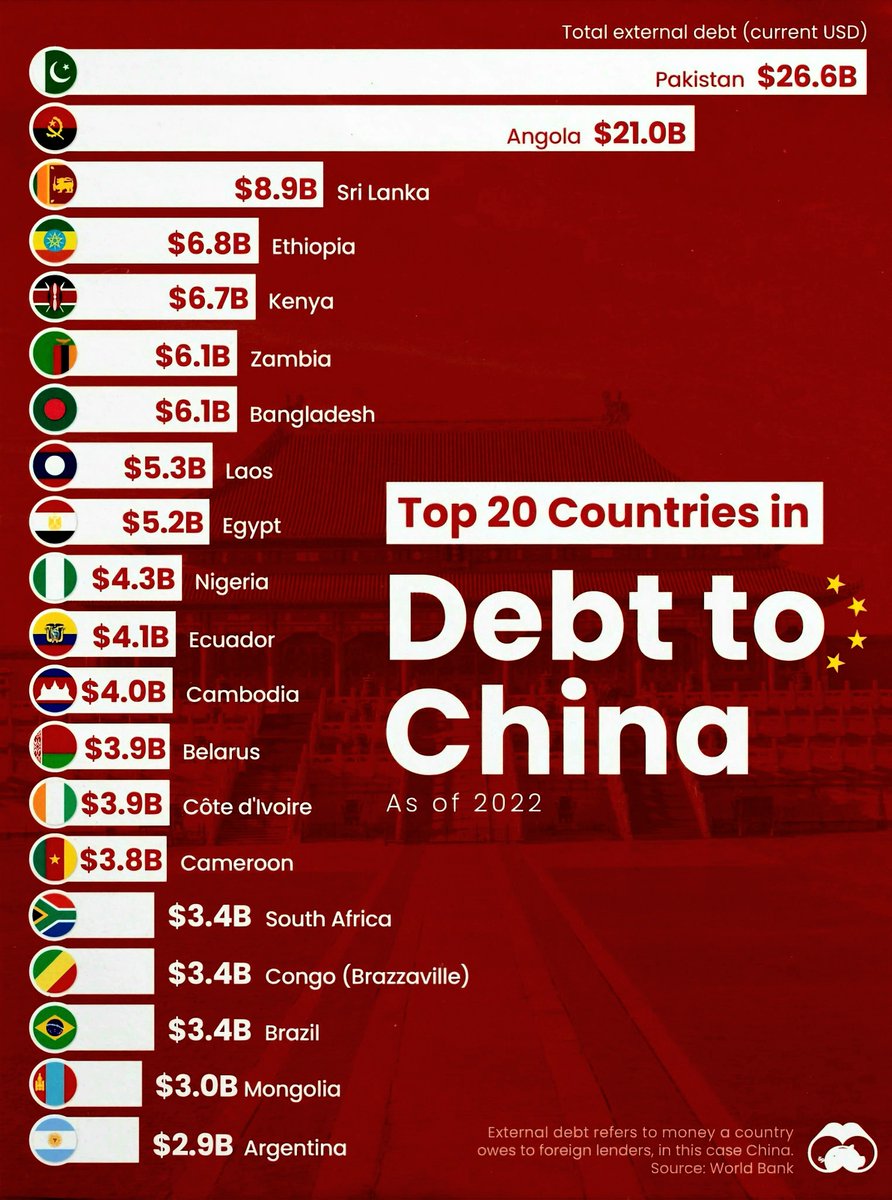
1. Pakistan
Pakistan remains at the top of the list, with strategic investments totaling over $25 billion in Chinese infrastructure projects under the Belt and Road Initiative (BRI). Its reliance on Chinese loans has grown, especially for energy and transportation sectors, making it the largest debtor nation.
2. Angola
Angola’s economy continues to heavily depend on oil exports, and its debt to China exceeds $18 billion. Most of these loans are tied to infrastructure development, including railways and oil fields, which are crucial for Angola’s economic recovery.
3. Ethiopia
With more than $13 billion owed to China, Ethiopia stands out as Africa’s leading debtor. Chinese financing has been vital for Ethiopia’s rapid infrastructure expansion, including airports, railways, and industrial parks.
4. Kenya
Kenya’s debt to China has surpassed $12 billion, mainly for major infrastructure projects like the Standard Gauge Railway (SGR). While these investments boost economic growth, concerns over repayment sustainability persist.
5. Mozambique
Mozambique’s Chinese debt portfolio reaches approximately $10 billion. This includes financing for port expansions, roads, and power plants, though recent defaults have raised questions about debt management.
6. Zambia
With debts exceeding $9 billion, Zambia’s government has heavily borrowed from China to finance mining and infrastructure projects. Economic instability and declining copper prices have put repayment plans under strain.
7. Angola
Continuing its high debt levels, Angola holds nearly $8.5 billion owed to China. Most of these are linked to oil-backed loans, highlighting its continued dependence on resource exports and Chinese financial support.
8. Ghana
Ghana owes China approximately $7.8 billion. Infrastructure spending in ports, roads, and energy sectors is vital for Ghana’s economic growth, but debt sustainability remains a concern.
9. Sudan
Sudan’s debt to China stands close to $7 billion, primarily for infrastructure and energy projects. Political instability has complicated repayment efforts, increasing financial risks.
10. Egypt
With debts around $6.5 billion, Egypt has secured Chinese loans for a variety of projects, including new airports and transportation links. These investments aim to bolster Egypt’s position as a regional hub.
11. Cote d’Ivoire
Cote d’Ivoire’s debt to China is approximately $5.9 billion, largely for road and energy infrastructure, aligning with its ambitions to develop its economic landscape.
12. Eritrea
Eritrea’s debt exceeds $5.4 billion, mainly for port upgrading projects, including the expansion of the Assab port, critical for regional trade.
13. Madagascar
Madagascar owes around $5 billion to China, largely for infrastructure projects like roads and power plants aimed at boosting the island’s economic independence.
14. Tanzania
Tanzania’s Chinese debt surpasses $4.8 billion, especially in railway and port developments, supporting its plans to become a regional logistics hub.
15. Liberia
With debts totaling roughly $4.2 billion, Liberia has benefited from Chinese-funded infrastructure projects, including roads and power systems, though debt management remains a concern.
16. Gabon
Gabon owes about $3.9 billion to China, mostly for urban development and port infrastructure, essential for regional economic integration.
17. Zimbabwe
Zimbabwe’s Chinese debt hits approximately $3.7 billion, mainly for energy infrastructure and agricultural development projects, vital for economic stabilization.
18. Burundi
Burundi’s debt to China totals around $3.5 billion, with investments focused on hydropower and road infrastructure to improve connectivity.
19. Zimbabwe
Zimbabwe’s continued reliance on Chinese financing has increased its debt to about $3.4 billion, with ongoing projects in the energy and transportation sectors.
20. Malawi
Malawi’s debt to China is close to $3 billion, primarily in agricultural and energy infrastructure that supports rural development goals.
The Geopolitical and Economic Impact of Chinese Lending
The growing debt of these countries to China reflects a strategic move by Beijing to expand global influence while supporting infrastructural development across regions. However, mounting debts raise concerns about economic sovereignty, especially for nations heavily reliant on Chinese financing. Some debtor countries have begun restructuring or negotiating repayment terms to mitigate risks, but the trend indicates that debt-to-China is a pressing issue on the international stage.
Balancing Development and Debt
While Chinese investments are catalyzing development in many regions, managing debt sustainability is essential for economic stability. Governments are now seeking alternative sources of financing, improving debt transparency, and exploring multilateral negotiations to avoid debt distress, which could have broader geopolitical repercussions.
Conclusion
In 2025, China’s role as a key lender continues to shape the economic futures of these nations. As many adjust to the complexities of debt management, the coming years will be critical in determining whether these countries can leverage Chinese investments for long-term growth without falling into unsustainable debt cycles.
Note: All figures are estimates based on the latest available data in 2025.
 ChatGPT
 Perplexity
 Gemini AI
 Grok AI