Select Language:
The 20 Countries Most Heavily Borrowed from China in 2025
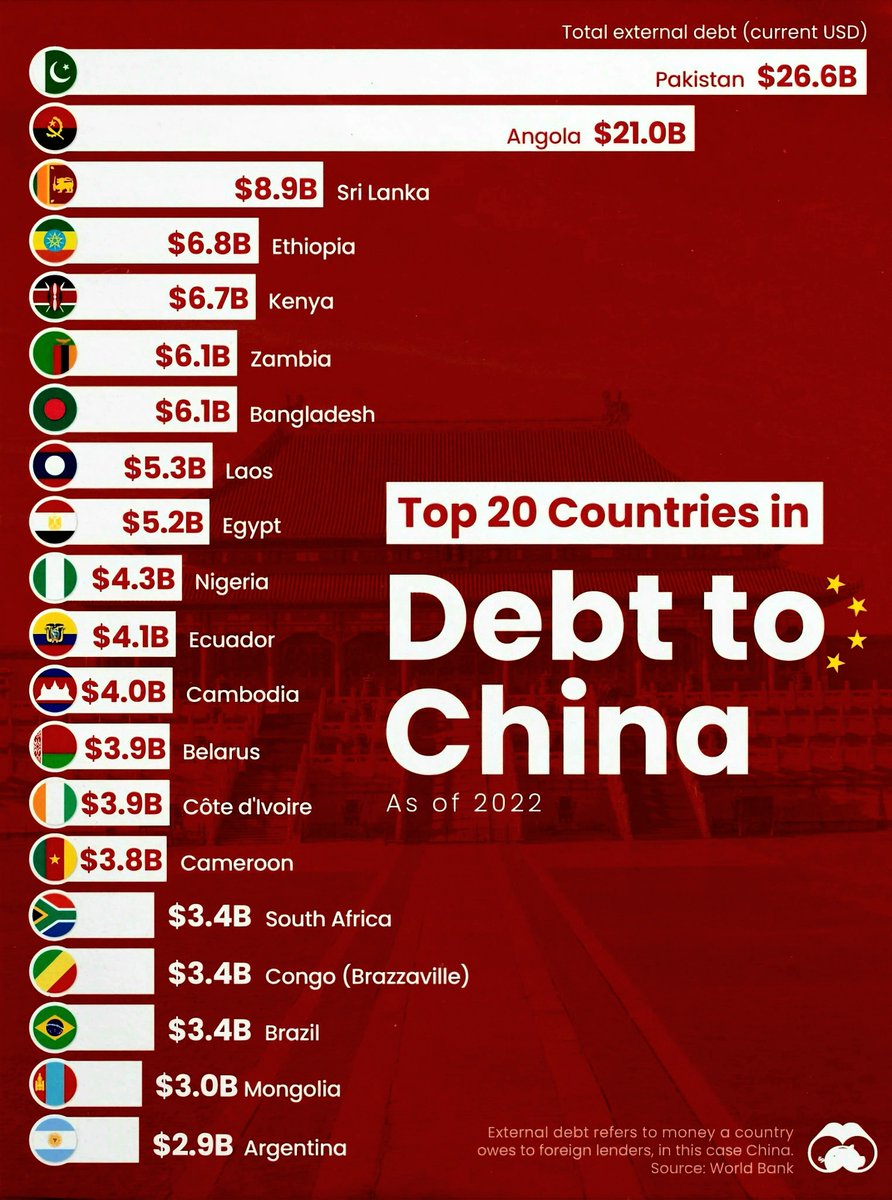
As China continues to expand its influence through economic partnerships and infrastructure investments, several countries are increasingly relying on Chinese loans to fuel their development projects. Here’s a detailed look at the top 20 nations saddled with the highest debt to China as of 2025.
1. Pakistan: Heavily Dependent on Chinese Infrastructure Loans
Pakistan remains at the forefront, with nearly $30 billion owed to China, primarily due to the China-Pakistan Economic Corridor (CPEC). The debt fuels infrastructure, energy, and transportation projects, making it a critical relationship for Pakistan’s economic growth but also raising concerns about long-term debt sustainability.
2. Sri Lanka: Struggling with Debt Repayments
Sri Lanka’s debt to China amounts to over $20 billion. The country’s reliance on Chinese loans, particularly for the Hambantota Port project, has stirred debates on debt management and the risk of losing strategic assets if repayments falter.
3. Angola: Africa’s Largest Debtor to China
With approximately $15 billion in debt, Angola’s economy is heavily tied to Chinese financing for its oil and infrastructure sectors. This dependence makes Angola vulnerable to shifts in China’s foreign lending policies.
4. Kenya: Major Recipient of Chinese Infrastructure Investment
Kenya owes China close to $12 billion, mostly due to the Standard Gauge Railway and other development projects. While these investments aim to boost economic growth, concerns over debt sustainability persist.
5. Ethiopia: Rapid Infrastructure Growth Oequ=
Ethiopia has accumulated about $11 billion in debt to China, largely through railway lines, factories, and energy projects. The country’s rapid economic expansion hinges on continued Chinese financing, raising questions about debt levels.
6. Mozambique: Struggling Amid Rising Debts
Mozambique owes around $9 billion, mainly from Chinese loans to develop mines, energy, and port facilities. Debt distress has led to financial crises and IMF intervention, underscoring risks tied to Chinese debt reliance.
7. Myanmar: Political Challenges and Heavy Debt
Myanmar’s debt to China exceeds $8 billion, linked to infrastructure and energy projects. Political instability and economic uncertainties complicate repayment prospects.
8. Zimbabwe: Financial Crisis and Debt Levels
Zimbabwe owes Beijing roughly $7 billion. Economic instability exacerbates repayment issues, prompting discussions of debt relief and restructuring.
9. Sudan: Longstanding Debt Ties
Sudan’s debt to China is around $6.5 billion, supporting oil infrastructure and agricultural development. Ongoing conflicts have hindered debt servicing efforts.
10. Kyrgyzstan: Chinese Loans Funding Development
Kyrgyzstan owes about $6 billion to China, mainly for road construction and energy projects. The country’s vulnerable economy highlights the risks associated with reliance on Chinese finance.
11. Laos: Infrastructure Investment Challenges
Laos owes approximately $5.5 billion to China, much of it for hydropower plants and transport infrastructure. The debt burden has made some projects economically unviable.
12. DRC (Democratic Republic of the Congo): Mining and Infrastructure
The DRC owes around $5 billion to China, mostly for mining projects and infrastructural development, adding pressure on the fragile economy.
13. Zambia: Facing High Debt Levels
With over $4.8 billion owed to China, Zambia’s economy is strained by debt servicing needs, especially as commodity prices fluctuate.
14. Mongolia: Heavy Investment in Mines and Energy
Mongolia owes about $4.5 billion to China, financing mines, energy, and infrastructure projects. Economic dependence leaves Mongolia vulnerable to external shocks.
15. Madagascar: Growing Debt Concerns
Madagascar’s Chinese debt stands at about $4 billion, primarily from infrastructure and resource development projects, raising sustainability questions.
16. Cameroon: Infrastructure and Resource Development
Cameroon owes Chinese lenders around $3.8 billion, largely for roads, ports, and energy initiatives, highlighting reliance on Chinese financing.
17. Gabon: Oil and Infrastructure Investment
Gabon’s debt to China is approximately $3.5 billion, mainly for oil sector development and infrastructure projects.
18. Liberia: Post-Ebola Reconstruction Funding
Liberia owes roughly $3.2 billion, stemming from Chinese loans aimed at rebuilding infrastructure and promoting economic stability.
19. Senegal: Economic Infrastructure Projects
Senegal’s debt to China hovers around $3 billion, with investments in transportation, ports, and energy sectors.
20. Nepal: Connecting Mountain Valleys
Nepal’s outstanding debt to China totals approximately $2.8 billion, predominantly for roads, hydropower, and education infrastructure.
The intricate web of Chinese loans woven into these nations’ economies exemplifies a broader pattern of Chinese strategic investment. While these projects foster development and infrastructure growth, the heavy debt burdens also pose significant risks. Countries must navigate the delicate balance of leveraging Chinese financing for economic progress while maintaining sustainable debt levels to avoid future financial crises.
Note: Debt figures are estimates based on recent reports and may fluctuate with ongoing negotiations and economic conditions in 2025.
 ChatGPT
 Perplexity
 Gemini AI
 Grok AI