Select Language:
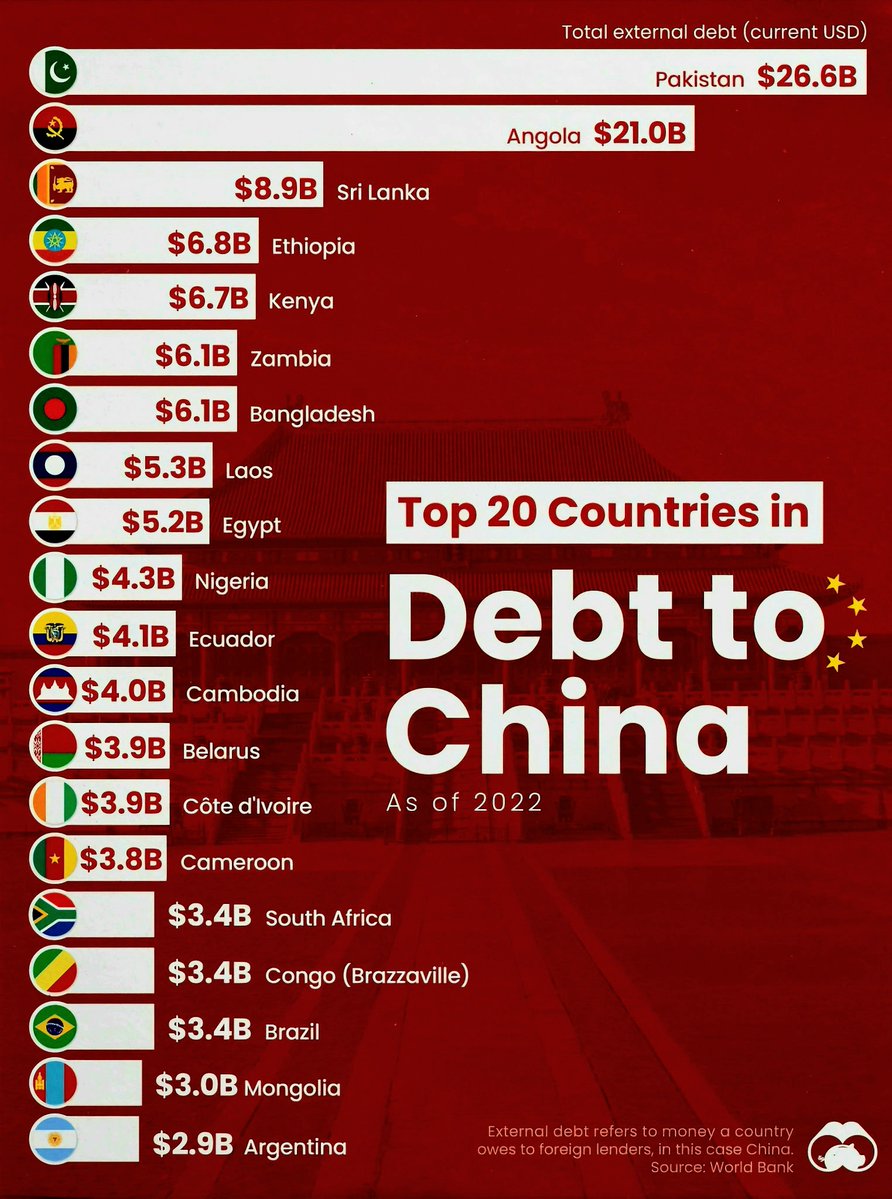
Top 20 Countries Owing the Most to China in 2025
1. Pakistan – $26.6 Billion
Pakistan remains the biggest debtor to China, with loans totaling approximately $26.6 billion. Much of this debt is linked to China’s Belt and Road Initiative (BRI), which aims to bolster infrastructure across Pakistan. From highways and railways to energy projects, Pakistan’s dependence on Chinese financing underscores deep economic ties. However, concerns about debt sustainability continue to grow among economists and policymakers alike.
2. Angola – $21.0 Billion
Angola maintains its position as the second-largest debtor to China, owing around $21 billion. The African nation’s heavy reliance on Chinese loans is tied to its oil exports, which fund energy projects and infrastructure development. While these investments bolster Angola’s economy, critics warn of increasing debt vulnerabilities and the potential for debt trap diplomacy.
3. Sri Lanka – $8.9 Billion
Sri Lanka’s debt to China has reached approximately $8.9 billion, much of which funded major infrastructure projects like the Hambantota Port. The country’s struggle to meet repayment obligations has led to fears of economic instability and negotiations over debt restructuring with China. This case highlights the complex implications of using Chinese funding for national development.
4. Ethiopia – $6.8 Billion
Ethiopia continues to expand its debt to China, totaling around $6.8 billion. Chinese investments are critical to Ethiopia’s rapid infrastructure development, including roads, factories, and energy facilities. While these projects have propelled growth, concerns mount over the country’s ability to sustain debt payments amid economic challenges.
5. Kenya – $6.7 Billion
Kenya owes roughly $6.7 billion to China, much of it secured for infrastructure projects like the Standard Gauge Railway. These investments are seen as vital for economic expansion, but critics question whether Kenya’s debt levels are sustainable long-term. The country is also exploring debt relief options to manage its obligations.
6. Zambia – $6.1 Billion
Zambia’s debt to China hovers around $6.1 billion. The nation’s reliance on Chinese loans has funded energy and transportation projects, but recent economic pressures have raised alarms about debt repayment capacity. Zambia is actively seeking debt restructuring options and aid from international lenders.
7. Bangladesh – $6.1 Billion
Bangladesh’s debt to China stands at about $6.1 billion, mainly used for infrastructure projects like roads, bridges, and power plants. The country’s growing infrastructure has fueled economic growth, but managing rising debt levels remains a priority as Bangladesh balances development with fiscal responsibility.
8. Laos – $5.3 Billion
Laos owes approximately $5.3 billion to China, largely for hydroelectric and road projects. The nation’s development is heavily linked to Chinese investments, yet concerns grow over the country’s ability to service these debts without overwhelming its economy.
9. Egypt – $5.2 Billion
Egypt owes China around $5.2 billion, funds that have supported energy, transportation, and urban development projects. These loans are instrumental in Egypt’s broader economic plans, but managing repayment amid regional economic fluctuations remains challenging.
10. Nigeria – $4.3 Billion
Nigeria’s debt to China reaches approximately $4.3 billion, mostly invested in infrastructure and energy sectors. With oil prices fluctuating and economic diversification ongoing, Nigeria is carefully assessing its debt management strategies to avoid future financial strain.
11. Ecuador – $4.1 Billion
Ecuador owes an estimated $4.1 billion to China, which has funded significant infrastructure projects including roads and energy facilities. As Ecuador navigates its economic future, debt sustainability remains a focal concern for policymakers.
12. Cambodia – $4.0 Billion
Cambodia’s $4 billion debt to China has fueled rapid development, especially in transportation and urban infrastructure. However, the country remains cautious about over-reliance on Chinese loans, seeking to diversify its sources of funding.
13. Belarus – $3.9 Billion
Belarus owes China about $3.9 billion, mainly for industrial and infrastructural growth. The relationship with China remains vital for Belarus’s economic plans, yet the country faces the challenge of balancing debt with economic growth.
14. Côte d’Ivoire – $3.9 Billion
The West African nation owes approximately $3.9 billion to China, funding transportation, energy, and urban projects. As the government seeks to expand its economic development, debt management strategies are central to future planning.
15. Cameroon – $3.8 Billion
Cameroon’s $3.8 billion debt to China has supported infrastructure upgrades, including roads and energy projects. The nation is working to ensure sustainable debt levels while advancing these vital development initiatives.
16. South Africa – $3.4 Billion
South Africa’s debt to China totals about $3.4 billion, mostly for energy, transport, and industrial projects. The country continues to explore balancing participation in Chinese-led projects with maintaining fiscal stability amid economic uncertainties.
17. Republic of Congo – $3.4 Billion
The Republic of Congo owes China roughly $3.4 billion, primarily used to finance infrastructure needed to support its resource-driven economy. Managing debt sustainability is a key concern for policymakers.
18. Brazil – $3.4 Billion
Brazil’s $3.4 billion debt to China has resulted from investments in energy and transportation. While these projects are crucial for Brazil’s economic recovery, the government is closely monitoring debt levels.
19. Mongolia – $3.0 Billion
Mongolia owes about $3 billion to China, mainly for mining and infrastructure projects intertwined with its resource-rich economy. The country must navigate the risks of debt dependence while pursuing economic growth.
20. Argentina – $2.9 Billion
Argentina owes approximately $2.9 billion to China, largely for infrastructure and energy projects. With ongoing economic challenges, Argentina is focused on prudent debt management going forward.
As of 2025, China’s international lending continues to play a critical role in shaping the economic landscapes of developing nations. While these loans facilitate much-needed infrastructure and development, the debt levels pose strategic challenges for many countries striving for sustainable growth.
 ChatGPT
 Perplexity
 Gemini AI
 Grok AI