Select Language:
The Leading Countries Dominating the Unicorn Landscape in 2025
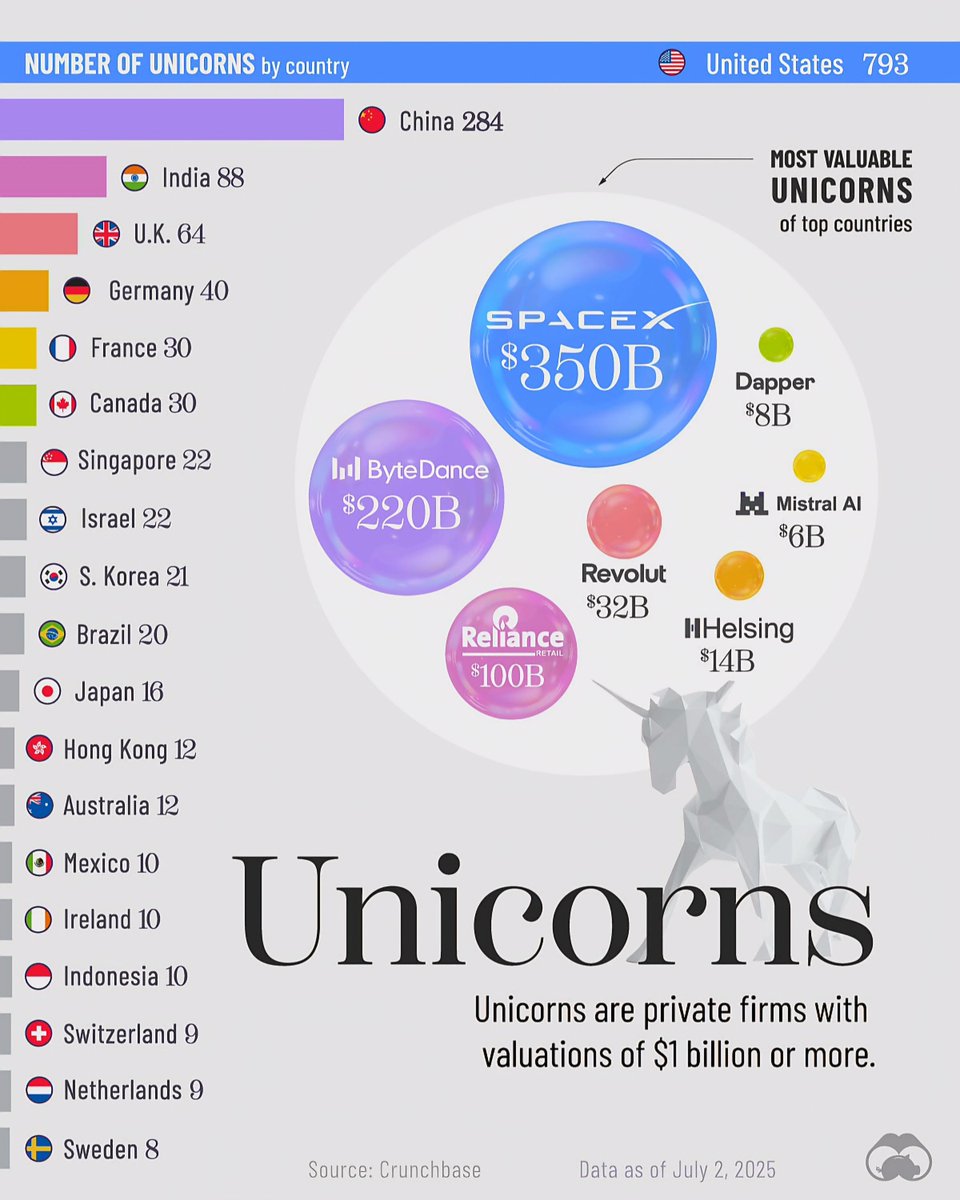
In 2025, the global startup ecosystem continues to thrive, with a remarkable surge in the number of “unicorns” — private companies valued at over $1 billion. As the unicorn phenomenon expands, certain countries stand out, driven by innovative ecosystems, strong investment climates, and government support. Here’s a closer look at the top nations leading the unicorn movement this year:
1. United States: Still Leading the Pack
The U.S. retains its top spot in the world with over 500 unicorns. Silicon Valley remains a powerhouse, with cities like San Francisco, New York, and Boston fostering vibrant tech scenes. The country’s massive venture capital ecosystem, coupled with a culture of innovation, continues to fuel startup growth across sectors such as AI, biotech, fintech, and SaaS.
2. China: A Rising Force in Innovation
China has seen exponential growth, now claiming more than 200 unicorns. The country’s government initiatives to boost technology and digital economy sectors have created a fertile ground for startups. Companies specializing in e-commerce, electric vehicles, and AI are leading the charge, with giants like Alibaba and Tencent supporting the ecosystem.
3. India: The Startup Boom Continues
India’s unicorn count surpasses 150 in 2025, thanks to a large, young, tech-savvy population and increasing foreign investment. Bengaluru, Delhi, and Mumbai are the primary hubs, with startups excelling in fintech, edtech, and healthtech. Government schemes like “Startup India” have played a pivotal role in this expansion.
4. United Kingdom: Maintaining a Strong Presence
Despite geopolitical shifts, the UK maintains a robust unicorn tally, exceeding 80. London remains Europe’s fintech capital, alongside growth in healthtech and AI sectors. Flexible regulations and a diverse talent pool continue to attract both startups and investors.
5. Germany: Europe’s Innovation Hub
Germany boasts over 40 unicorns, primarily in Munich and Berlin. The country’s focus on industrial innovation, cleantech, and automotive tech positions it as Europe’s engineering and tech powerhouse. Supportive policy frameworks and EU funding have helped nurture this ecosystem.
6. South Korea: Advancing in Tech and Innovation
South Korea has witnessed its unicorn numbers grow to around 35, mainly in gaming, e-commerce, and semiconductors. The government’s digital transformation initiatives and tech-driven investments are fueling rapid industry growth.
7. Canada: Startups Building Global Champions
Canada’s startup scene is thriving with approximately 30 unicorns, with Toronto, Vancouver, and Montreal leading. Focused on AI, clean energy, and medtech, Canadian companies benefit from top-tier research institutions and immigration-friendly policies.
8. Singapore: The Asian Financial Hub
Singapore has cemented its reputation as a fintech and innovation hub with over 25 unicorns. Its strategic location, pro-business policies, and strong connections to Southeast Asia make it an attractive base for startups seeking regional expansion.
9. Israel: The Startup Nation Continues to Shine
Israel boasts around 20 unicorns, especially in cybersecurity, medtech, and agritech. The country’s robust defense research and a culture of innovation foster many successful ventures that reach unicorn status.
10. Brazil: Showing Rapid Growth in Latin America
Brazil has added more unicorns, now totaling about 15, primarily in fintech, e-commerce, and agritech. A growing middle class and digital adoption drive demand, while government incentives promote local entrepreneurship.
The Global Unicorn Outlook in 2025
Other notable nations include France, Australia, and the United Arab Emirates, each contributing several unicorns to the international scene. This diversification underscores how innovation is truly a global phenomenon, transcending traditional tech hotspots.
Investors, entrepreneurs, and policymakers worldwide will watch closely as these countries continue to evolve in the unicorn race, pushing the boundaries of what startups can achieve.
Note: The data presented reflects the latest available figures as of 2025, showcasing regional growth trends and the ever-evolving landscape of global innovation.
 ChatGPT
 Perplexity
 Gemini AI
 Grok AI