Select Language:
Top 15 Largest Countries by Land Area (Excluding Lakes and Rivers)
1. Russia – The Largest Country on Earth
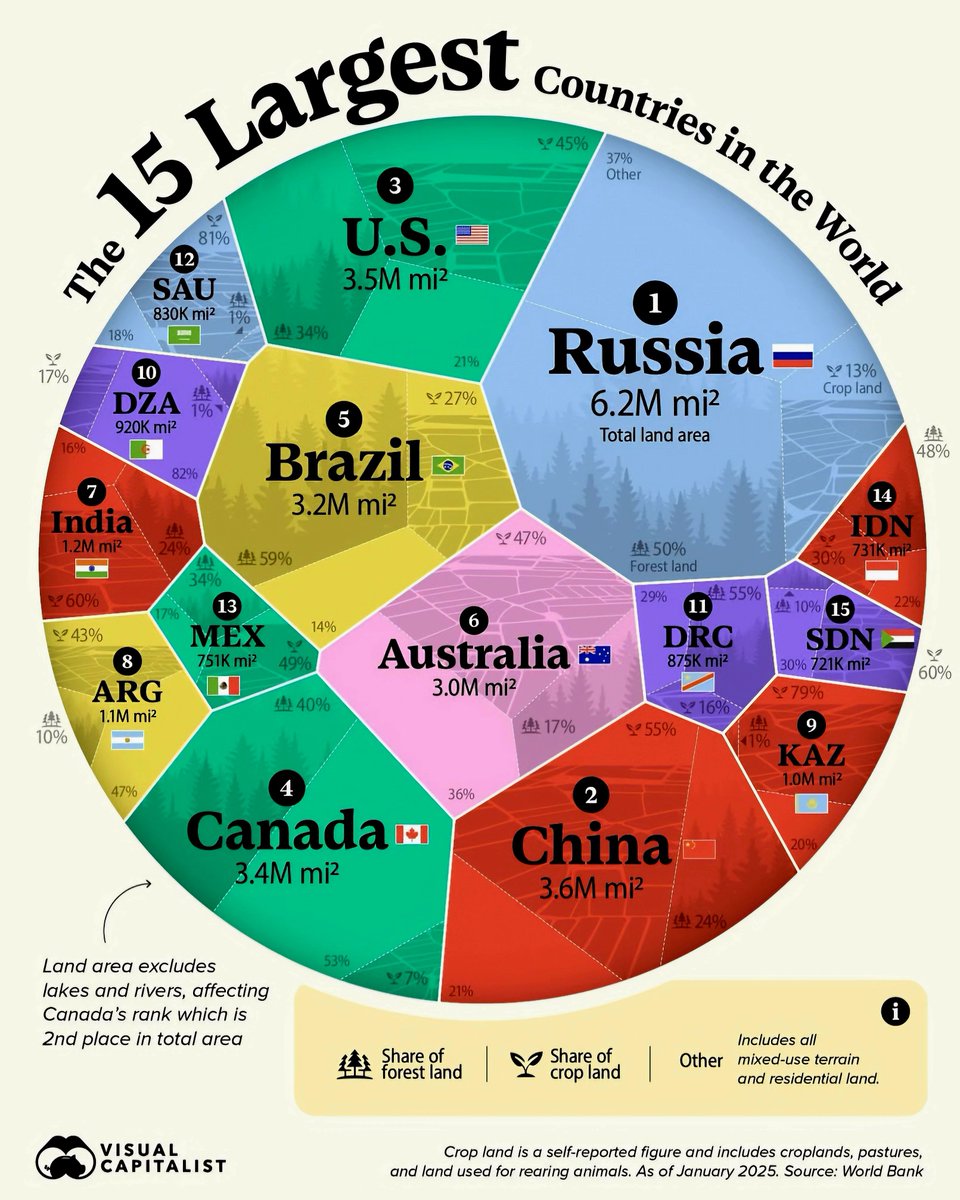
Covering approximately 6.2 million square miles, Russia is the world’s largest country by land area. Spanning Eastern Europe and northern Asia, it encompasses a diverse range of climates and terrains, from tundra and taiga to mountains and plains. Its vast expanse accounts for about 11% of the world’s land surface, making it a significant geographical entity on the global stage. Russia’s enormous size influences its climate, biodiversity, and economic activities, with natural resources like oil, gas, and minerals playing a crucial role in its economy.
2. China – Leading the Asian Continent in Size
China follows as the second-largest country, covering around 3.6 million square miles. This vast nation features diverse landscapes, from the Himalayas and deserts to lush forests and river deltas. China’s incredible size contributes to its status as a major global economic power, with a population exceeding 1.4 billion people. Its extensive land area supports a wide range of agricultural activities, including rice paddies, wheat fields, and cotton farms, enabling it to sustain its large population.
3. United States – The Land of Diversity
Spanning approximately 3.5 million square miles, the United States holds the third spot among the world’s largest nations. Its territory includes a wide array of geographical features such as plains, mountain ranges, forests, and coastlines. The U.S. is notable for its economic diversity, driven by agriculture, industry, and technology sectors. Its size and varied environments have fostered regional cultures and ecosystems, from the deserts of the Southwest to the Great Lakes and Atlantic coast.
4. Canada – The Second Largest in Total Area, Fourth in Land Area
Canada’s total area, including lakes and rivers, is second only to Russia. When excluding water bodies, its land area stretches about 3.4 million square miles, making it the fourth-largest country by land. Known for its expansive boreal forests, tundra, and mountain ranges, Canada boasts rich natural resources and a modest population spread across its vast territory. Its diverse climates range from Arctic conditions in the north to temperate zones in the south.
5. Brazil – The Largest Country in South America
With a land area of roughly 3.2 million square miles, Brazil is South America’s biggest country. Its vast Amazon rainforest and river systems are some of the most significant ecological regions globally. Brazil’s diverse ecosystems support abundant wildlife and are central to the global climate, as the Amazon acts as a critical carbon sink.
6. Australia – The Continent and a Country
Covering about 3 million square miles, Australia is both a country and a continent. Its geography includes deserts like the Outback, tropical rainforests in the northeast, and mountain ranges along the eastern coast. Australia’s unique ecosystems and mineral wealth have made it an important player in global resource markets, especially for ores, coal, and natural gas.
7. India – The Subcontinent with Vast Land
India spans approximately 1.2 million square miles, making it the seventh-largest country. Its diverse landscapes include the Himalayas in the north, the Thar Desert, fertile plains, and coastal regions. India’s large landmass supports extensive agriculture, which employs a significant portion of its population, and is central to its economic development.
8. Argentina – The Land of Tumbleweeds and Pampas
Covering about 1.1 million square miles, Argentina is South America’s eighth-largest country. Its vast pampas plains are famous for cattle ranching and agriculture. The country features diverse environments, from the Andes mountains in the west to subtropical forests in the northeast.
9. Kazakhstan – The Heart of Central Asia
Kazakhstan’s land area measures around 1 million square miles. It is known for extensive steppes, deserts, and mountains. As the ninth-largest country, Kazakhstan plays a vital role in regional energy production and transit, with significant oil, gas, and mineral reserves.
10. Algeria – Largest Country in Africa
Spanning nearly 920,000 square miles, Algeria is Africa’s largest country by land area. Its territory comprises parts of the Sahara Desert, the Atlas Mountains, and the Mediterranean coastline. Algeria’s economy is heavily reliant on hydrocarbons, with oil and natural gas exports being key economic drivers.
11. Democratic Republic of the Congo (DR Congo) – Rich in Resources
The DR Congo covers approximately 875,000 square miles. Its vast rainforests and mineral-rich soils encompass one of the world’s most biodiverse regions. Despite its size, DRC faces economic and political challenges but remains a critical resource hub for Africa.
12. Saudi Arabia – The Desert Kingdom
With about 830,000 square miles, Saudi Arabia is the largest country in the Middle East. Its vast expanses are mainly desert, with rich oil reserves that sustain its economy. The country’s strategic location and natural resources make it a global energy leader.
13. Mexico – The Land of Contrasts
Mexican territory encompasses roughly 751,000 square miles. Its landscape includes deserts, mountains, and tropical coastlines. Mexico’s rich cultural history and diverse environments support agriculture, manufacturing, and tourism industries.
14. Indonesia – The Archipelagic Nation
Stretching over approximately 731,000 square miles, Indonesia is made up of thousands of islands. Its expansive territorial waters and landmass include tropical forests, volcanic peaks, and numerous biodiversity hotspots, making it a key player in Southeast Asia.
15. Sudan – The Largest Country in Northeast Africa
Covering about 721,000 square miles, Sudan features deserts, savannas, and the Nile River. Its size makes it a significant geographic entity within Africa, with ongoing development projects and regional importance.
Note:
While Canada ranks second in total area (including lakes and rivers), it is fourth when water bodies are excluded. The data on cropland — including croplands, pastures, and land used for raising animals — is self-reported and as of January 2025.
Source: World Bank
 ChatGPT
 Perplexity
 Gemini AI
 Grok AI