Select Language:
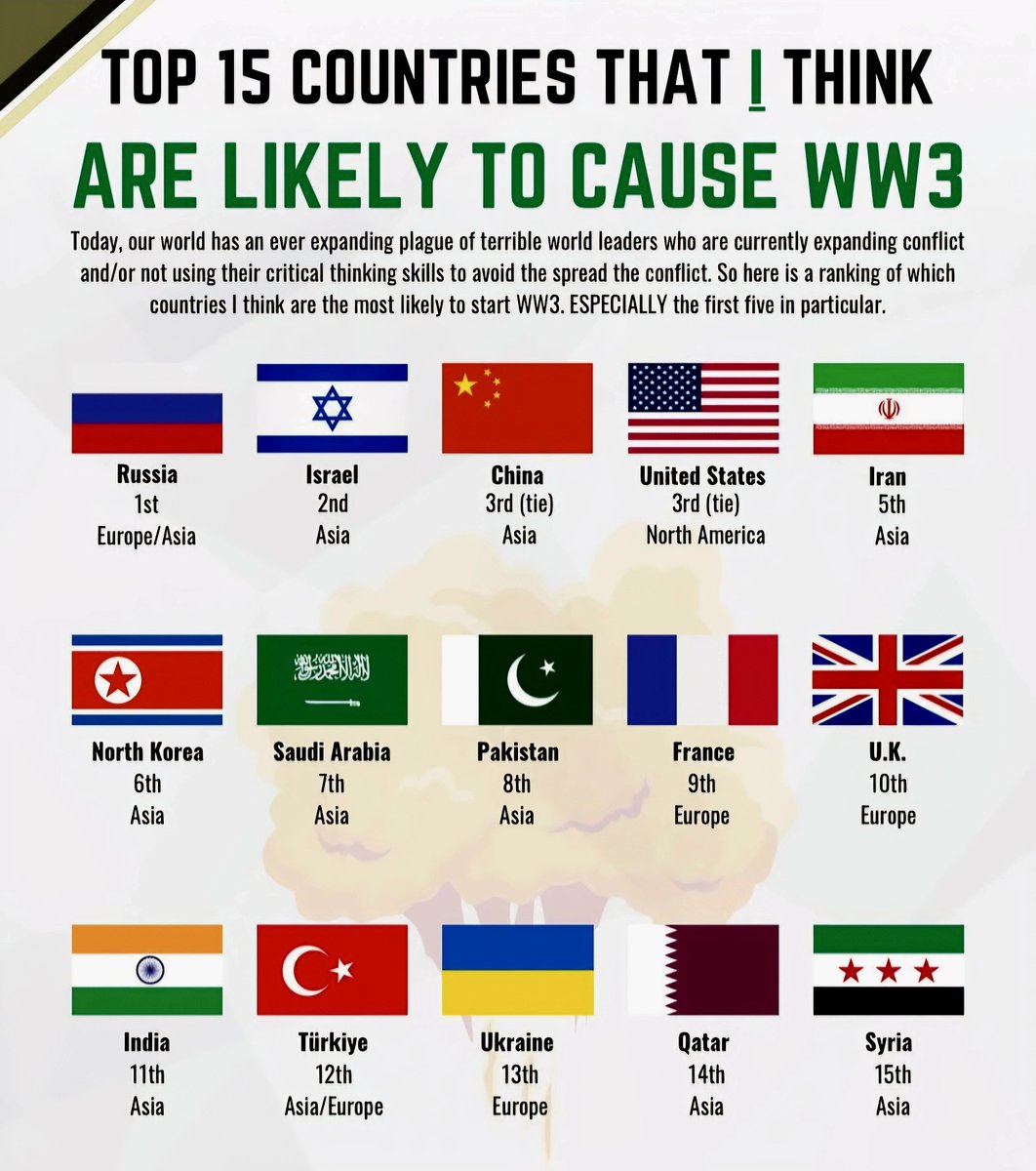
15 Countries Most Likely to Spark a Global Conflict in 2025
1. Russia
Russia remains at the forefront of countries with potential to ignite a worldwide conflict. Its ongoing military activities in Ukraine, increased nuclear posturing, and strained relations with Western nations keep it in the spotlight. The Kremlin’s ambitions to reassert influence over former Soviet states and its readiness to escalate conflicts make Russia a primary concern for global stability.
2. Israel
With persistent tensions in the Middle East, particularly with Palestine and neighboring countries, Israel’s military actions and diplomatic responses are closely monitored. Any escalation or conflict that spills over into neighboring regions could quickly draw in larger powers, risking regional escalation into a broader conflict. Its strategic alliances, especially with the US, amplify the potential for wider repercussions.
3. China & United States
This pair is often seen as the most significant global flashpoints. From territorial disputes in the South China Sea to trade tensions and cybersecurity conflicts, the rivalry between China and the United States has the potential to escalate into broader military confrontations. As both nations expand their military capabilities, the risk of miscalculation increases, which could trigger a larger global conflict.
4. Iran
Iran remains a volatile actor in the Middle East, with ongoing proxy conflicts in Syria, Iraq, and Yemen. Its nuclear ambitions and confrontations with the US and its allies threaten regional stability. Any misstep or escalation involving Iran could ignite broader Middle Eastern or even global conflicts.
5. North Korea
North Korea’s continued development of missile technology and its unpredictable leadership keep it high on the list of potential conflict instigators. Its provocations, including missile tests and military exercises near border areas, could spark an escalation with neighboring South Korea or draw in other regional powers, escalating to a larger war.
6. Saudi Arabia
As a key player in Middle Eastern geopolitics, Saudi Arabia’s involvement in regional conflicts, especially with Iran and Yemen, has significant implications for global stability. Its oil wealth and strategic alliances, notably with the United States and other Gulf nations, heighten the risk of broader regional disruptions.
7. Pakistan
Pakistan’s longstanding conflict with India, especially over Kashmir, continues to be a significant flashpoint. Tensions frequently flare, and any major skirmish or miscalculation could escalate into a full-fledged war with regional and global consequences.
8. France
France’s active role in international military interventions and its involvement in surveys of instability— notably in Africa and the Middle East—position it as a possible participant in larger conflicts. Its alliance commitments and nuclear capabilities further complicate its geopolitical role.
9. United Kingdom
Similar to France, the UK’s military alliances, historical ties, and strategic positioning make it a country that could be drawn into a global conflict. Its involvement in international peacekeeping, military operations, and intelligence activities underscores its importance on the world stage.
10. India
India’s growing military power and ongoing border disputes with China and Pakistan make it a critical player. Any escalation in these regional conflicts could have ripple effects making India a potential instigator of wider warfare.
11. Turkey
Turkey’s strategic location at the crossroads of Europe and the Middle East, along with its complex relations with Greece, Syria, and Kurdish groups, adds to regional instability. Its military interventions and political tensions could make it a pivotal player in the escalation of conflicts.
12. Ukraine
The ongoing conflict with Russia over Crimea and eastern Ukraine continues to be a major point of tension. If the situation escalates or spills over into neighboring countries, it could prompt a larger, more devastating global conflict.
13. Qatar
While Qatar has maintained stability, its strategic alliances with Western powers and regional tensions with neighbors like Saudi Arabia could be a flashpoint. Any sudden shifts in alliances or regional conflicts could impact global security.
14. Syria
Syria remains a tinderbox of regional rivalries, with multiple international actors involved. The ongoing civil war, involvement of Russia and the US, and the presence of extremist groups keep the likelihood of broader conflict high.
15. Global Implications and Geopolitical Tensions
The above nations are interconnected through alliances, conflicts, and regional disputes. As the geopolitical landscape continues to evolve, the chance of one or more of these countries igniting a worldwide conflict increases. Unlike previous decades, modern military technology and nuclear capabilities make the stakes higher, and miscalculations could lead to catastrophic consequences.
Note: This ranking is based solely on current international conflicts, military actions, alliances, and geopolitical trends—not personal opinions or biases. The global environment as of 2025 remains highly fragile, and any incident involving these nations could potentially escalate into a world war scenario.
Stay informed, stay safe. The stakes have never been higher.
 ChatGPT
 Perplexity
 Gemini AI
 Grok AI