Select Language:
The World’s Top 15 Countries by Carbon Emissions: A Look at the Numbers
As global concerns about climate change intensify, the discussion often centers around carbon emissions—a significant contributor to greenhouse gases. Understanding which countries are the biggest polluters can shed light on where efforts to reduce emissions need to be focused. Here, we explore the latest data on carbon emissions, highlighting the top 15 countries and the impact they’re having on our planet.
1. China – 15.9 GtCO₂e
China stands as the world’s largest emitter, producing a staggering 15.9 gigatonnes of carbon dioxide equivalent (GtCO₂e) annually. Rapid industrialization and a heavy reliance on coal as an energy source have driven this figure higher. This calls into question the balance between economic growth and environmental sustainability.
2. United States – 6.0 GtCO₂e
Following closely behind is the United States, which emits approximately 6.0 GtCO₂e. Despite significant advancements in renewable energy technologies, the U.S. continues to grapple with high emissions levels, largely due to its extensive transportation sector and fossil fuel consumption.
3. India – 4.1 GtCO₂e
India ranks third with 4.1 GtCO₂e and is rapidly industrializing. The country faces the challenge of meeting energy demands while transitioning toward cleaner energy solutions, making it a significant player in the global efforts to mitigate climate change.
4. European Union – 3.2 GtCO₂e
The European Union collectively contributes about 3.2 GtCO₂e. While individual countries within the EU are taking strides to reduce their carbon footprints, the union as a whole still grapples with significant emissions, especially from transportation and agriculture.
5. Russia – 2.7 GtCO₂e
With emissions at 2.7 GtCO₂e, Russia remains one of the largest carbon emitters in the world. The country’s heavy reliance on oil and gas production has kept its emissions figures high, emphasizing a need for diversification into sustainable energy sources.
6. Brazil – 1.3 GtCO₂e
Brazil emits around 1.3 GtCO₂e, significantly impacted by deforestation in the Amazon rainforest. Environmental policies and conservation efforts will play crucial roles in curbing future emissions from this biodiverse region.
7. Indonesia – 1.2 GtCO₂e
At 1.2 GtCO₂e, Indonesia ranks seventh, with deforestation and land-use changes being pivotal contributors to its emissions. Balancing economic interests with environmental sustainability is key for the future.
8. Japan – 1.0 GtCO₂e
Japan’s carbon emissions sit at approximately 1.0 GtCO₂e. Despite being a leader in technology and renewable energy, the nation still faces challenges in reducing its reliance on fossil fuels, especially post-Fukushima.
9. Iran – 1.0 GtCO₂e
Iran also emits about 1.0 GtCO₂e, primarily due to its oil and gas sectors. Given its significant fossil fuel reserves, the country faces unique challenges in shifting towards a greener economy.
10. Saudi Arabia – 0.8 GtCO₂e
Saudi Arabia, known for its oil wealth, contributes around 0.8 GtCO₂e. The nation’s economy is heavily dependent on oil, making transitions to more sustainable energy sources a complicated issue.
11. Canada – 0.7 GtCO₂e
Canada reports emissions of roughly 0.7 GtCO₂e. Its vast natural resources, including tar sands, complicate its efforts to reduce greenhouse gases, although there is growing momentum towards renewable energy initiatives.
12. Mexico – 0.7 GtCO₂e
Mexico also emits about 0.7 GtCO₂e. The country is working on various strategies to reduce emissions, including investments in renewable energy projects, although challenges remain.
13. South Korea – 0.7 GtCO₂e
With emissions at 0.7 GtCO₂e, South Korea is focused on transitioning towards renewable energy but still relies heavily on coal for power.
14. Türkiye – 0.6 GtCO₂e
Turkey’s emissions reach 0.6 GtCO₂e, with industrial activities and energy generation being major contributors. Efforts to improve energy efficiency are in progress.
15. Australia – 0.6 GtCO₂e
Rounding out the list is Australia, also at 0.6 GtCO₂e. The country is noted for its fossil fuel exports, and while there are policies in place to promote renewable energy, significant challenges remain.
Understanding GtCO₂e
For context, “GtCO₂e” stands for gigatonnes of carbon dioxide equivalent, a metric used to compare emissions from different greenhouse gases. To clarify, one gigatonne equals one billion metric tons.
A Call for Action
As these numbers illustrate, addressing climate change will require concerted efforts from both the highest and lowest polluting countries. The most responsible path forward involves collaboration and innovation in energy technologies—essential for creating a more sustainable future. The time for robust action is now, and global leaders must step up to the challenge.
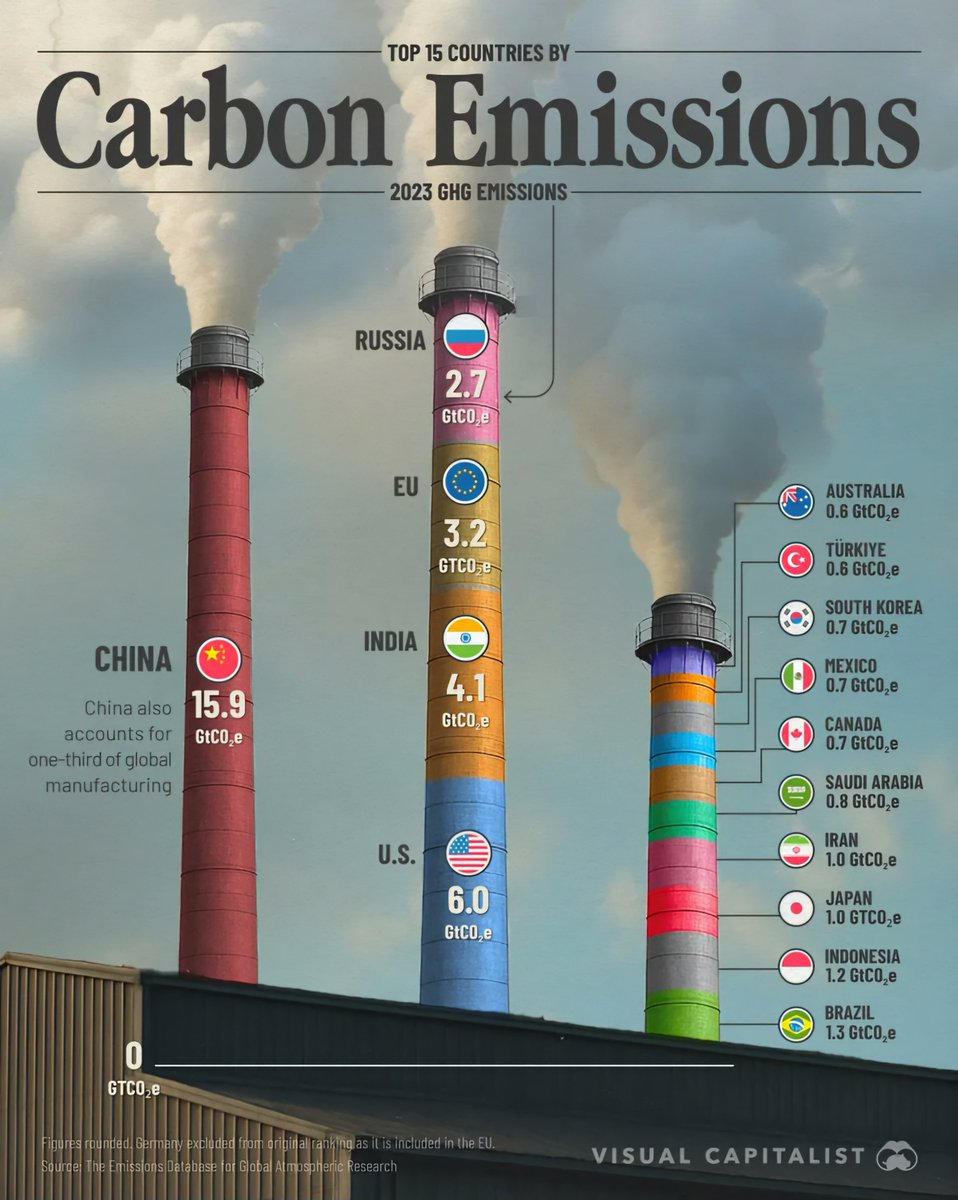
By understanding and addressing the factors that contribute to carbon emissions, we can work towards a healthier planet for future generations.
 ChatGPT
 Perplexity
 Gemini AI
 Grok AI