Select Language:
The Leading Countries in Gold Production and Reserves in 2025
1. China Maintains Its Dominance in Gold Output
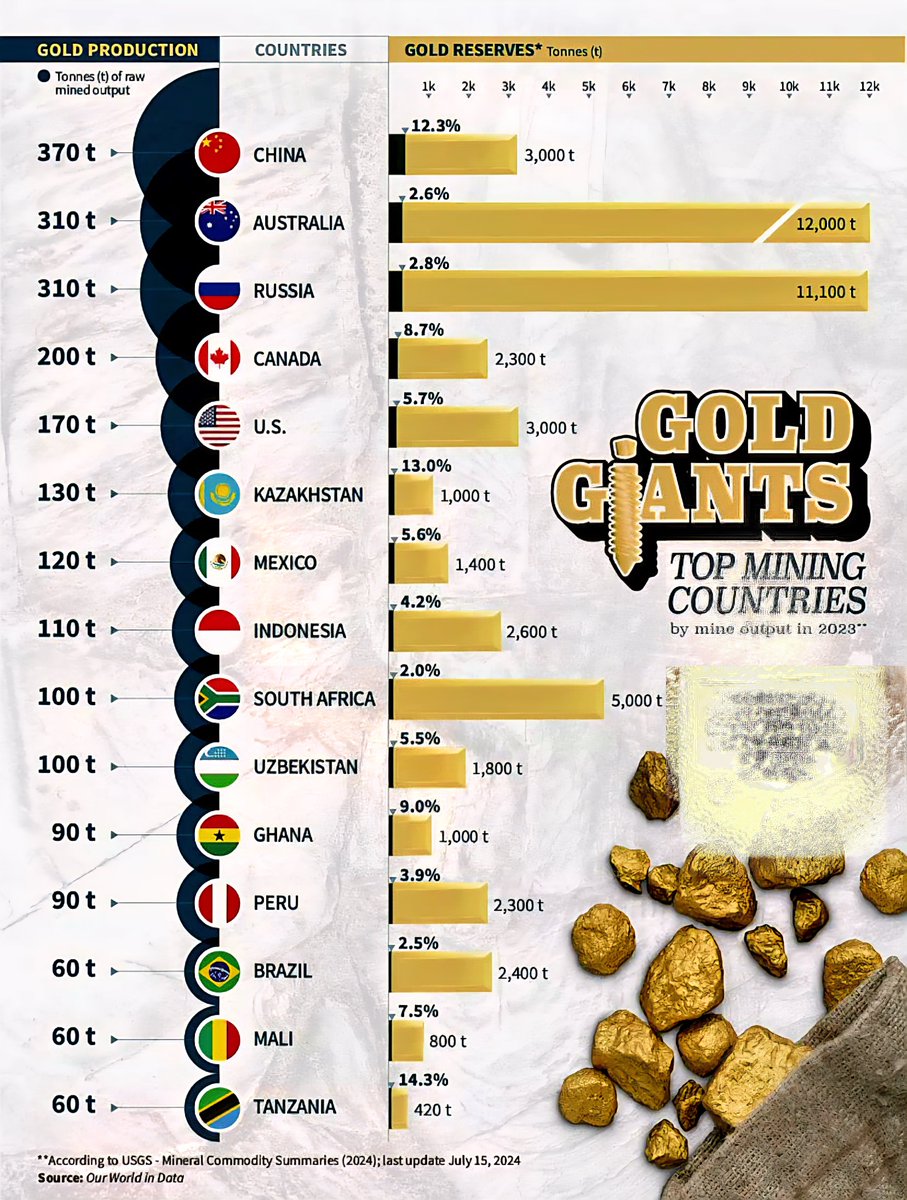
China continues to hold its position as the world’s top gold producer in 2025. With extensive mining operations across provinces like Shandong, Henan, and Jiangxi, China’s gold mining sector contributes approximately 400 metric tons annually. The country’s abundance of mineral resources combined with advanced mining technology ensures consistent high output. Additionally, China’s vast reserves and increasing domestic consumption make it a significant player on the global stage.
2. Australia’s Resilient Gold Sector
Australia remains a powerhouse in gold production, ranking second globally. Its prolific goldfields, notably in Western Australia and New South Wales, produce around 330 metric tons of gold per year. The country has heavily invested in sustainable mining techniques, reducing environmental impact while boosting output. Australia’s substantial reserves, which surpass 10,000 metric tons, underpin its position as a leading global supplier.
3. Russia’s Golden Wealth
Russia has solidified its third-place status, with annual gold production close to 300 metric tons. The Siberian region and the Ural Mountains are major sources of this metal. Russia’s strategic focus on expanding its mining infrastructure and exploration activities has helped it increase both reserves and output. Current estimates suggest Russia holds reserves exceeding 5,800 metric tons, making it a significant player in the global gold market.
4. United States: A Major Gold Producer and Reserver
The U.S. consistently ranks among the top gold-producing nations, contributing approximately 200 metric tons annually. Key mining regions include Nevada, California, and Alaska. With an estimated reserve of over 3,000 metric tons, the U.S. continues to be a dominant force in global gold reserves. Ongoing exploration and technological innovations work to sustain U.S. production levels.
5. Canada’s Robust Gold Industry
Canada maintains its status as a leading gold producer, with annual outputs close to 170 metric tons. The mines situated in Ontario, Quebec, and British Columbia make Canada a significant source of the yellow metal. It boasts reserves of about 2,500 metric tons, with many projects prioritizing efficiency and environmentally friendly practices.
6. South Africa’s Reserves and Production Challenges
Once the world’s largest producer, South Africa now produces approximately 100 metric tons of gold annually. The decline in output stems from aging mines and increasing operational costs. However, the country’s gold reserves remain substantial—estimated at over 6,000 metric tons—making it a key region for potential future mining activity once conditions improve.
7. Peru and Its Gold Endowment
Peru’s gold production aligns around 130 metric tons each year, mostly from the southern and northern mining regions. The country holds reserves estimated at over 2,000 metric tons. Investments in exploration and mining technology are expected to sustain and possibly increase future output.
8. Mexico’s Growing Gold Sector
Mexico ranks as a strong contender, with annual production reaching approximately 120 metric tons. Its prolific mines in Sonora, Guerrero, and Zacatecas contribute to a reserve base of roughly 1,800 metric tons. The government continues to promote mining revitalization, fostering growth in this sector.
9. Ghana and West Africa’s Gold Supply
Ghana remains Africa’s leading producer, producing around 100 metric tons annually. The country boasts reserves exceeding 1,000 metric tons. New discoveries and increased exploration activities continue to bolster Ghana’s position in Africa’s gold market.
10. Indonesia’s Expanding Gold Mining Industry
Indonesia has scaled up its gold production, reaching about 80 metric tons per year. The Grasberg mine, one of the world’s largest, plays a significant role. Indonesia’s reserves stand at approximately 2,600 metric tons, with government initiatives aimed at boosting sustainable and responsible mining.
11. Uzbekistan’s Growing Gold Reserves
Uzbekistan is increasingly recognized for its gold reserves and production. With annual output around 70 metric tons, the country holds reserves estimated at over 1,300 metric tons. Major mining projects and government support are driving growth.
12. Iran’s Gold Reserves and Production Dynamics
Iran produces approximately 60 metric tons annually, with considerable reserves of around 2,000 metric tons. Political and economic factors influence development, but Iran continues exploring avenues to expand its gold sector.
13. The Democratic Republic of Congo
DR Congo’s gold output is roughly 50 metric tons a year. The country’s vast mineral wealth, including gold, remains underdeveloped due to infrastructural challenges. Nonetheless, recent investments aim to unlock this potential further.
14. Argentina’s Gold Potential
Argentina produces around 40 metric tons of gold per year, primarily from Andean regions. Reserves are estimated at about 1,000 metric tons. The country’s focus on sustainable mining practices could bolster its output in upcoming years.
15. Bolivia’s Emerging Gold Sector
Bolivia is witnessing increased interest in its gold deposits, with current annual mine production around 35 metric tons. Its reserves are believed to exceed 900 metric tons. The government’s efforts to attract investment are expected to facilitate growth in this sector.
In Summary: The global landscape of gold production remains diverse, with established giants like China, Australia, and Russia maintaining leading roles in output and reserves. Countries across Africa, the Americas, and Asia are rapidly developing their mining sectors, promising a dynamic future for gold supply worldwide. Continuous innovations, exploration, and sustainable practices will likely shape the global gold market in 2025 and beyond.
 ChatGPT
 Perplexity
 Gemini AI
 Grok AI