Select Language:
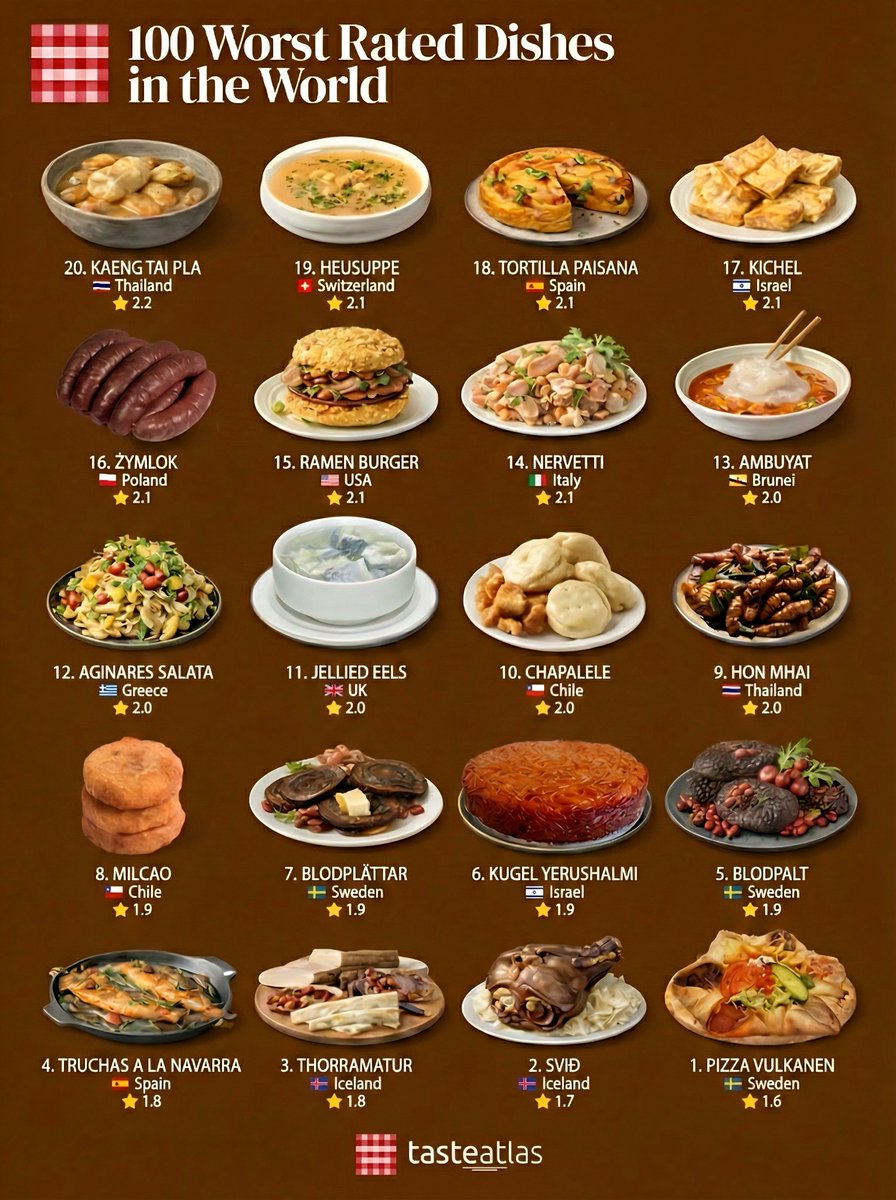
10 of the Most Disliked Dishes in the World in 2025
1. Pizza Vulkanen – Sweden (1.6 Stars)
Known for its disastrously unappetizing flavor profile, Pizza Vulkanen in Sweden has garnered the dubious honor of being the world’s least favored dish. Despite the universal love for pizza, this particular variation lands at the bottom of the ratings, leaving many diners disappointed and diners wary.
2. Svið – Iceland (1.7 Stars)
A traditional Icelandic dish, Svið is a sheep’s head served boiled. Its presentation and strong flavor have not gained favor among international palates, with many finding its taste off-putting, thus earning it a notorious reputation globally.
3. Þorramatur – Iceland (1.8 Stars)
Another Icelandic delicacy, Þorramatur is a traditional platter that includes various cured and fermented foods. Its intensely pungent aroma and acquired taste make it one of the most disliked dishes on the list.
4. Truchas a la Navarra – Spain (1.8 Stars)
This dish features smoked trout served with a heavy-handed flavor combination, leaving many consumers unimpressed. Its greasy texture and overpowering seasoning have led to widespread dislike.
5. Blodpalt – Sweden (1.9 Stars)
Made with blood and potatoes, Blodpalt is a Danish and Swedish dish that often elicits grimaces due to its rich blood content and dense texture.
6. Kugel Yerushalmi – Israel (1.9 Stars)
A dish from Jerusalem, Kugel Yerushalmi is a sweet and savory noodle pudding. Its unusual combination of flavors and textures hasn’t resonated well with many diners.
7. Blodplättar – Sweden (1.9 Stars)
Similar to Blodpalt, Blood Pancakes or Blodplättar have not won praise for their taste, largely because of the use of blood in a pancake form, which many find unappetizing.
8. Milcao – Chile (1.9 Stars)
A traditional potato cake from Chile, Milcao tends to be very dense and bland, leading to its ranking among the least-liked traditional foods globally.
9. Hon Mhai – Thailand (2.0 Stars)
This fermented fish dish, popular locally, has difficulty attracting international fans due to its potent aroma and strong flavor profile, receiving criticism for its pungency.
10. Chapalele – Chile (2.0 Stars)
A type of Chilean potato dumpling, Chapalele’s heavy texture and bland flavor make it a hit-or-miss dish, with many rating it poorly.
Other Notable Mentions
Beyond these top ten, the list continues with dishes like British Jellied Eels, Greek Anginares Salata, and Ambuyat from Brunei, each with under 2.5 stars. Many of these dishes are traditional, representing cultural heritage, yet tend to polarize or outright repel diners unfamiliar with their flavors and preparation.
The Cultural Context Behind Disliked Dishes
While many of these dishes are cultural staples in their respective countries, they often face international disdain due to unfamiliar ingredients, strong aromas, or textures that clash with global tastes. For instance, dishes like Lutefisk in Norway or Gachas in Spain are prized locally but are often considered unpalatable outside their native regions.
The Challenge for Food Innovators
As culinary experiences become more globally connected, chefs and food enthusiasts grapple with introducing these traditional dishes to broader audiences. The challenge lies in balancing authentic flavors with modern palates, which may lead to adaptations that are more palatable worldwide—even if it risks losing some cultural authenticity.
The Role of Personal Taste and Cultural Heritage
Taste is highly subjective. What vexes one person might be a delicacy to another. Many of these dishes hold meaning in their cultures and are revered traditions passed down through generations, even if they rank poorly in modern taste tests.
Bottom Line
While these dishes may rank as the least favorite globally today, they represent cherished parts of their cultural identities. Whether they endure in traditional forms or evolve over time, they continue to contribute to the rich diversity of world cuisine.
Note: Ratings are based on Tasteatlas scores from 2025.
 ChatGPT
 Perplexity
 Gemini AI
 Grok AI