Select Language:
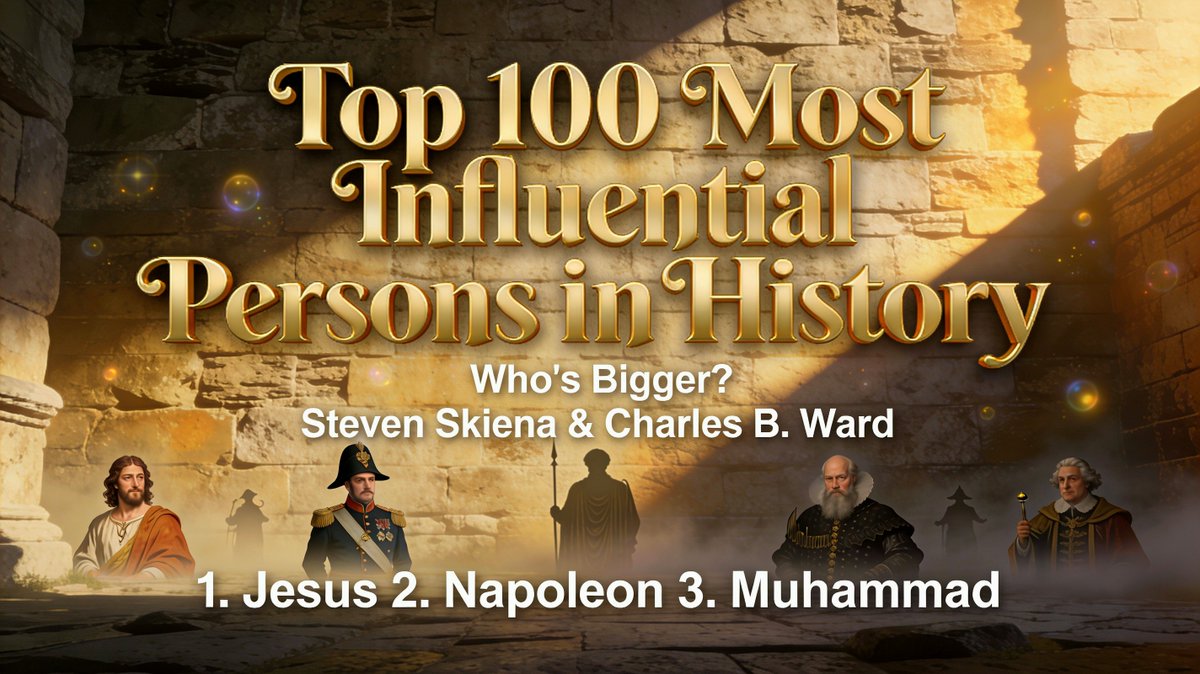
2025’s List of the Most Influential People in History: Key Figures Who Shaped Our World
1. Jesus Christ: The Central Figure of Christianity
As the foundation of one of the world’s major religions, Jesus’s teachings and life have profoundly impacted history, culture, and morality for over two millennia. His influence extends beyond religion, inspiring art, philosophy, and social movements worldwide.
2. Napoleon Bonaparte: The Master Strategist of France
Napoleon’s military genius and reforms shaped France and Europe significantly. His leadership during the Napoleonic Wars altered European borders and inspired modern legal systems, including the Napoleonic Code still used today.
3. Muhammad: The Prophet Who United and Transformed Communities
As the founder of Islam, Muhammad’s teachings fostered a rich spiritual and cultural civilization. His legacy remains central to billions of Muslims and continues to influence global history.
4. William Shakespeare: The Bard of English Literature
Shakespeare’s plays and poetry revolutionized language, storytelling, and theater. His works continue to resonate globally, shaping Western literature and culture profoundly.
5. Abraham Lincoln: The Emancipator of the United States
Lincoln’s leadership during the Civil War and his commitment to ending slavery have made him an enduring symbol of freedom and equality, defining American history and moral progress.
6. George Washington: The United States’ First President
As a founding leader, Washington established foundational principles of American democracy. His leadership during the Revolutionary War and presidency set standards for future generations.
7. Adolf Hitler: The Catalyst of World War II and the Holocaust
While notorious for atrocities, Hitler’s actions drastically changed world history. His rise and the subsequent war prompted global efforts toward human rights and international cooperation.
8. Aristotle: The Philosopher Who Laid Foundations for Western Thought
Aristotle’s contributions to philosophy, science, and politics continue to influence intellectual thought and scientific methodology today.
9. Alexander the Great: The Conqueror Who Spread Greek Culture
His empire expansion united diverse cultures and laid the groundwork for the Hellenistic civilization, shaping Western and Middle Eastern history.
10. Thomas Jefferson: Architect of American Independence
As the principal author of the Declaration of Independence, Jefferson’s ideas about liberty and democracy remain foundational to American identity and values.
(The list continues with figures spanning science, politics, arts, and religion—each leaving a lasting mark on history, from Leonardo da Vinci and Isaac Newton to modern leaders and thinkers.)
Additional Highlights of Influential Figures Include:
- Albert Einstein: Revolutionized physics with the theory of relativity, paving the way for modern technological advancements.
- Genghis Khan: Created one of the largest empires in history, affecting global trade and cultural exchange.
- Martin Luther: Sparked the Protestant Reformation, reshaping Christianity and European society.
- Marie Curie: Pioneered radioactivity research, laying groundwork for modern medicine.
- Joan of Arc: Symbol of courage and faith during France’s Hundred Years’ War.
- Vladimir Lenin: Led the Bolshevik Revolution, influencing 20th-century geopolitics profoundly.
- Bill Gates: Co-founder of Microsoft, transforming the tech landscape and global communication.
(Image source: Twitter)
The Scope of Influence: A Broad Spectrum of Impact
The individuals listed have shaped political systems, revolutionary ideas, scientific progress, artistic expression, and religious doctrines. Their legacies continue to influence contemporary society—be it through laws, philosophies, arts, or global policies.
Note: The rankings are based on historical impact, acknowledgment across cultures, and enduring influence up to the year 2025. This list recognizes that influence varies across regions and disciplines, but each figure listed has left an indelible mark on our collective history.
Source: Based on research by Steven Skiena and Charles B. Ward, from “Who’s Bigger? Where Historical Figures Really Rank,” published by Cambridge University Press, 2013.
Disclaimer: The rankings reflect scholarly analysis and cultural significance as of 2025. Views expressed are those of the authors and do not necessarily represent universal consensus.
 ChatGPT
 Perplexity
 Gemini AI
 Grok AI