Select Language:
A Closer Look at the World’s Poorest Countries by GDP Per Capita in 2025
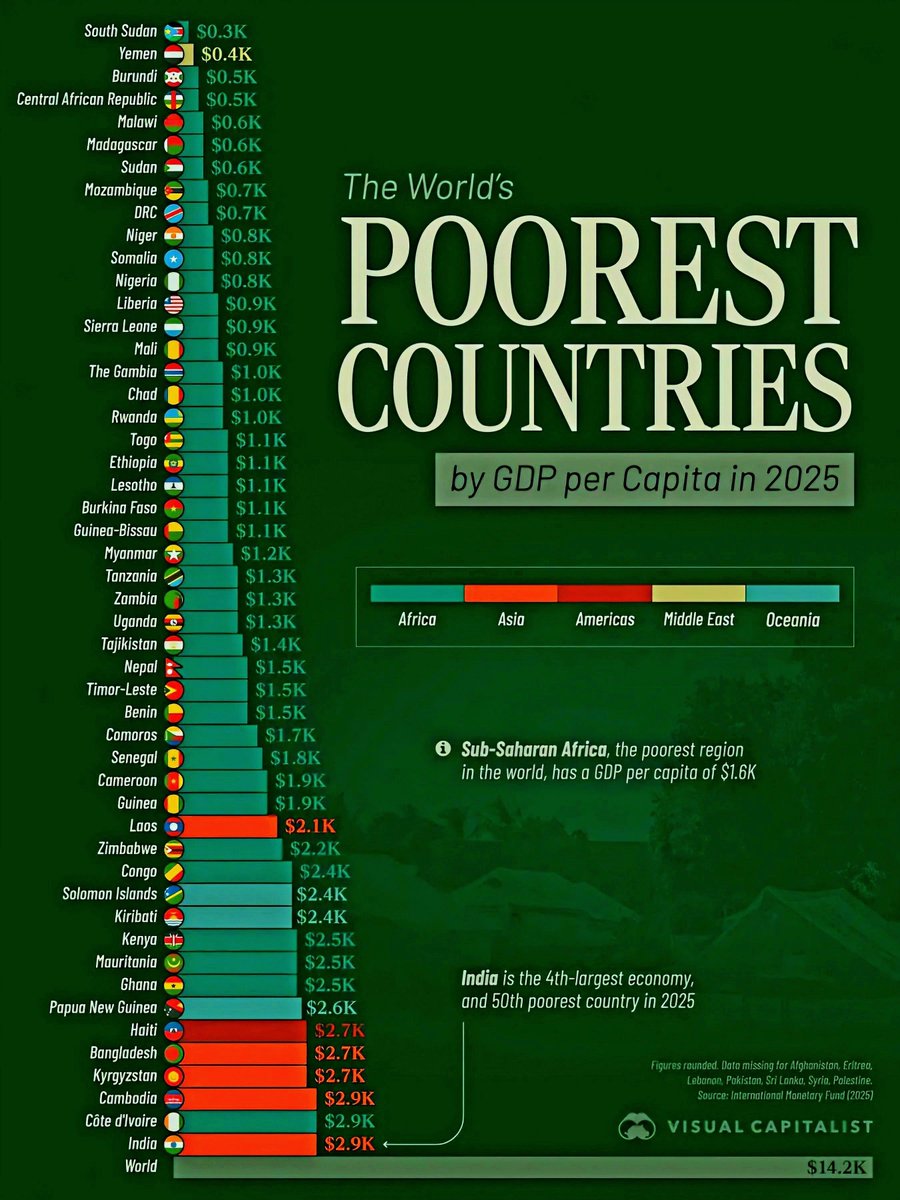
In 2025, global economic disparities continue to be stark, leaving some nations grappling with extreme poverty. Despite numerous international development efforts, many countries still face significant hurdles in elevating their populations out of poverty. Here are the key countries with the lowest GDP per capita in 2025, shedding light on their challenges and the ongoing global efforts to support their development.
1. Burundi: Battling Deep-rooted Poverty and Fragile Institutions
Burundi remains one of the poorest nations in the world, with a GDP per capita that barely exceeds $300. The country’s economy heavily depends on subsistence agriculture, which is vulnerable to climate change and pests. Ongoing political instability and weak infrastructure have further hindered economic growth. Despite international aid, Burundi’s path to economic stability remains uncertain, as the country struggles with health crises, education deficits, and food insecurity.
2. South Sudan: Post-Conflict Economy in Turmoil
South Sudan’s economy remains fragile five years after the end of its civil war. GDP per capita hovers around $350, a reflection of a society still trying to recover from conflict and displacement. Oil revenues, which once fueled economic growth, have plummeted due to decreased production and global oil prices. The country faces immense challenges in building resilient institutions, ensuring food security, and providing basic services amid ongoing conflicts and political instability.
3. Malawi: Poverty Amid Agricultural Dependence
Malawi’s GDP per capita in 2025 is approximately $400. The country relies heavily on agriculture, which employs the majority of the population but is highly susceptible to climate fluctuations. Malawi’s economy is hindered by limited diversification, weak infrastructure, and recurrent droughts that threaten food security. Although international aid has played a role in supporting health and education initiatives, significant gaps in economic diversification persist.
4. Niger: Facing Challenges of Desertification and Development
With a GDP per capita near $420, Niger continues to face vast developmental hurdles. Its economy is primarily based on agriculture and livestock, sectors vulnerable to desertification and climate change. The country confronts high rates of malnutrition, limited access to healthcare, and insufficient infrastructure. Continued instability in neighboring regions and internal security issues further impede economic progress, making sustainable development an uphill battle.
5. Central African Republic: Struggling Amidst Conflict and Weak Governance
The Central African Republic’s GDP per capita remains low at roughly $430. Prolonged conflict, political instability, and weak governance have devastated the nation’s economic prospects. The country’s rich natural resources, such as timber and minerals, remain underexploited due to insecurity. Persistent violence hampers investment and development, leaving a large portion of the population in poverty and lacking access to essential services.
6. Madagascar: Environmental Fragility and Economic Challenges
Madagascar’s GDP per capita is about $440 in 2025. The island’s economy is largely driven by agriculture, mining, and forestry, all of which are impacted by environmental degradation. Deforestation, cyclones, and locust swarms lead to poor harvests and food insecurity. Despite efforts to boost tourism and natural resource management, Madagascar continues to grapple with poverty, exacerbated by inadequate infrastructure and health services.
7. Democratic Republic of the Congo: Rich in Resources but Poor in Wealth
Despite its vast natural resources, the Democratic Republic of the Congo (DRC) has a GDP per capita of roughly $460. Ongoing conflict, political instability, and corruption limit economic development. The DRC’s potential for growth remains unrealized due to underdeveloped infrastructure, health crises like Ebola outbreaks, and limited access to education. The nation’s resource wealth has yet to translate into widespread prosperity for its citizens.
8. Chad: Landlocked Struggles and Oil Dependence
Chad’s GDP per capita in 2025 is estimated at $470. The landlocked nation depends heavily on oil revenue, which fluctuates with global prices. Political instability, internal conflicts, and inadequate infrastructure contribute to persistent poverty. The country faces significant challenges in diversifying its economy and improving healthcare, education, and transportation networks.
9. Sierra Leone: Post-Ebola Recovery and Economic Vulnerability
With a GDP per capita around $480, Sierra Leone continues to recover from the devastating Ebola outbreak years ago. The nation’s economy is dominated by mining, agriculture, and services. Despite international aid and reforms, high unemployment rates, poor infrastructure, and health issues continue to keep many citizens in poverty. Efforts are underway to diversify the economy and improve social services, but progress remains slow.
10. Mozambique: Natural Disasters and Economic Struggles
Mozambique’s GDP per capita stands at about $490. The country faces frequent natural disasters like cyclones, which hinder economic progress. Its economy relies heavily on agriculture, coal mining, and natural gas. Political stability and infrastructure development are critical to boosting growth, yet many Mozambicans still live below the poverty line, struggling for access to basic services.
As these nations illustrate, economic hardship remains a persistent barrier to development worldwide. While international efforts continue to focus on aid, infrastructure, and sustainable development, addressing the foundational issues—such as conflict, climate change, and governance—remains crucial for improving livelihoods in 2025 and beyond. Governments, NGOs, and the global community must collaborate to craft tailored solutions that recognize each country’s unique challenges and potential.
 ChatGPT
 Perplexity
 Gemini AI
 Grok AI