Select Language:
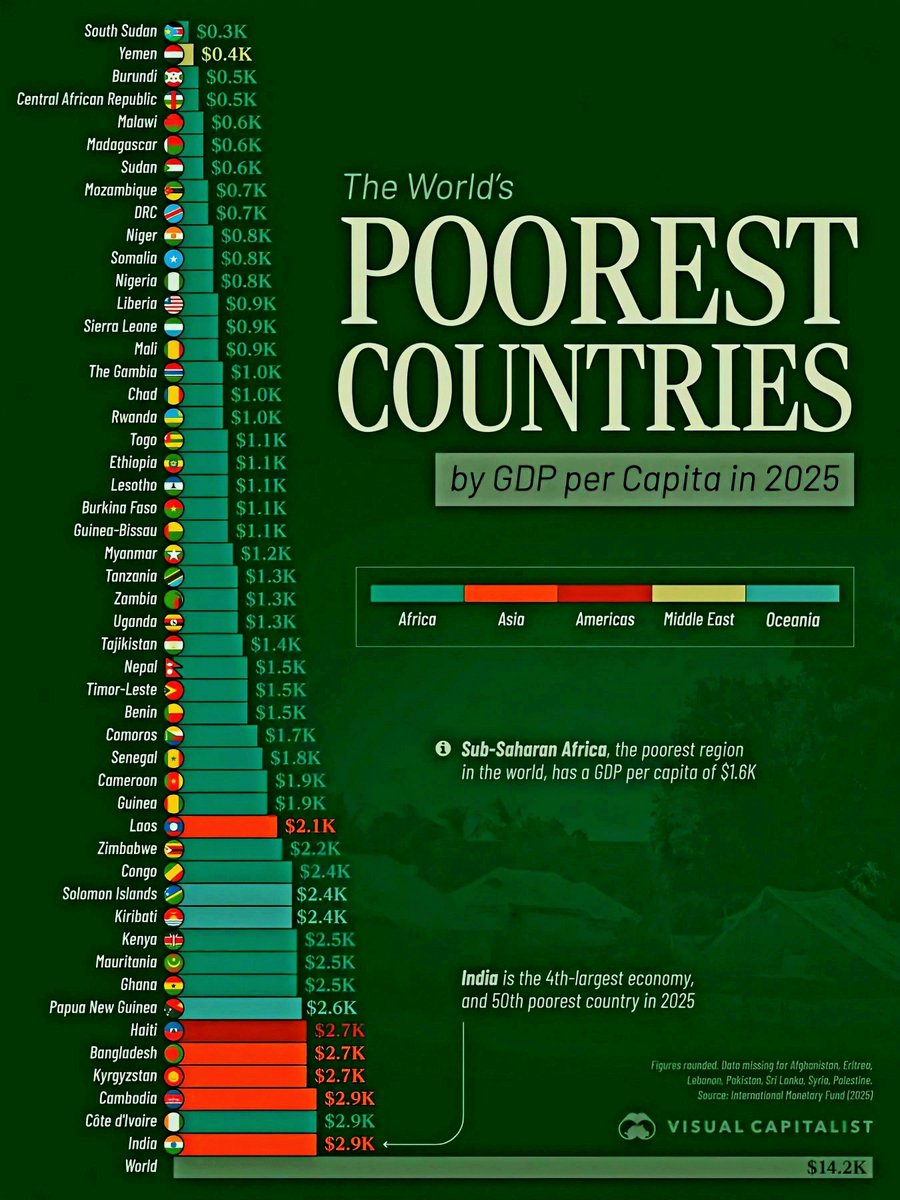
The World’s Poorest Countries by GDP Per Capita in 2025
1. Burundi: Continual Struggles in Sub-Saharan Africa
Despite ongoing international aid efforts, Burundi remains at the bottom of the GDP per capita list in 2025. The nation’s economic landscape is severely impacted by political instability, recurring violence, and limited access to quality education and healthcare. The average income per person hovers just above $250, making it one of the poorest countries in the world. Rural populations, mostly dependent on subsistence farming, suffer the most, facing challenges such as food insecurity and lack of basic infrastructure.
2. South Sudan: Conflict-Hindrance Keeps Economy Weak
Fast forward to 2025, South Sudan remains entrenched in conflict, hampering economic development. The war-torn nation struggles with bleeding infrastructure, minimal access to clean water, and inadequate healthcare services. With an estimated GDP per capita of around $280, poverty remains widespread, especially among internally displaced persons. International organizations continue to push for peace and reconstruction efforts, but economic recovery remains slow.
3. Malawi: Limited Resources and Agricultural Struggles
Malawi’s economy is still predominantly reliant on agriculture, which is highly vulnerable to climate change and weather fluctuations. In 2025, Malawi’s GDP per capita rate is roughly $300, with a significant portion of the population living below the poverty line. Limited industrialization and foreign investment restrict economic growth, leaving many families in impoverished conditions. Access to education and healthcare remains a challenge, further trapping the country in a cycle of poverty.
4. Niger: Facing Climate and Security Challenges
Niger, classified among the poorest countries globally, continues to grapple with extreme droughts, desertification, and security issues related to insurgencies. The country’s GDP per capita is approximately $320, with much of its population engaged in subsistence farming and pastoralism. Despite mining and oil resources, they haven’t significantly boosted prosperity due to governance issues and infrastructural deficits. Malnutrition and lack of healthcare access are widespread in rural regions.
5. Central African Republic: Political Instability and Poverty
The Central African Republic’s economy remains fragile due to ongoing political instability and conflict. With a GDP per capita near $330, the nation faces high levels of violence, weak institutions, and inadequate public services. Humanitarian aid is essential for survival for many residents, with limited prospects of rapid economic growth or job creation. Poverty alleviation strategies have yet to make a large-scale impact, leaving large segments of the population vulnerable.
6. Democratic Republic of Congo: Natural Resources, Limited Benefits
Home to vast natural resources, the Democratic Republic of Congo (DRC) still struggles with economic inequality. Despite mineral wealth, the GDP per capita remains around $350 due to corruption, poor infrastructure, and ongoing conflict. Many Congolese live in poverty, battling malnutrition, disease, and displacement. Efforts to harness natural resources for national development continue, but progress remains sluggish.
7. Madagascar: Environmental Issues and Political Turmoil
In 2025, Madagascar’s economy continues to be hindered by environmental degradation, political turmoil, and weak governance. The GDP per capita is approximately $370, with most of the population engaged in farming, fishing, and forestry. Deforestation and climate change threaten livelihoods, exacerbating poverty levels. International aid helps, but sustainable development remains elusive.
8. Mozambique: Post-Conflict Recovery Needs More Time
Mozambique, after years of conflict and recent natural disasters, still faces economic hardships. Its GDP per capita is estimated at around $400, with widespread rural poverty. The country struggles with infrastructure deficits, health crises, and political stability. Efforts to recover and boost economic growth require sustained investment and good governance.
9. Liberia: Post-War Challenges Persist
Liberia’s economy in 2025 is still rebounding from civil conflict and health crises like Ebola outbreaks. The GDP per capita is approximately $410, with many citizens working in agriculture and informal sectors. The country needs ongoing aid, infrastructural development, and education reform to break out of poverty traps.
10. Chad: Landlocked and Underdeveloped
Chad rounds out the list of poorest countries with a GDP per capita hovering just above $420. As a landlocked nation with limited infrastructure, reliance on oil exports, and ongoing security issues, Chad faces a tough road ahead. Poverty persists across rural and urban areas, and basic services like healthcare and education are scarce for most of its population.
While these nations face complex challenges, global cooperation, targeted aid, and sustainable development initiatives remain vital in improving economic conditions and reducing poverty in these regions.
 ChatGPT
 Perplexity
 Gemini AI
 Grok AI