Select Language:
Unearthing History: The Oldest Universities in the World in 2025
-
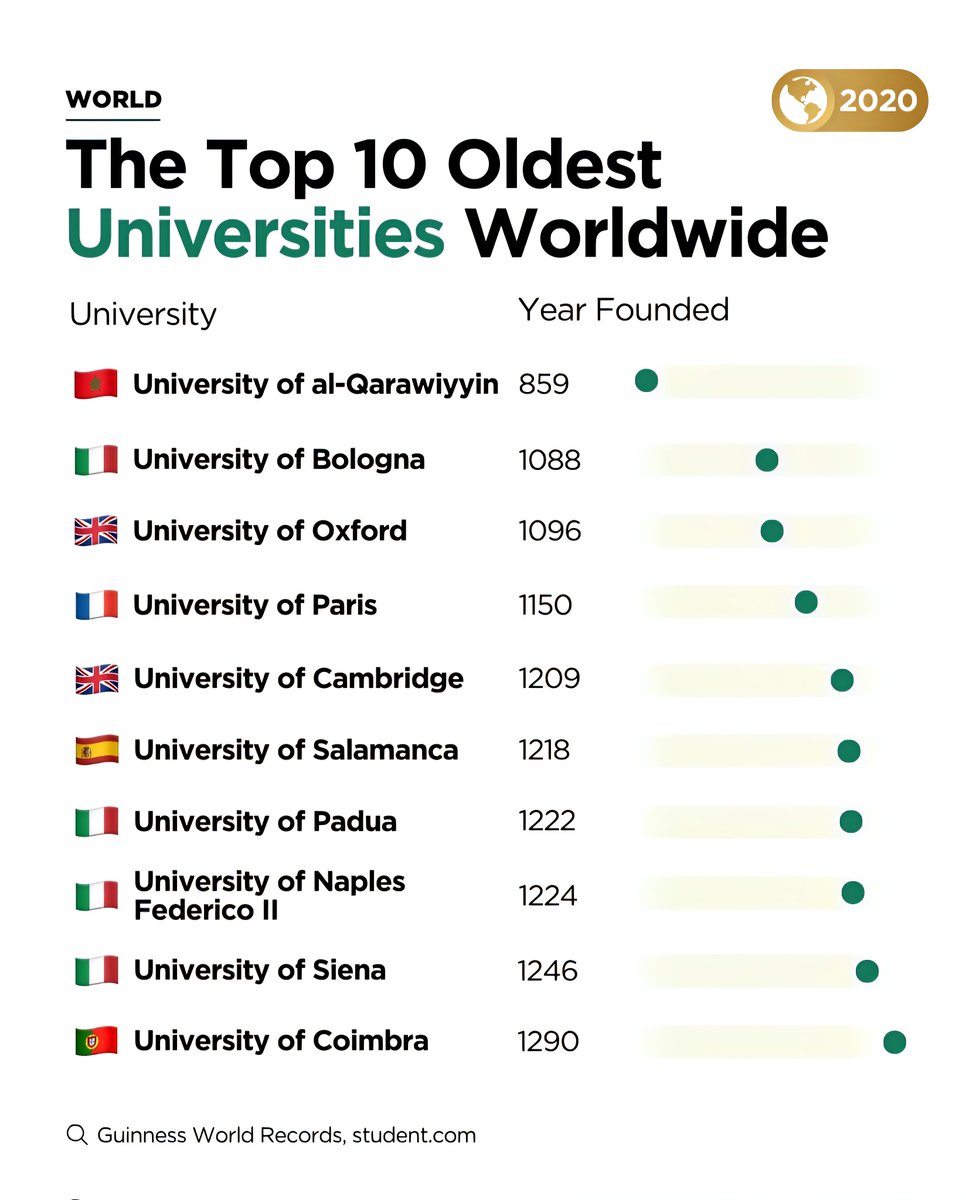
University of al-Qarawiyyin (Morocco) – 859 AD
Founded in the bustling city of Fez, Morocco, the University of al-Qarawiyyin holds the title as the world’s oldest existing educational institution. Originally established as a small madrasa, it has grown into a comprehensive university offering a wide range of disciplines, from religious studies to modern sciences. Recognized by UNESCO and the Guinness World Records, it remains a pivotal center of Islamic scholarship and continues to influence education in North Africa and beyond. -
University of Bologna (Italy) – 1088 AD
A beacon of medieval academia, the University of Bologna is renowned for being the oldest university in Europe still in operation today. It first opened its doors over nine centuries ago, emphasizing law, arts, and philosophy. Bologna paved the way for the modern university system, inspiring countless institutions around the globe. Its historic architecture and vibrant student life continue to attract scholars from all over the world. -
University of Oxford (United Kingdom) – 1096 AD
Oxford University is arguably the most well-known institution on this list and has been shaping leaders and thinkers since the late 11th century. With a rich history of academic excellence, the university boasts legendary alumni, including Nobel laureates, writers, and political leaders. Its collegiate system and centuries-old traditions make it a unique place for higher learning. -
University of Paris (France) – 1150 AD
Often referred to as the Sorbonne, the University of Paris has played a significant role in the development of European intellectual thought. Although closed for a period during the French Revolution, its influence persists through various successor institutions. The university was pivotal during the Middle Ages, especially in philosophy and theology, and remains a symbol of French academic excellence. -
University of Cambridge (United Kingdom) – 1209 AD
Established in the early 13th century, Cambridge has a storied history of academic innovation. Known for groundbreaking research and notable alumni like Sir Isaac Newton and Charles Darwin, the university continues to be a hub for scientific discovery and literary achievement. Its historic colleges and picturesque setting make it an iconic symbol of academia. -
University of Salamanca (Spain) – 1218 AD
Spain’s oldest university, the University of Salamanca, is famed for its Renaissance architecture and vibrant student culture. Established in the 13th century, it has contributed significantly to innovation in fields like law, literature, and science. It’s also renowned for its historic affiliation with Miguel de Cervantes, author of “Don Quixote.” -
University of Padua (Italy) – 1222 AD
Located in northern Italy, the University of Padua is a pioneering institution especially in the study of medicine and science. Galileo Galilei studied here, laying the foundation for modern physics. Its beautiful campus and advanced research facilities continue to attract students from across the globe. -
University of Naples Federico II (Italy) – 1224 AD
Founded by Emperor Frederick II, this university was revolutionary for its time, emphasizing scientific inquiry and modern academia. Today, it remains one of Italy’s leading institutions, offering a broad spectrum of programs and fostering innovation in research and education. -
University of Siena (Italy) – 1246 AD
Set amid the scenic landscapes of Tuscany, Siena’s university is known for arts, humanities, and social sciences. Its rich history is reflected in its medieval architecture and cultural traditions. The university continues to promote a vibrant blend of tradition and modern academic pursuits. -
University of Coimbra (Portugal) – 1290 AD
Perched on the hills of Portugal, the University of Coimbra has been a center for learning for over 700 years. Its historic buildings, including the Joanina Library, are UNESCO World Heritage sites. It offers diverse programs, especially in law, medicine, and arts, and remains a vital part of Portuguese higher education.
Summary:
These institutions have traversed centuries, evolving from religious schools and medieval academies into modern universities. Their enduring legacies reflect a deep commitment to knowledge, innovation, and cultural preservation. As they continue adapting to the demands of 2025, their rich histories inspire future generations of students and scholars worldwide.
 ChatGPT
 Perplexity
 Gemini AI
 Grok AI