Select Language:
Top 10 Oldest Universities in the World
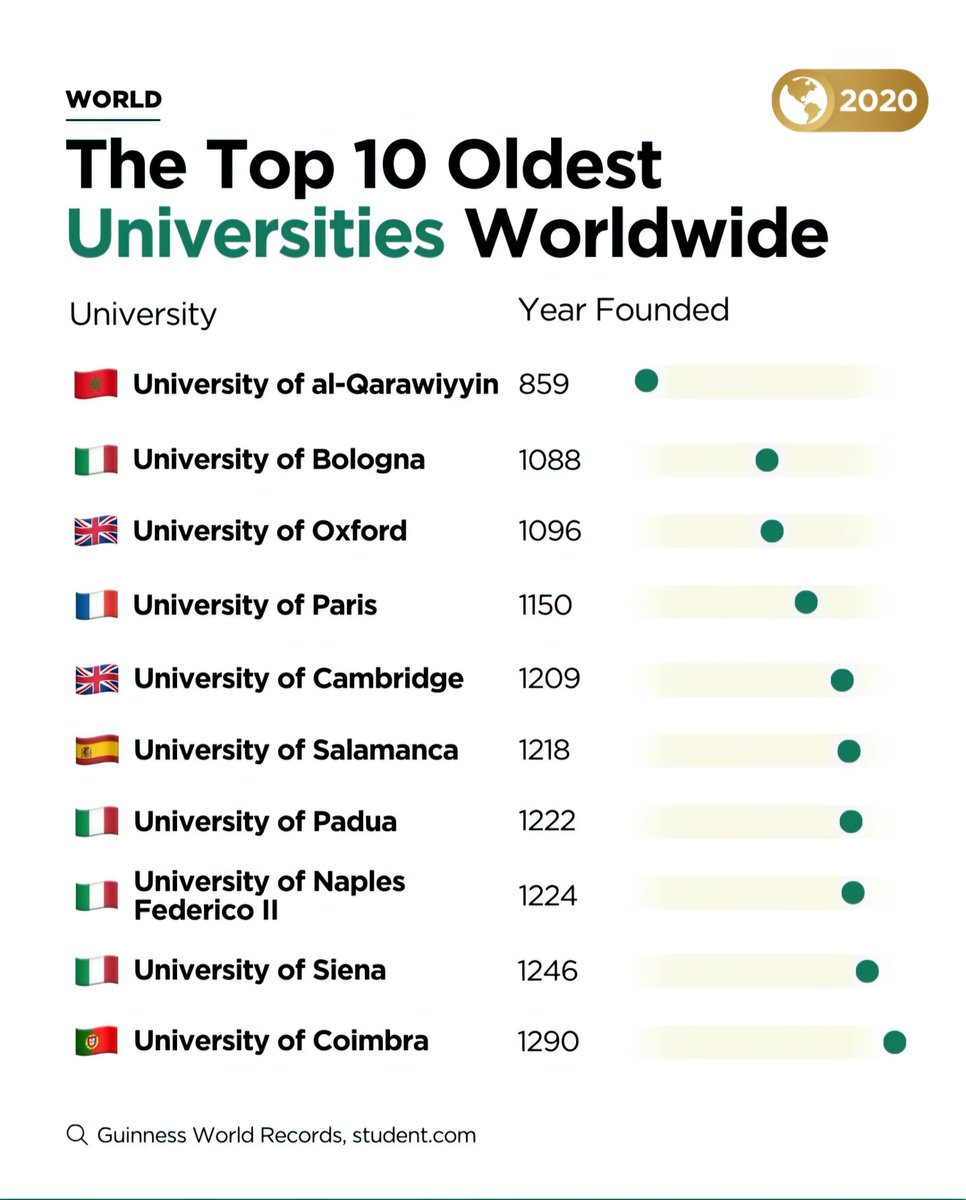
1. University of al-Qarawiyyin (809 CE)
Founded in 809 CE in Fez, Morocco, the University of al-Qarawiyyin holds the record for being the world’s oldest continuously operating degree-granting university. Initially established as a madrasa, it quickly became a hub for Islamic scholarship, attracting students from across Africa and Europe. Today, it remains active as a prestigious institution offering religious and secular studies, combining centuries of tradition with modern education methods.
2. University of Bologna (1088 CE)
Founded in 1088 CE in Italy, the University of Bologna is widely recognized as the oldest university in Europe and the first to emphasize the academic freedom of students and faculty. This institution pioneered the concept of a university as a learned community, laying the groundwork for higher education institutions worldwide. The university’s strengths in law, arts, and humanities continue to influence modern academia.
3. University of Oxford (1096 CE)
Established around 1096 CE in Oxford, England, the University of Oxford is renowned globally for its academic excellence and its historic prestige. While exact founding dates are debated, Oxford’s continuous operation for nearly a millennium underscores its vital role in shaping education. With its distinguished alumni, including numerous world leaders and Nobel laureates, Oxford’s tradition of research and scholarship remains unmatched.
4. University of Salamanca (1134 CE)
Founded in 1134 CE in Salamanca, Spain, the University of Salamanca is the oldest surviving university in Spain and one of the oldest in the world. Recognized for its outstanding contributions to Spanish culture and language, Salamanca became an integral part of Europe’s medieval academic landscape. Its historic architecture and rich academic heritage continue to attract students worldwide.
5. University of Cambridge (1209 CE)
Established in 1209 CE in Cambridge, England, the University of Cambridge is famed for its rigorous academics and groundbreaking research. Originating from a group of scholars fleeing Oxford amid unrest, Cambridge has grown into an iconic institution, boasting alumni such as Sir Isaac Newton, Charles Darwin, and Stephen Hawking. Its historic colleges and innovative science programs remain at the forefront of global education.
6. University of Padua (1222 CE)
Founded in 1222 CE in Padua, Italy, the University of Padua is one of Italy’s most prestigious universities. Known for advances in medicine, sciences, and philosophy, it hosted renowned figures like Galileo Galilei, who made groundbreaking discoveries here. The university’s commitment to scientific inquiry and research excellence continues to thrive into 2025.
7. University of Naples Federico II (1224 CE)
Established in 1224 CE in Naples, Italy, the University of Naples Federico II is Europe’s oldest public university. It was founded by Holy Roman Emperor Frederick II with the aim of promoting higher education in the southern parts of Italy. Today, it offers diverse programs ranging from engineering to medicine while celebrating its centuries-old legacy of innovation.
8. University of Coimbra (1290 CE)
Dating back to 1290 CE in Coimbra, Portugal, the University of Coimbra is Portugal’s oldest university. It played a crucial role in Portuguese culture and academia, especially during Portugal’s Age of Discoveries. Its historic library and traditions continue to enrich student life, making it a cultural as well as educational landmark.
9. University of St. Andrews (1413 CE)
Founded in 1413 CE in St. Andrews, Scotland, this university is the oldest in Scotland and the third-oldest in the English-speaking world. Known for its distinguished faculty and research programs, St. Andrews has produced numerous influential figures, including royalty, scientists, and writers. Its picturesque campus remains a symbol of scholarly excellence.
10. Harvard University (1636 CE)
Established in 1636 CE in Cambridge, Massachusetts, Harvard University is America’s oldest higher education institution. It has become a symbol of academic achievement, with a vast influence across every sector. Harvard’s commitment to research, innovation, and public service continues to impact the world decade after decade, holding a special place in global education history.
The historical legacy of these institutions highlights the longevity and evolution of higher education across centuries. Their contributions to societal development, culture, and science have cemented their status as pillars of global knowledge and innovation.
 ChatGPT
 Perplexity
 Gemini AI
 Grok AI