Select Language:
The Most Powerful Countries in 2025: A Closer Look
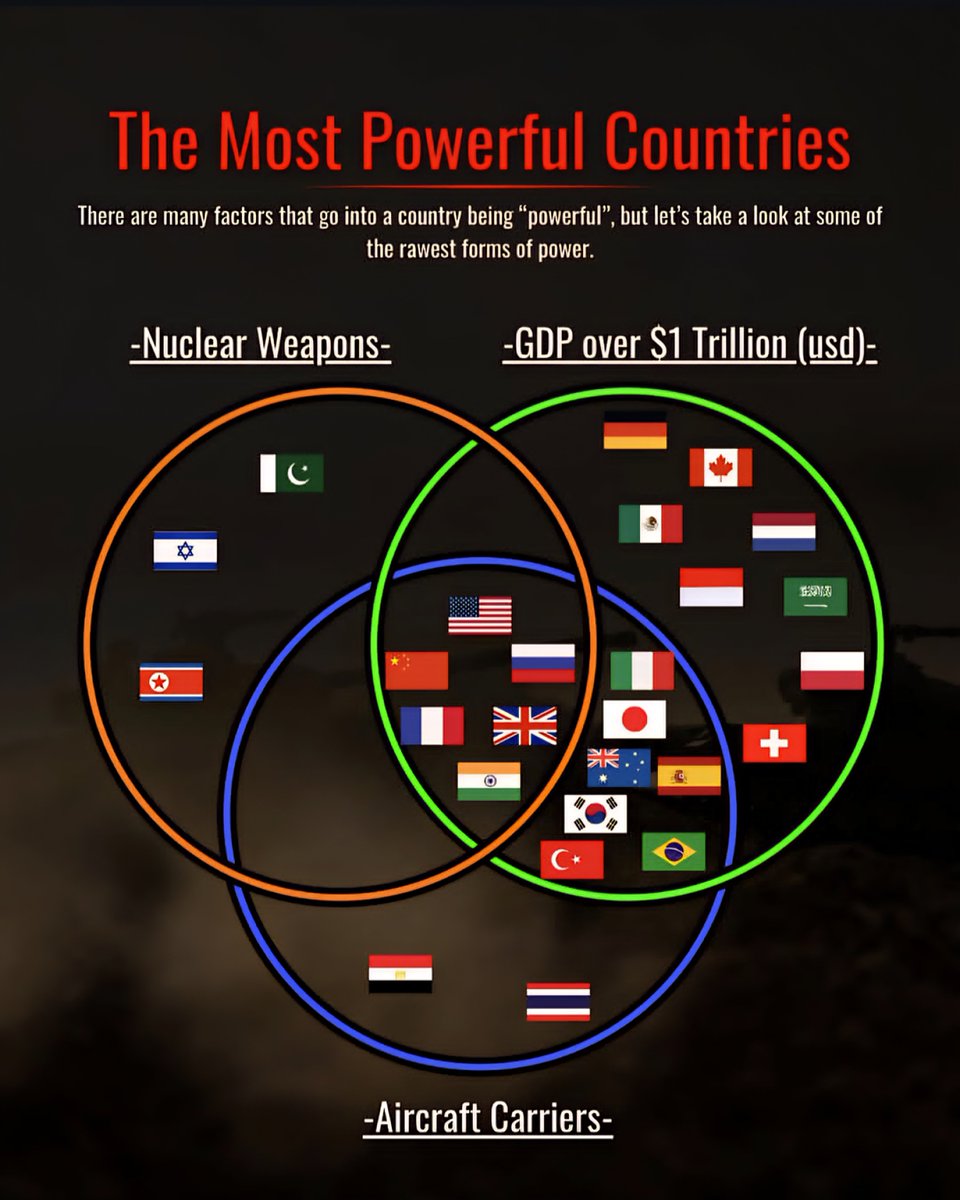
1. United States Dominates Global Power Plays
For yet another year, the United States cements its position as the most influential country worldwide. Its unparalleled military strength, technological innovation, and economic resilience continue to set the global standard. With a GDP surpassing $25 trillion, the U.S. leads in sectors like aerospace, digital technology, and finance. The country’s ability to project military power across continents, maintain a formidable defense budget of over $700 billion, and sustain a culture of innovation ensures its dominance on multiple fronts.
2. China’s Economic and Military Rise
China has solidified its position as a global superpower, driven by rapid economic growth and expanding military clout. With a GDP of approximately $18 trillion, China boasts impressive advancements in artificial intelligence, renewable energy, and infrastructure development. Its Belt and Road Initiative continues to strengthen influence across Asia, Africa, and beyond. The Chinese military modernization, including advances in missile technology and naval forces, underscores its strategic ambitions to challenge Western dominance.
3. Russia’s Continuing Strategic Influence
Russia maintains its status as a key global player thanks to its strategic military capabilities and vast natural resources. The country’s military modernization efforts, including advanced missile systems and nuclear arsenal, keep it relevant in global security dynamics. Despite economic challenges, Russia leverages its geopolitical positioning—particularly in Eastern Europe, the Middle East, and Central Asia—to maintain diplomatic influence. Its leadership in energy exports, chiefly oil and natural gas, further solidifies its economic leverage.
4. European Union: A United Power Bloc
While not a single country, the European Union (EU) functions collectively as a potent geopolitical entity. With member states contributing to a combined GDP of around $17 trillion, the EU wields considerable influence in global diplomacy, trade, and environmental policies. Major players like Germany, France, and Italy drive technological innovation, green energy initiatives, and defense cooperation. The EU’s unified stance on climate change and digital regulation elevates its role as a moral and economic leader on the world stage.
5. India’s Rapid Expansion on the Global Stage
India continues its impressive ascent in 2025, leveraging its large population, technological advancements, and strategic economic reforms. The country’s GDP is now approximately $4.8 trillion, making it the fifth-largest economy globally. India’s burgeoning tech industry, strong military capabilities, and expanding space program underscore its rising influence. As a member of the Quad alliance alongside the U.S., Japan, and Australia, India plays a crucial role in regional security and economic collaborations in Asia-Pacific.
6. Japan’s Technological Prowess and Economic Resilience
Japan maintains its reputation as a technological powerhouse and a stable economic entity. Despite demographic challenges, the country continues to lead in robotics, electronics, and manufacturing. Its GDP remains around $5 trillion, emphasizing its resilience. Japan’s strategic partnerships and investments across Asia, coupled with its focus on sustainable development, keep it central to regional stability and innovation.
7. Brazil’s Growing Influence in Latin America
Brazil has emerged as the leading economic force in Latin America, driven by its vast natural resources and agricultural sector. With a GDP nearing $2 trillion, Brazil is increasingly influential in regional politics and global trade. Its leadership in biodiversity conservation, renewable energy, and shipping logistics makes it a key player for international environmental and economic discussions. The country’s expanding military capabilities also contribute to regional stability.
8. Canada’s Role as a Global Mediator
Canada’s reputation as a peacekeeping nation and a champion of human rights continues to enhance its global influence. With a GDP approaching $2.2 trillion, Canada is prominent in natural resource management, technological innovation, and diplomatic efforts. Its strategic alliances, including NATO and the G7, position it as a vital supporter of international stability and sustainable development.
9. South Korea’s Technological and Economic Leadership
South Korea remains a technological frontrunner, driven by their leadership in consumer electronics, semiconductors, and renewable energy solutions. With a GDP of around $1.8 trillion, South Korea’s innovative semiconductor industry and emerging biotech sector bolster its global standing. Its diplomatic and military engagements in East Asia also amplify its strategic influence.
10. Australia’s Strategic Position in the Indo-Pacific
Australia’s strategic importance grows as it strengthens alliances across the Indo-Pacific region. Its booming mineral and energy exports, along with a robust defense sector, reinforce its position. With a GDP over $1.6 trillion, Australia is also a leader in climate action and sustainable practices. Its partnership with regional powers and the United States enhances its geopolitical significance.
By 2025, these nations exemplify the complex web of power dynamics shaping our world. While economic strength remains a core indicator, military capacity, technological innovation, diplomatic influence, and regional leadership are equally vital in determining global clout.
Please note: The information presented reflects the geopolitical landscape as of 2025 based on recent developments and projections.
 ChatGPT
 Perplexity
 Gemini AI
 Grok AI