Select Language:
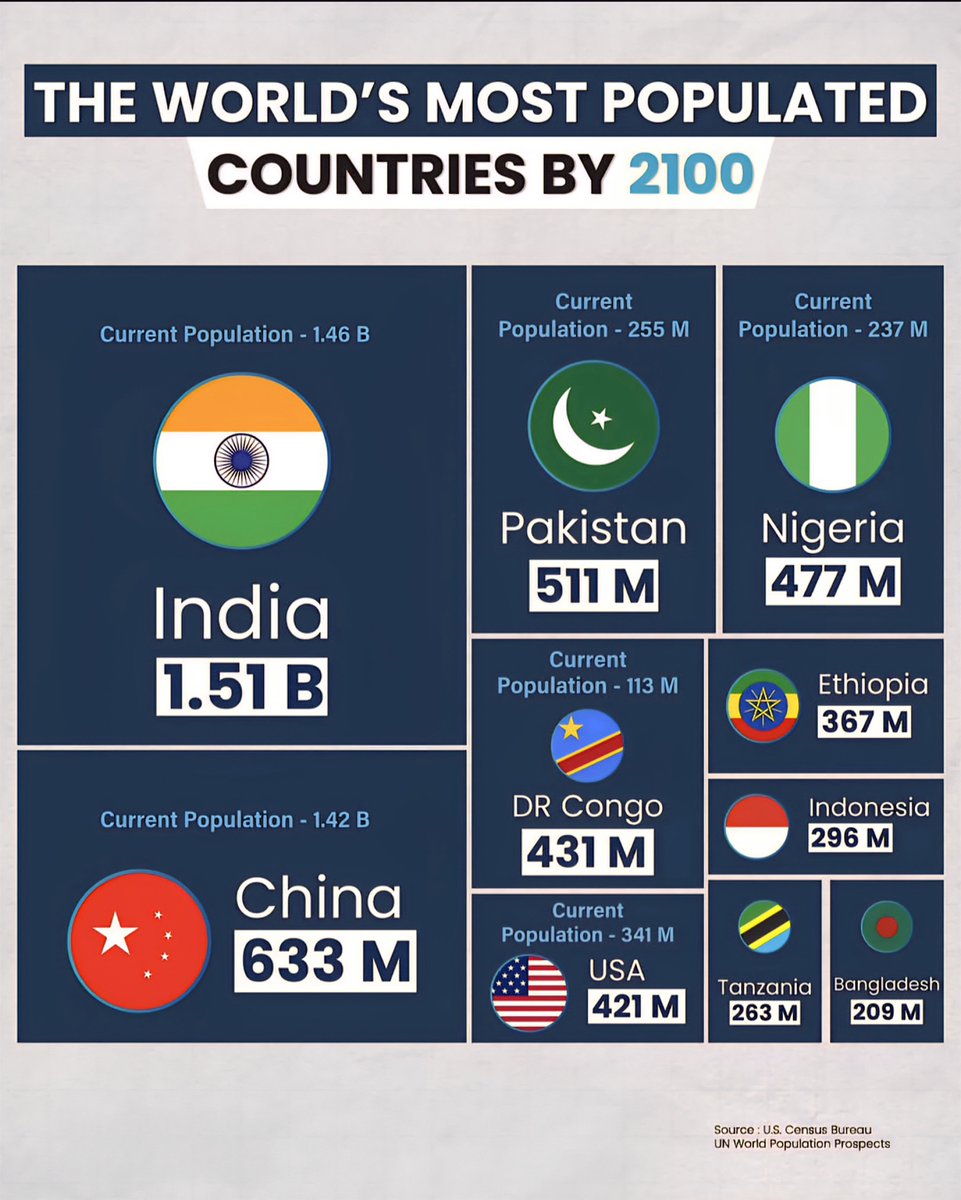
The World’s Most Populated Countries in 2025: A Closer Look at Future Demographics
- India Continues to Lead with Over 1.5 Billion People
India remains at the top of the list, with a population projected to reach approximately 1.51 billion in 2025. Its rapid population growth continues to influence global demographics, making it a pivotal player on the world stage. The country’s large and youthful population contributes significantly to its economic potential, but also presents challenges in infrastructure, healthcare, and education.
- China’s Population Declines Significantly to 633 Million
Once the most populous country, China’s population has drastically declined, now sitting at around 633 million. This decrease is due to decades of family planning policies and a declining birth rate. The demographic shift poses economic challenges, including a shrinking labor force and increased pressure on social welfare systems.
- Pakistan Sets to Reach 511 Million Amid Rising Growth
Pakistan’s population continues to climb, expected to hit approximately 511 million. Its steady growth underscores challenges related to resource management, healthcare, and educational services in the coming years. Urbanization is accelerating as more people move to cities in search of better opportunities.
- Nigeria Emerges as Africa’s Largest with 477 Million Residents
Nigeria’s population is burgeoning rapidly and is projected to reach 477 million. With its high birth rates and improving access to healthcare, Nigeria is poised to become one of the most influential economies in Africa, though it must tackle issues like infrastructure development and governance.
- Democratic Republic of the Congo Rises to 431 Million as Africa’s Population Hub
The DRC’s population has grown to approximately 431 million. Its natural resources and strategic location make it a key country for Africa’s future growth, but internal stability and development challenges remain key hurdles.
- United States Maintains a Significant Population with 421 Million
The US population is expected to reach about 421 million. Immigration, higher birth rates compared to some other developed nations, and demographic shifts continue to shape its population dynamics. Challenges include managing diversity and ensuring equitable access to technology and education.
- Ethiopia Surpasses Many Neighbors with 367 Million
Ethiopia’s demographic expansion has pushed its population to around 367 million. Its economic growth is closely tied to its expanding population, but it must address issues such as poverty, access to healthcare, and infrastructural development.
- Indonesia’s Population Hits 296 Million, Strengthening Southeast Asia
Indonesia remains the most populous country in Southeast Asia, with a projected population of 296 million. Its diverse cultures and economies draw attention as it continues to evolve politically and socially amidst demographic changes.
- Tanzania’s Population Rises to 263 Million, Signaling Regional Growth
Tanzania’s population growth is marking a significant milestone at approximately 263 million. Increased investment in health and education systems is necessary to manage the demographic expansion and harness its potential.
- Bangladesh Reaches 209 Million, Facing Urbanization and Resource Challenges
Bangladesh’s population exceeds 209 million, leading to rapid urbanization and resource strain. Focus on sustainable development and infrastructure will be crucial in supporting its growing population.
Source: U.S. Census Bureau & UN World Population Prospects 2025
 ChatGPT
 Perplexity
 Gemini AI
 Grok AI