Select Language:
The Future of Global Population: Top 10 Most Populated Countries by 2100
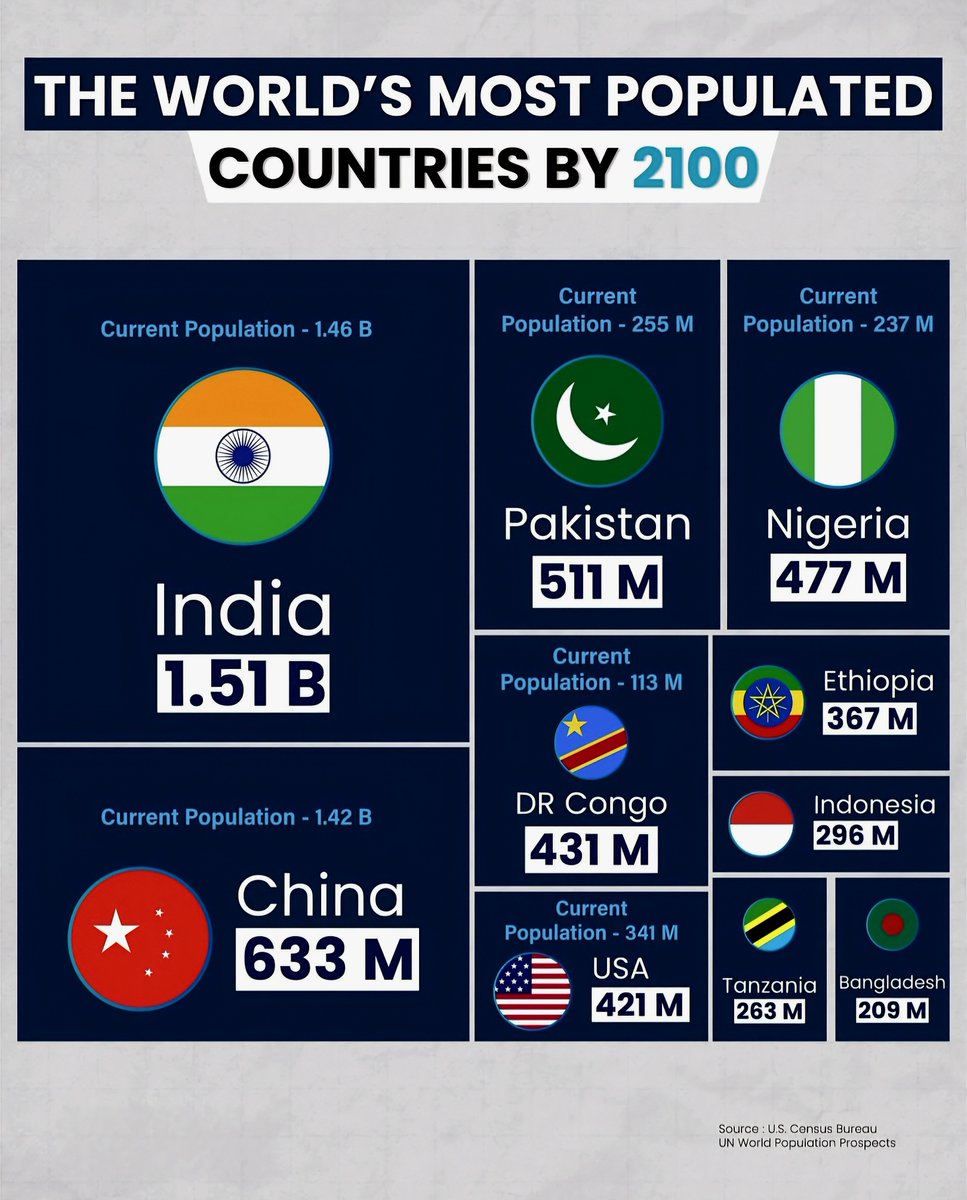
The world’s population landscape is expected to undergo significant changes by the year 2100. Demographers and global experts predict shifts in population sizes due to factors like birth rates, death rates, and migration patterns. Here’s a detailed look at the ten countries projected to be the most populous in 2100, along with insights into their demographics and potential implications for the future.
1. India: The Continued Population Powerhouse
India is poised to maintain its position as the most populated country worldwide into 2100. With a current population exceeding 1.4 billion, India’s demographic trend is characterized by a slowing but still high birth rate, and a growing middle class influencing fertility rates. Experts anticipate India’s population to stabilize around 1.5 billion by 2100, accounting for nearly 14% of the global total. Urbanization and technological advancements are expected to shape its future growth, alongside ongoing efforts to improve healthcare and education.
2. Nigeria: The Surging West African Giant
Nigeria is projected to experience rapid population growth, overtaking other nations to claim second place globally by 2100. Currently Africa’s most populous country, Nigeria’s population is expected to soar past 500 million, driven by high fertility rates, youthful demographics, and improving healthcare. Its burgeoning population presents both economic opportunities and challenges, including increased demand for infrastructure, education, and employment opportunities.
3. Pakistan: A Growing South Asian Power
With a current population of around 240 million, Pakistan’s demographic trends point towards continued growth. Predominantly young, the country’s population is expected to reach approximately 400 million by 2100. Rapid urbanization and improved healthcare could influence these numbers, although political stability and economic reforms will play crucial roles in shaping its future trajectory.
4. Democratic Republic of the Congo: Africa’s Emerging Demographic Force
Expected to be among the top five most populous countries by 2100, the Democratic Republic of the Congo’s population is anticipated to climb to roughly 370 million. Its high birth rates, coupled with improving healthcare, could significantly alter the continent’s population landscape. Socioeconomic development and conflict resolution will be key factors influencing its growth outlook.
5. Ethiopia: The Rising Star in Africa’s Population Boom
Ethiopia, currently home to about 125 million people, is forecasted to see its population nearly triple by 2100, reaching approximately 230 million. Its demographic expansion reflects ongoing high fertility rates and improvements in health services. This growth could position Ethiopia as a leading economic hub in East Africa, but will also require substantial investments in infrastructure and social services.
6. United States: The Steady Dominator in the Western Hemisphere
The United States is expected to remain among the most populated countries, with a projected population of around 400 million in 2100. Despite relatively low fertility rates, continued migration and population stability will help sustain its demographic prominence. The U.S. might see increased diversity and urban growth, shaping its societal landscape for decades to come.
7. Tanzania: Africa’s Emerging Population Giant
Tanzania’s population growth is set to accelerate, reaching roughly 330 million by 2100. Current high fertility rates and improvements in healthcare are driving this boom. As one of Africa’s fastest-growing countries, Tanzania’s demographic expansion offers potential for economic growth but also poses challenges related to resource management and urban planning.
8. Indonesia: Southeast Asia’s Demographic Leader
Indonesia will remain Southeast Asia’s most populous country, with its population stabilizing around 300 million by 2100. The archipelago’s demographic trends are characterized by declining fertility rates, but the sizable youth population still sustains growth. Urbanization and economic development will continue to influence its demographic profile.
9. Mexico: Latin America’s Population Leader
Projected to reach approximately 150 million by 2100, Mexico’s population growth is expected to slow due to decreased fertility rates. Urbanization, aging, and migration are pivotal factors influencing its demographic evolution, shaping future social policies and economic strategies.
10. Nigeria: Completing the Top 10
Echoing earlier projections, Nigeria remains a prominent populous country, with its population forecasted to complement the top-tier rankings, emphasizing Africa’s accelerated demographic changes and the continent’s significance in global population dynamics.
Overall Outlook:
By 2100, the global population is expected to reach nearly 11 billion, with Asia and Africa anchoring the list of most populated nations. Countries in Africa will contribute a substantial share of the growth, driven by high fertility and youthful populations, while developed nations face stagnating or declining birth rates. Policymakers worldwide will need to adapt to this evolving demographic reality, focusing on sustainable development, resource management, and social cohesion to navigate the challenges and opportunities ahead.
Note: These projections are based on current demographic trends and may change with future technological, environmental, and political developments.
 ChatGPT
 Perplexity
 Gemini AI
 Grok AI