Select Language:
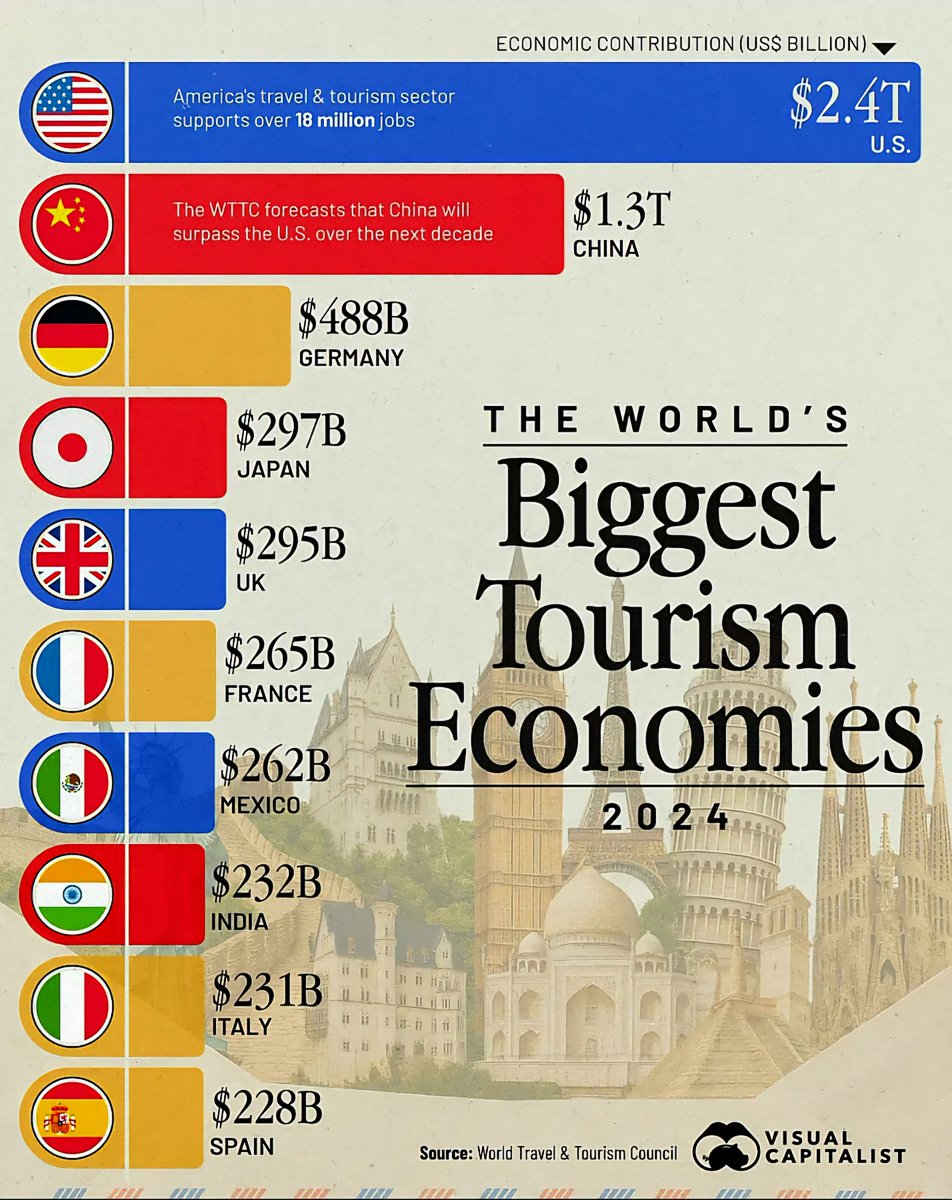
The Top 10 Largest Tourism Economies in 2025: A Closer Look
1. United States — $2.4 Trillion
Leading the global tourism economy once again, the United States stands out with an impressive contribution of $2.4 trillion. This robust figure underscores the country’s diverse attractions, from iconic landmarks such as the Statue of Liberty, Grand Canyon, and Disney World, to vibrant cities like New York, Los Angeles, and Miami. Improved infrastructure, strategic marketing campaigns, and the recent lifting of international travel restrictions post-pandemic have significantly bolstered inbound tourism.
2. China — $1.3 Trillion
China remains a major force in global tourism, generating approximately $1.3 trillion. Its rich cultural heritage, scenic wonders like the Great Wall and Terracotta Warriors, along with China’s expansion of domestic travel options, continue to drive its impressive economic footprint. The Chinese government’s focus on promoting tourism as a key economic driver has resulted in increased international visitation, especially to neighboring Asian countries.
3. Germany — $488 Billion
Germany, with its blend of history, modern innovation, and picturesque landscapes, has earned nearly half a trillion dollars in tourism revenue. The country’s renowned cultural festivals, historic castles, and the scenic Romantic Road attract millions annually. Additionally, Germany’s excellent transportation network and strong tourism infrastructure have facilitated consistent growth in international travelers.
4. Japan — $297 Billion
Japan’s tourism sector soared to generate close to $300 billion in 2025. The country’s unique blend of tradition and cutting-edge modernity, from ancient temples to futuristic cities like Tokyo, continues to attract global visitors. The successful hosting of international events and a surge in premium travel experiences have also played a role in Japan’s economic achievement.
5. United Kingdom — $295 Billion
The UK has maintained a significant presence in the global tourism scene, with revenues reaching nearly $300 billion. London’s historic sites, cultural festivals, and renewed interest in rural and coastal regions have increased tourist spending. The government’s recent initiatives to promote lesser-known destinations have diversified the country’s tourism sources.
6. France — $265 Billion
France, famed for its art, cuisine, and romantic ambiance, remains a top tourist destination, contributing $265 billion to the economy. Paris continues to welcome millions for fashion weeks, art exhibitions, and culinary festivals. Regional initiatives spotlighting wine regions, historic towns, and the French Riviera further enhance the country’s appeal and spending.
7. Mexico — $262 Billion
Mexico’s warm beaches, archaeological sites, and vibrant culture generate over $260 billion in tourism revenue. The country remains a favorite for North American travelers and increasingly attracts visitors from Asia and Europe. Investments in tourism infrastructure, including luxury resorts and ecological parks, have supported its steady growth.
8. India — $232 Billion
India’s tourism economy experienced remarkable growth, now valued at $232 billion, making it one of the fastest-growing sectors in the country. Its diversity—ranging from the Himalayan peaks and iconic Taj Mahal to vibrant festivals and spiritual retreats—continues to draw international visitors. Government campaigns promoting “Incredible India” have amplified global interest and spending.
9. Italy — $231 Billion
Italy, renowned for its historical sites, fashionable cities, and culinary excellence, earned $231 billion in 2025. The country’s art, architecture, and scenic countryside inspire repeat visits from travelers worldwide. Recent efforts to enhance tourism accessibility and sustainable practices have kept Italy a top destination.
10. Spain — $228 Billion
Completing the top ten, Spain’s lively culture, beaches, historic towns, and festivals generate approximately $228 billion. Barcelona, Madrid, and Seville remain hotspots, complemented by a rising influx of visitors exploring lesser-known regions. Investments in eco-tourism and smart infrastructure are poised to sustain growth.
Source: World Travel & Tourism Council, 2024
 ChatGPT
 Perplexity
 Gemini AI
 Grok AI