Select Language:
Top Economies of 2075: The Future Powerhouses
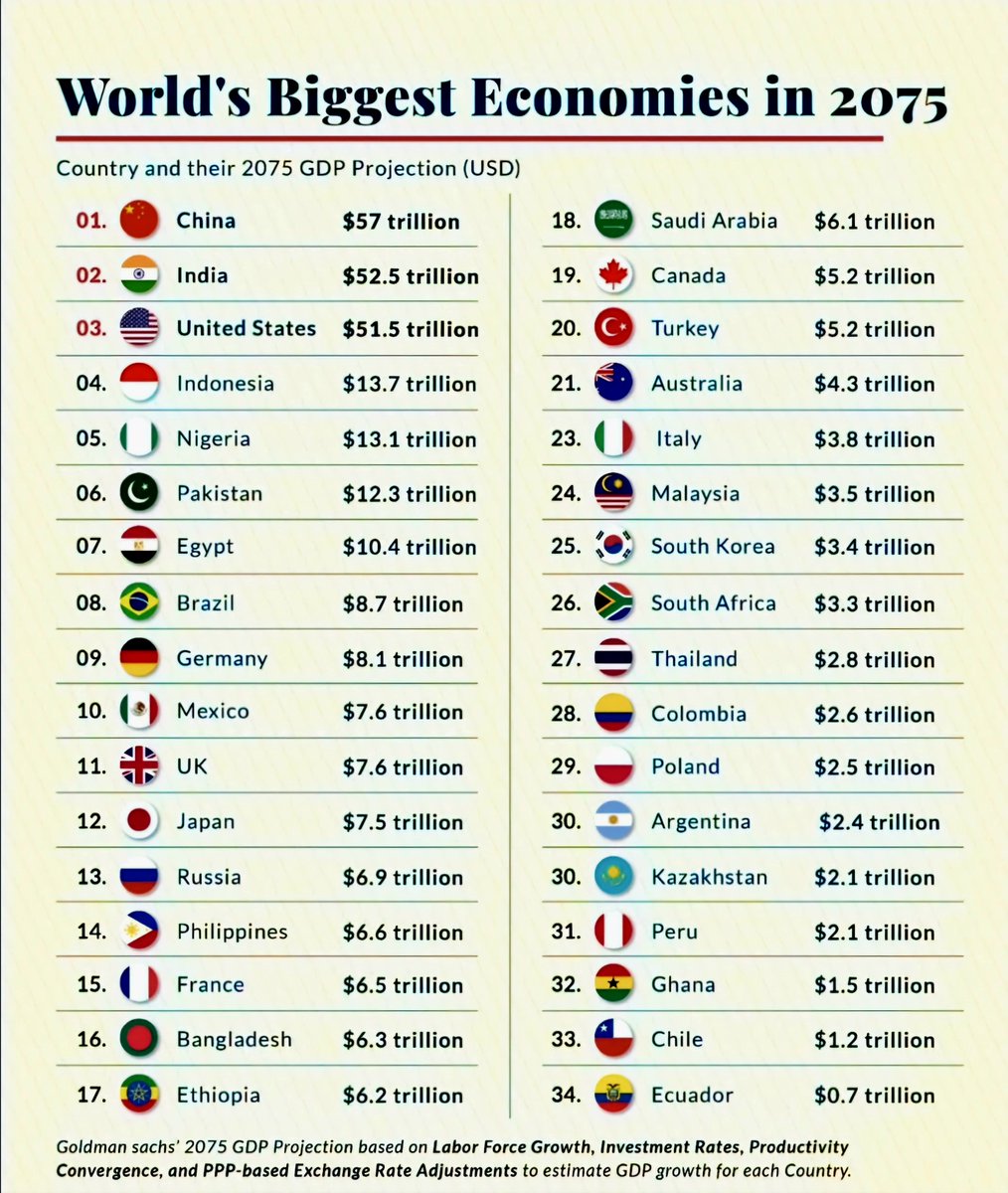
1. The United States: Maintaining Its Global Dominance
In 2075, the United States continues to be a top contender among the world’s largest economies. Thanks to groundbreaking advancements in technology, space exploration, and healthcare, the U.S. has preserved its economic edge. Its robust innovation ecosystem, combined with a strong consumer market, keeps the nation afloat in an ever-changing global landscape.
Key factors contributing to its sustained power include investments in AI and quantum computing, which have revolutionized industries from finance to military. Additionally, its diversified economy remains resilient despite shifts in global trade dynamics. The U.S. also benefits from its widespread influence in international organizations and technological standards.
2. China: The Apex of Rapid Development
By 2075, China has cemented its position as the world’s economic titan. Over the past decades, China’s focus on technological innovation, urbanization, and infrastructure expansion has catapulted it into the top rank. The nation’s pioneering efforts in renewable energy, advanced manufacturing, and AI have built a highly competitive economy.
The Belt and Road Initiative has evolved into a global infrastructure network, boosting trade and investment across continents. Additionally, China’s investment in space colonization and sustainable city development has made it a model for economic growth and environmental management. As a result, it has overshadowed traditional Western economies in many sectors.
3. India: The Rising Giant
India’s astounding growth over the past decades has propelled it to become the third-largest economy by 2075. Its expanding technological sector, large skilled workforce, and burgeoning consumer market make India a formidable player on the global stage.
Innovations in telecommunications, renewable energy, and biotechnology have fueled economic expansion. The country’s advancements in space exploration and digital infrastructure have opened new avenues for growth. Wide-ranging reforms in governance, education, and industry further support its rising status, making India a key driver of global economic stability for decades to come.
4. The European Union: United in Prosperity
In 2075, the European Union’s economic strength is symbolized by its collective innovation, sustainability initiatives, and integrated markets. The EU remains an influential economic bloc, heavily investing in green technology, digital transformation, and social welfare programs.
Several member countries have transitioned to entirely renewable energy sources, making the region a leader in climate-positive development. The EU’s unified policies on trade, research, and technology foster a resilient economy, capable of competing with major global players. Its commitment to social equality and technological leadership keeps it as a prominent force in the global economy.
5. Japan: The Technology Powerhouse
Despite earlier economic stagnation, Japan’s focus on robotics, biotech, and clean energy has revitalized its economy by 2075. Its advanced automation industries dominate manufacturing and service sectors worldwide.
Japanese innovation in quantum computing, environment-friendly transportation, and health tech keeps this island nation competitive. Its deep cultural emphasis on quality, precision, and technological excellence underscores its success. Japan’s strategic investments in space technology and sustainable urban solutions further cement its position among the top economies.
6. Brazil: South America’s Economic Leader
Brazil’s emergence as a major economy comes from its vast natural resources, technological advancements, and agricultural modernization. By 2075, Brazil has expanded its industrial base and diversified its exports, positioning itself as a key global supplier of food, bioenergy, and raw materials.
Urban centers like Rio de Janeiro and São Paulo have transformed into hubs of innovation and green technology, driven by government-led initiatives. Brazil’s investments in renewable energy—particularly wind and solar—have bolstered its economy and environmental stability, making it an economic leader on the South American continent.
7. Nigeria: The Continent’s Economic Power
Nigeria is no longer just Africa’s largest economy — it’s a global leader in innovation, digital finance, and renewable energy. The nation’s youthful population, rich natural resources, and expanding tech industry have helped it climb the global economic ladder.
Smart cities powered by renewable energy, widespread internet access, and thriving tech startups have spurred Nigeria’s rapid development. Its strategic location and focus on regional trade alliances have allowed it to become a pivotal player in international commerce, geopolitics, and technology.
8. Russia: The Energy and Innovation Nexus
Russia remains a significant force in 2075, primarily through its vast natural resource reserves, including renewable energy technologies and advanced materials. The nation has diversified from traditional energy exports into the fields of nuclear tech, biotech, and space exploration.
Significant investments in Arctic infrastructure and resource extraction have secured Russia’s position as a critical energy supplier. Its cutting-edge research centers in cybernetics, AI, and nanotechnology make Russia a hub for scientific innovation, balancing its historic strengths with futuristic technologies.
9. Germany: The Industrial and Technological Leader
Germany’s reputation for engineering and manufacturing excellence persists, but now it’s complemented by its leadership in sustainable energy and digital innovation. The country’s focus on smart factories, green technology, and renewable energy has made it a model for industrial sustainability.
German companies have pioneered advancements in autonomous vehicles, AI-driven manufacturing, and environmental engineering. Its highly educated workforce, robust infrastructure, and deep commitment to research and development have solidified Germany’s standing among the world’s top economic powers.
10. Australia: The Mining and Tech Hybrid
Thanks to its natural resource wealth and focus on high-tech industries, Australia has emerged as a global economic leader. Investments in sustainable mining, marine biotech, and clean energy have transformed the continent into a land of prosperity.
Its commitment to environmental conservation and renewable energy development has helped Australia maintain a competitive edge. Additionally, the country’s leadership in oceanic research and off-world mining initiatives positions it as a future-oriented economy with significant influence in both terrestrial and extraterrestrial sectors.
As the world evolves into a landscape of technological marvels and sustainable growth, these nations lead the charge, shaping the economic future of 2075. The balance of power has shifted, highlighting the importance of innovation, environmental stewardship, and geopolitical collaboration for countries aiming to remain at the top.
 ChatGPT
 Perplexity
 Gemini AI
 Grok AI