Select Language:
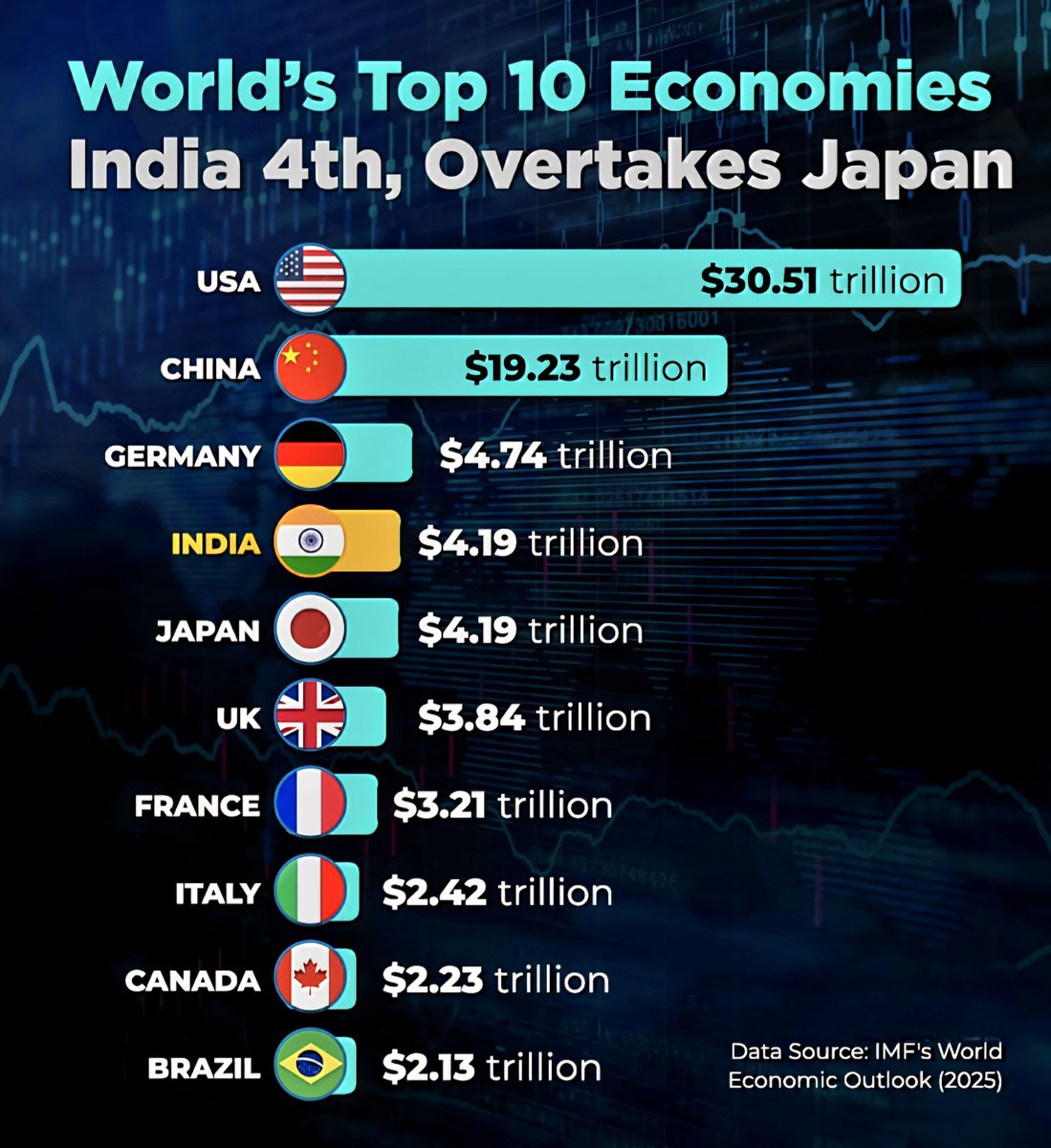
The World’s Largest Economies in 2025: A Closer Look
1. The United States Continues to Lead at Over $30.5 Trillion
The U.S. maintains its position as the world’s largest economy with a staggering gross domestic product (GDP) of approximately $30.51 trillion. Its robust tech, financial, and healthcare sectors drive this dominance. Despite global economic shifts, the American economy remains resilient, underpinned by a strong consumer market, innovation, and technological advancements.
2. China Surpasses $19 Trillion, Maintaining Its Second-Place Position
China’s economy has expanded significantly, reaching around $19.23 trillion. As the fastest-growing major economy in recent decades, China continues to cement its global economic influence through manufacturing, exports, and a burgeoning middle class. The country’s ongoing investments in technology and infrastructure bolster its position on the world stage.
3. Germany’s Economy: Steady at Nearly $4.75 Trillion
Europe’s powerhouse, Germany, remains the largest economy in the European Union with an estimated GDP of $4.74 trillion. Its global reputation for engineering, automotive manufacturing, and chemical industries sustains its economic strength. Germany’s focus on innovation and sustainability ensures stability amidst international uncertainties.
4. India Overtakes Japan to Claim Fourth Place with $4.19 Trillion
India has made a significant leap, now surpassing Japan with a gross domestic product of $4.19 trillion. This milestone reflects India’s rapid economic growth fueled by digitization, infrastructure development, and a thriving service sector. The nation’s young demographic and government reforms are key drivers in this upward trend.
5. Japan’s Economy Tails Slightly Behind at $4.19 Trillion
Japan remains the fifth-largest economy with an approximate GDP of $4.19 trillion. Its economy is characterized by advanced technology, robotics, and automobile industries. Although Japan faces demographic challenges and slow growth, its innovation-led economy sustains its position among the top global players.
6. The United Kingdom Holds Its Position at $3.84 Trillion
With an estimated GDP of $3.84 trillion, the UK continues to be a significant financial hub, especially in finance, pharmaceuticals, and aerospace. Post-Brexit economic adjustments have stabilized, and the nation remains an influential global economy with strategic investments.
7. France’s Economy at $3.21 Trillion
France remains Europe’s third-largest economy, with nearly $3.21 trillion in GDP. Its strengths lie in aerospace, luxury goods, and tourism. France’s focus on green energy and technological innovation is expected to boost future growth.
8. Italy’s Economy Accounts for $2.42 Trillion
Italy holds its place as a major European economy with a GDP of around $2.42 trillion. Driven by fashion, automotive, and manufacturing sectors, Italy faces challenges including political stability and high public debt but continues to be a resilient economic actor.
9. Canada’s Economy at $2.23 Trillion
Canada’s rich natural resources and stable financial system support its economy, valued at approximately $2.23 trillion. It remains a key player in energy, mining, and technology sectors, benefiting from strong trade ties to the U.S. and Asia.
10. Brazil Rounds Out the Top 10 at $2.13 Trillion
Brazil’s economy, valued at about $2.13 trillion, is the largest in South America. Moving forward, Brazil aims to diversify its economy, focusing on agriculture, infrastructure, and technological innovation to sustain growth amid global economic uncertainties.
Source: IMF’s World Economic Outlook (2025)
Note: The figures are estimates based on recent data analysis and projections for 2025.
 ChatGPT
 Perplexity
 Gemini AI
 Grok AI