Select Language:
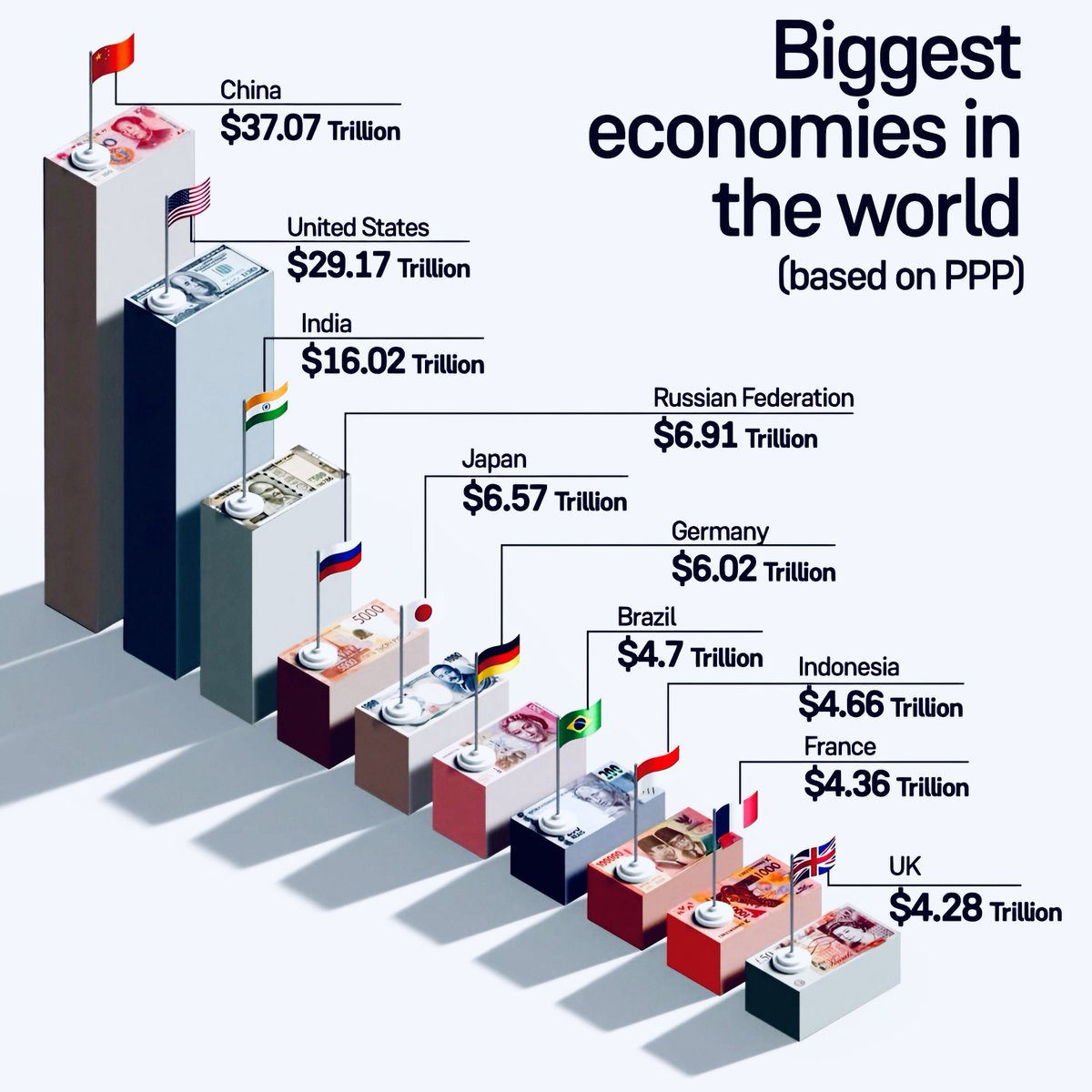
The 10 Largest Economies in 2025 (PPP)
1. China – The Unmatched Economic Powerhouse
China continues to hold its position as the largest economy in the world based on Purchasing Power Parity (PPP). The country’s rapid technological advancements, massive manufacturing sector, and expanding consumer market have bolstered its economic strength. Beijing’s focus on innovation, green energy, and infrastructure has paid off significantly, propelling China ahead of traditional economic giants. Despite challenges like demographic shifts and regional disparities, China remains resilient, poised to maintain its dominance through strategic investments and ongoing reforms.
2. United States – The Leading Global Innovator
The U.S. remains a heavyweight with a robust economy driven by innovation, advanced technology, and a dynamic services sector. Cutting-edge industries such as artificial intelligence, biotechnology, and clean energy continue to fuel its economic growth. American companies dominate global markets, and the country remains a top destination for international investments. While facing headwinds from political polarization and global economic uncertainties, the United States’ diverse economy and Silicon Valley innovation hub keep it firmly in the top spot in 2025.
3. India – The Rising Giant
India’s economy has experienced exponential growth, making it the third-largest in the world (PPP). Its expanding middle class, increasing urbanization, and significant investments in infrastructure and technology have accelerated growth. The nation’s digital economy is booming, with India emerging as a global leader in IT services, e-commerce, and renewable energy. With ongoing reforms aimed at ease of doing business, India is poised to challenge established economic powers and further solidify its position in the global hierarchy.
4. Japan – The Tech and Innovation Hub
Japan retains its fourth-place position thanks to its advanced technology, robotics, and automotive industries. Despite a declining population, Japan’s focus on innovation, quality manufacturing, and strategic economic partnerships continue to uphold its global standing. The country has also been investing heavily in sustainable energy and smart city initiatives to adapt to changing economic and environmental realities.
5. Germany – Europe’s Economic Leader
Germany remains Europe’s economic leader, bolstered by a resilient manufacturing sector, high exports, and a highly skilled workforce. Its leadership in automotive, machinery, and chemical industries ensures steady economic performance. Germany’s commitment to transitioning toward a green economy and embracing Industry 4.0 has allowed it to sustain growth and innovation amidst global uncertainties.
6. Indonesia – Southeast Asia’s Largest Economy
Indonesia’s economy has experienced remarkable growth, driven by a burgeoning middle class, urban expansion, and a wealth of natural resources. Investment in infrastructure, digital transformation, and renewable energy projects has contributed to its rising stature. The country’s strategic location and large population give it a significant advantage in the Southeast Asian region.
7. Brazil – South America’s Economic Power
Brazil’s economy has shown resilience through diversified sectors such as agriculture, mining, energy, and services. Recent reforms aimed at improving the business climate and reducing bureaucratic hurdles have fostered growth. Enhanced infrastructure investments, along with export expansion in commodities, continue to support its position among the world’s top economies.
8. Russia – Energy and Resources Dominance
Russia maintains its strong position with ample natural resources, especially oil, natural gas, and minerals. Its strategic focus on modernizing energy infrastructure and expanding its technological sectors has kept its economy competitive. Russia’s geopolitical importance and resource wealth ensure its ongoing role in the global economy.
9. Mexico – North America’s Quick Ascent
Mexico’s economy benefits from its advantageous location, free trade agreements, and a skilled, young workforce. The country is becoming a key player in manufacturing, especially in automotive and electronics industries. Investment in infrastructure and digital industries points toward continued growth, with Mexico climbing the ranks of global economic standings.
10. France – Europe’s Cultural and Economic Power
France maintains its position among the world’s top economies thanks to a diverse economy rooted in luxury goods, aerospace, agriculture, and tourism. Its stance on green energy and commitment to innovation in industries such as aerospace and pharmaceuticals position it well for future growth. France’s strategic partnerships within the EU also bolster its economic resilience.
In 2025, these economies continue to influence global markets, shaping international policies and economic trends for years to come. Their combined resilience and strategic growth initiatives secure their futures on the world stage.
 ChatGPT
 Perplexity
 Gemini AI
 Grok AI