Select Language:
Venezuela Leads Global Oil Reserves in 2025
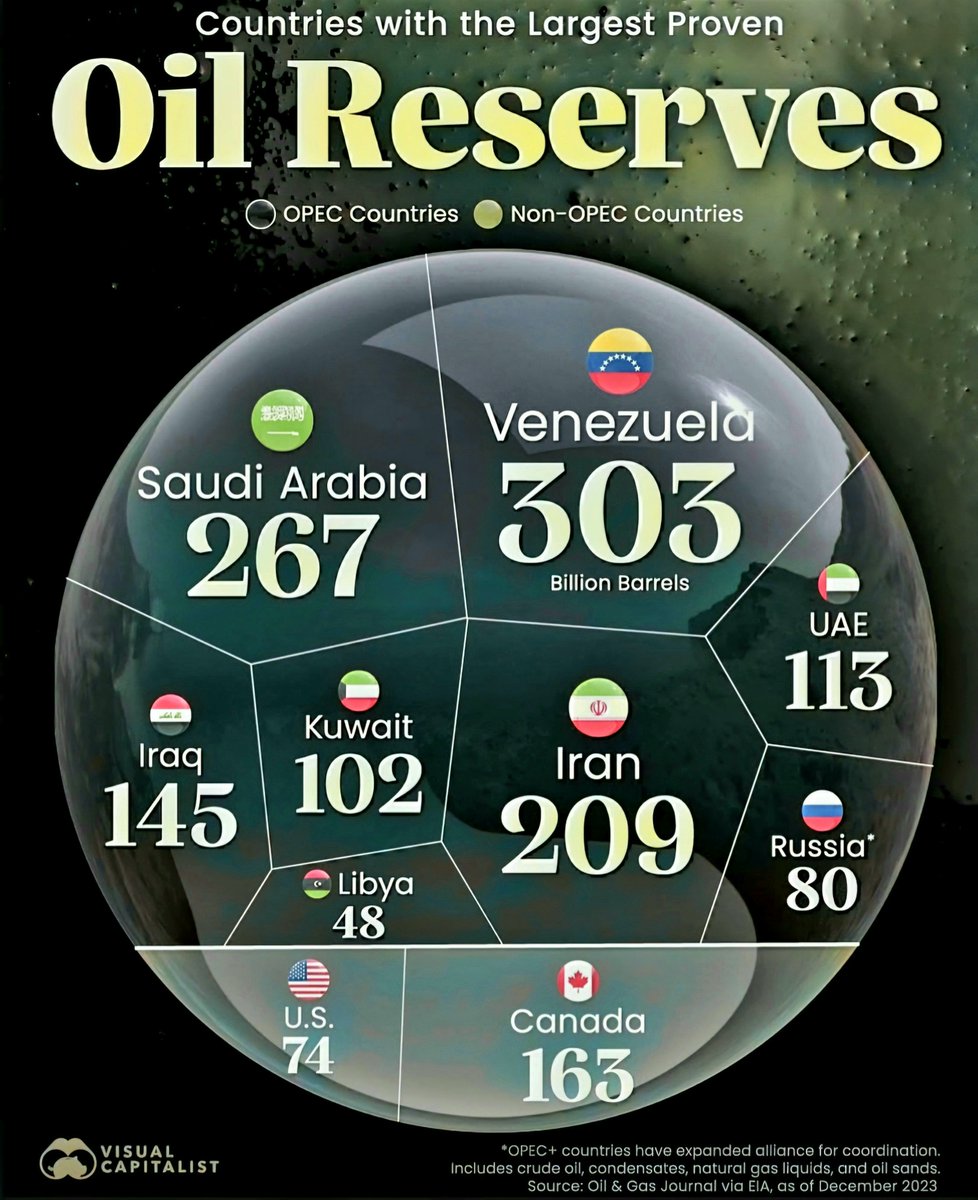
Venezuela remains at the top of the list with the world’s largest proven oil reserves, holding approximately 303 billion barrels of oil. Despite ongoing economic challenges and political uncertainties, the nation’s formidable underground oil riches continue to dominate global rankings. The vast Orinoco Belt significantly contributes to Venezuela’s massive reserves, making it a key player in global energy markets. However, tapping into these reserves has faced hurdles, including infrastructure issues and sanctions, impacting the country’s ability to fully capitalize on its resources.
Saudi Arabia Maintains Its Dominance as the Oil Giant
Saudi Arabia secures the second spot with approximately 267 billion barrels of proven oil reserves. As a leading member of OPEC, Saudi Arabia’s vast reserves have cemented its influence over worldwide oil supply and prices. The nation’s strategic oil policies and production capacity give it significant geopolitical leverage. Despite shifting trends toward renewable energy, Saudi Arabia continues to invest heavily in maintaining its status as a global oil powerhouse.
Iran’s Reserves Remain Impressive Despite Sanctions
Iran holds about 209 billion barrels of proven oil reserves, ranking third globally. While sanctions and international negotiations have complicated Iran’s oil industry, the country’s reserves remain substantial. Iran’s oil fields, especially the South Pars and Persian Gulf regions, are critical to its economy and regional influence. With renewed interest and potential easing of restrictions in 2025, Iran’s oil future remains closely watched by global markets.
Canada’s Rich Oil Sands Fuel Its Economy
Canada secures the fourth position with approximately 163 billion barrels of proven reserves, primarily in the oil sands of Alberta. The Canadian oil sector has grown significantly in recent years, leveraging advanced extraction technologies. Despite environmental concerns and shifts toward sustainable energy, Canada continues to expand its oil extraction efforts, positioning itself as a major player in North America’s energy landscape.
Iraq’s Strategic Oil Holdings
With around 145 billion barrels of reserves, Iraq ranks fifth on the list. The country possesses the fifth-largest proven reserves globally and relies heavily on oil exports for economic stability. Iraq’s oil fields, located mainly in the Basra region, are some of the most productive. Ensuring stability and modernizing infrastructure are key to Iraq’s ability to maximize its resource potential.
UAE’s Growing Oil Reserves and Production
The United Arab Emirates, with about 113 billion barrels of reserves, is a significant oil producer in the Middle East. Abu Dhabi’s oil fields, notably the Zakum and Upper Zakum fields, are among the largest in the world. The UAE has been diversifying its economy, but oil remains central to its wealth and strategic global energy position, especially with investments in offshore and deep-field projects.
Kuwait’s Maintaining Its Oil Wealth
Kuwait holds approximately 102 billion barrels of proven reserves, ranking seventh globally. Its oil-rich fields, particularly the Burgan field, are some of the largest in the world. Kuwait’s government remains committed to managing its resources prudently, investing in infrastructure and technology to sustain production levels amid global energy shifts.
Russia’s Extensive Oil Reserves
Russia maintains roughly 80 billion barrels of proven reserves, making it a vital energy supplier to Europe and Asia. Its vast Siberian oil fields and Arctic explorations continue to support its position as a top oil reserve holder. Political factors, including sanctions and international relations, influence Russia’s ability to fully exploit its reserves, but its long-term energy strategy remains robust.
United States: A Leading Non-OPEC Oil Power
The United States possesses about 74 billion barrels of proven reserves, with significant portions located in Texas, North Dakota, and the Gulf of Mexico. The U.S. has become a dominant oil producer thanks to technological advancements in hydraulic fracturing and horizontal drilling. Its reserve estimates fluctuate based on technological and economic factors, but the country remains a pivotal figure in global energy markets.
Libya’s Fragile but Rich Oil Reserves
Libya holds around 48 billion barrels of proven reserves, primarily in the Sirte Basin. Political instability and conflict have hampered near-term expansion, but Libya’s reserves promise substantial potential once stability is restored. As the country seeks to rebuild its infrastructure, it could significantly impact North African and global oil supplies.
Summary
As of December 2023, global oil reserves remain concentrated in a handful of nations, with Venezuela leading the pack. The evolving geopolitical landscape, technological advances, and international policies will continue to shape the extraction and utilization of these resources moving into 2025 and beyond. Countries like Canada, Iraq, and the UAE are increasingly influential, while traditional giants like Saudi Arabia and Russia maintain their strategic dominance.
Source: Oil & Gas Journal via EIA
 ChatGPT
 Perplexity
 Gemini AI
 Grok AI