Select Language:
The World’s Top 10 Countries with the Largest Proven Natural Gas Reserves in 2025
Natural gas remains a vital component of the global energy landscape, fueling economies and powering industries across the world. As technology advances and exploration expands, some countries continue to hold enormous reserves of this precious resource. Here’s a detailed look at the top 10 nations with the largest proven natural gas reserves in 2025.
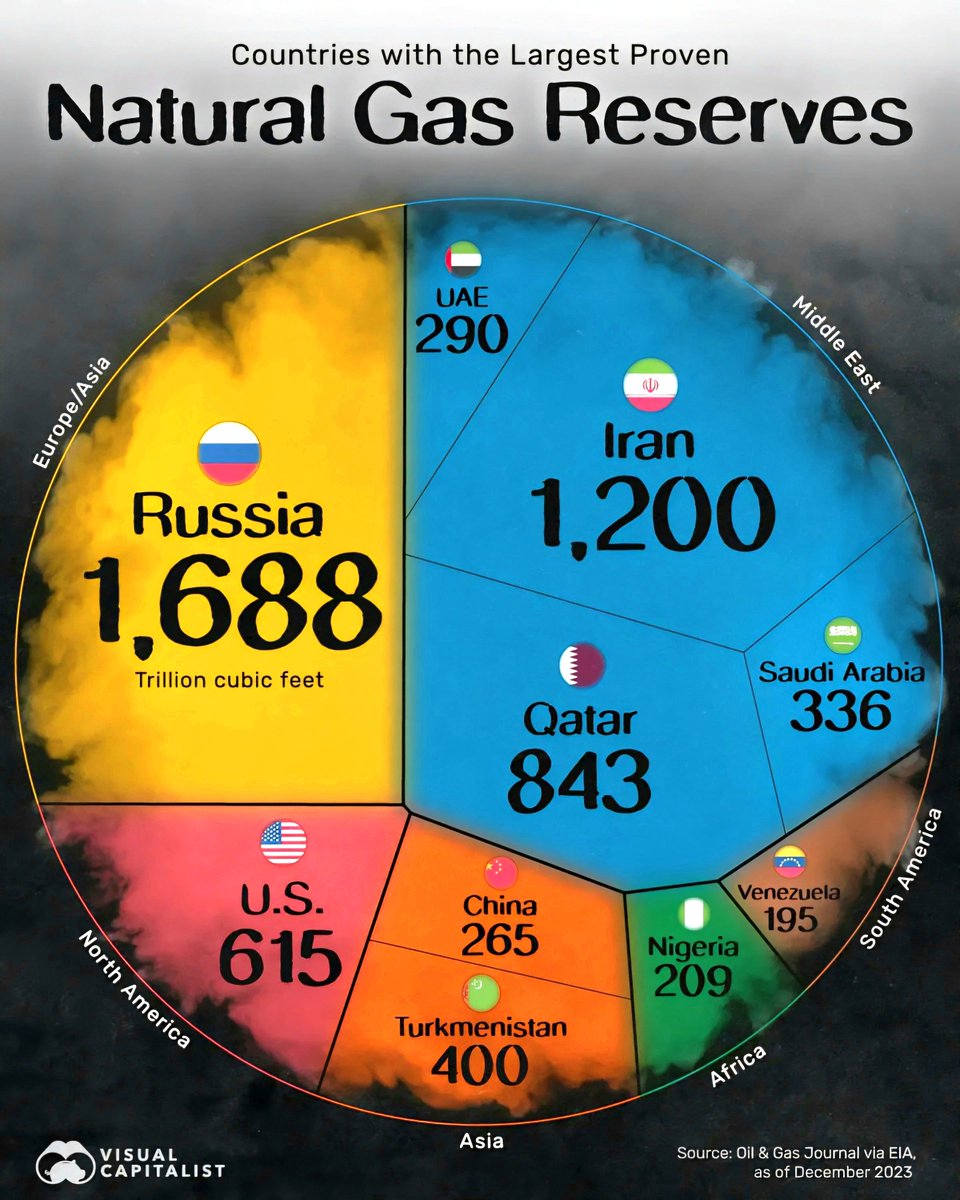
1. Russia: Dominating the Global Landscape
Russia, renowned for its vast natural resources, maintains the largest proven natural gas reserves in the world. With an estimated 37 trillion cubic meters of proven reserves, Russia’s Siberian fields—such as Urengoy, Yamburg, and Sakhalin—serve as the backbone of its energy sector. The country heavily relies on natural gas exports, especially through pipelines like Nord Stream and Power of Siberia, to sustain its economy and global influence.
2. Iran: A Persian Gas Powerhouse
Iran holds approximately 32 trillion cubic meters of proven natural gas reserves, making it the second-largest holder worldwide. Its South Pars/North Dome field, shared with Qatar, is the most extensive gas field globally. Iran’s strategic geographical position and large reserves give it significant leverage in global energy markets, although U.S. sanctions have historically constrained its export capacity.
3. Qatar: The Gulf’s Gas Champion
Although now ranked third, Qatar remains a critical player in the global natural gas scene, boasting about 14.2 trillion cubic meters of reserves. Its North Field, the same as Iran’s South Pars, fuels its vast LNG export industry, making Qatar one of the world’s leading LNG exporters. The country’s economic stability heavily depends on these exports, with plans for expanding its liquefaction facilities.
4. Turkmenistan: Central Asian Gas Reserves
Holding approximately 7 trillion cubic meters, Turkmenistan boasts significant reserves nestled within the vast and relatively unexplored Karakum Desert. Its proximity to China, Iran, and Russia positions Turkmenistan as a key energy transit hub and an emerging gas exporter in Central Asia.
5. United States: Leading in Market Size
The USA contains around 13.5 trillion cubic meters of proven reserves, ranking it among the top countries. The U.S. has experienced a shale gas revolution, unlocking previously inaccessible reserves through advanced hydraulic fracturing and horizontal drilling techniques. As domestic consumption rises and export terminals expand, the U.S. continues to grow as a significant global natural gas supplier.
6. Turkiye (Turkey): Rising Reserves and Regional Significance
While not traditionally a natural gas producer, Turkey has approximately 2.2 trillion cubic meters of proven reserves, mostly located offshore and in its eastern regions. Its strategic position as a transit country for pipeline routes from Russia and Central Asia makes Turkey increasingly influential in regional energy dynamics.
7. China: Expanding Reserves
With an estimated 3.8 trillion cubic meters of reserves, China’s natural gas industry is rapidly expanding. Recent discoveries, notably in the Sichuan Basin and offshore fields, aim to reduce reliance on coal and import dependence, emphasizing cleaner energy transitions.
8. Venezuela: Latin America’s Natural Gas Giant
Venezuela holds around 5.4 trillion cubic meters of proven gas reserves. Its vast reserves are primarily located in offshore fields along the Gulf of Venezuela. Political and economic challenges, however, have hindered the country’s ability to fully exploit its resources and increase exports.
9. Nigeria: Africa’s Leading Gas Producer
Nigeria maintains approximately 2.6 trillion cubic meters of proven reserves. Its reserves are concentrated offshore, with significant development planned to boost liquefied natural gas (LNG) capacity. Nigeria’s gas industry is seen as critical for diversifying its economy and reducing gas flaring.
10. Australia: Rapidly Growing Reserves
Rounding out the top 10, Australia possesses about 3.2 trillion cubic meters of proven reserves. Its massive offshore fields, such as Ichthys and Prelude, have propelled Australia to become one of the world’s leading LNG exporters, with plans to increase capacity further in the coming years.
Future Outlook
As 2025 progresses, the landscape of natural gas reserves continues to evolve. Countries are investing heavily in exploration, infrastructure, and technology to maximize their reserves and meet rising global demand. Meanwhile, geopolitical considerations and environmental policies will influence how these reserves are developed and utilized. The transition towards cleaner energy sources may also shift the global reliance on natural gas, but for now, these nations maintain their crucial roles in the world’s energy economy.
Note: Reserve figures are approximate and subject to change as new discoveries are made and existing fields are reevaluated.
 ChatGPT
 Perplexity
 Gemini AI
 Grok AI