Select Language:
What the Latest 2025 Data Reveals About Global Living Standards Compared to the United States
1. The Top Countries in Global Quality of Life Rankings
According to the 2025 World Life Quality Index, nations such as Switzerland, Denmark, and Norway continue to dominate the highest spots for overall living standards. These countries are praised for their advanced healthcare systems, strong economies, and high levels of education. Interestingly, many of these nations also rank highly in happiness reports, underscoring the connection between economic stability and personal satisfaction.
Image showing global rankings:
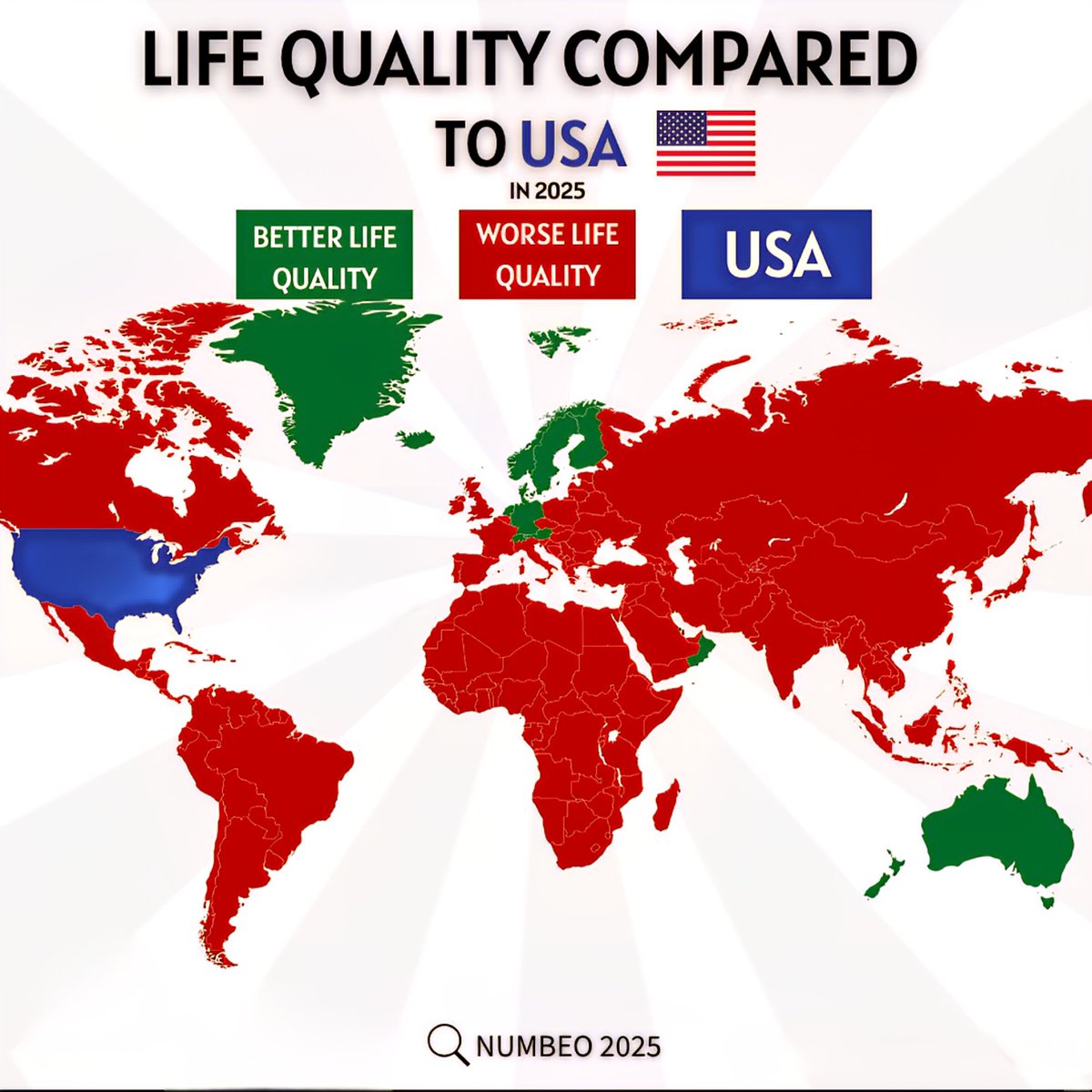
2. The U.S. Experience: Steady But Facing New Challenges
While the United States remains one of the top global economies, its overall quality of life has seen slight fluctuations in 2025. Factors such as rising healthcare costs, inflation, and regional disparities have affected residents unevenly. Nevertheless, the U.S. continues to excel in technological innovation, higher education, and cultural influence worldwide.
Key Point: Economic resilience helps maintain the U.S. position, but challenges in social equity and healthcare accessibility highlight ongoing issues.
3. Healthcare Systems: A Comparative Perspective
When comparing healthcare, many of the top-ranked countries like Switzerland and Germany showcase universal healthcare models that ensure accessibility and affordability for all citizens. In contrast, the U.S. healthcare system’s reliance on employer-based plans and insurance subsidies results in disparities, with millions still lacking adequate coverage.
Highlight: The difference is evident—Universal healthcare nations experience better health outcomes and higher life expectancy rates than the U.S., which continues to grapple with healthcare inequalities.
4. Education Quality and Accessibility
Education plays a significant role in quality of life, and countries in Scandinavia, as well as Canada and Australia, maintain high standards for accessible, high-quality education systems. The U.S. remains competitive with its prestigious universities and extensive research opportunities, but student loan debt and disparities in primary and secondary education accessibility persist as concerns.
Insight: Education systems that promote equity and innovation directly influence national happiness and economic prosperity.
5. Environmental Sustainability and Green Living
Environmental factors are increasingly pivotal in quality of life assessments. Countries such as Sweden and New Zealand stand out for their proactive environmental policies, renewable energy usage, and conservation efforts. While the U.S. has made strides in some regions, climate change and pollution remain pressing issues, especially in urban centers.
Observation: Sustainable policies contribute to healthier living environments, which directly impact public health and overall happiness indices.
6. Cost of Living and Economic Freedom
The cost of living remains a determining factor in quality of life. Countries like Portugal and Mexico offer lower living costs alongside high happiness scores, making them attractive for expatriates and retirees. The U.S., despite its wealth, experiences high housing prices and living costs in major cities, which can strain household budgets.
Conclusion: Balancing affordability with economic opportunity is essential in maintaining high standards of living.
7. Work-Life Balance and Social Wellbeing
Nordic countries consistently score well on work-life balance, parental leave, and social security measures. These policies foster happiness and reduce stress levels among residents. The U.S., with longer working hours and less comprehensive social safety nets, faces challenges in providing comparable levels of social wellbeing.
Takeaway: Social safety nets and policies supporting work-life harmony are critical components for thriving societies.
8. Personal Safety and Crime Rates
Safety is an essential aspect of quality of life. Countries such as Japan, Singapore, and the Scandinavian nations report minimal crime rates and high levels of personal security. The U.S. has seen improvements but still grapples with higher crime rates in certain urban areas, impacting residents’ sense of safety.
Summary: Personal safety is fundamental to happiness, making crime rates a key metric in global quality of life rankings.
9. Technology and Connectivity
In 2025, technological infrastructure significantly enhances quality of life worldwide. High-speed internet, access to digital services, and innovation hubs are prevalent in top-ranked nations. The U.S. is a global leader in tech industries, but disparities in digital access persist across regions.
Note: Connectivity not only boosts productivity but also fosters social connections and access to resources.
10. Cultural and Recreational Opportunities
Lastly, cultural richness and recreational options contribute to life satisfaction. Countries with vibrant arts scenes, outdoor activities, and historic sites—such as Italy, France, and Spain—offer residents and visitors enriching experiences. Despite its diversity, the U.S. still competes with its vast cultural landscape, national parks, and entertainment industry.
Final thought: A blend of cultural diversity and access to leisure activities is crucial for a fulfilling life.
As of 2025, it’s clear that while the United States maintains its economic and cultural influence, many nations excel in aspects that fundamentally foster higher quality of life. The global landscape continues to evolve, with sustainability, healthcare, education, and social policies shaping the future of happiness worldwide.
 ChatGPT
 Perplexity
 Gemini AI
 Grok AI