Select Language:
The Countries Burdened the Most by IMF Debt in 2025
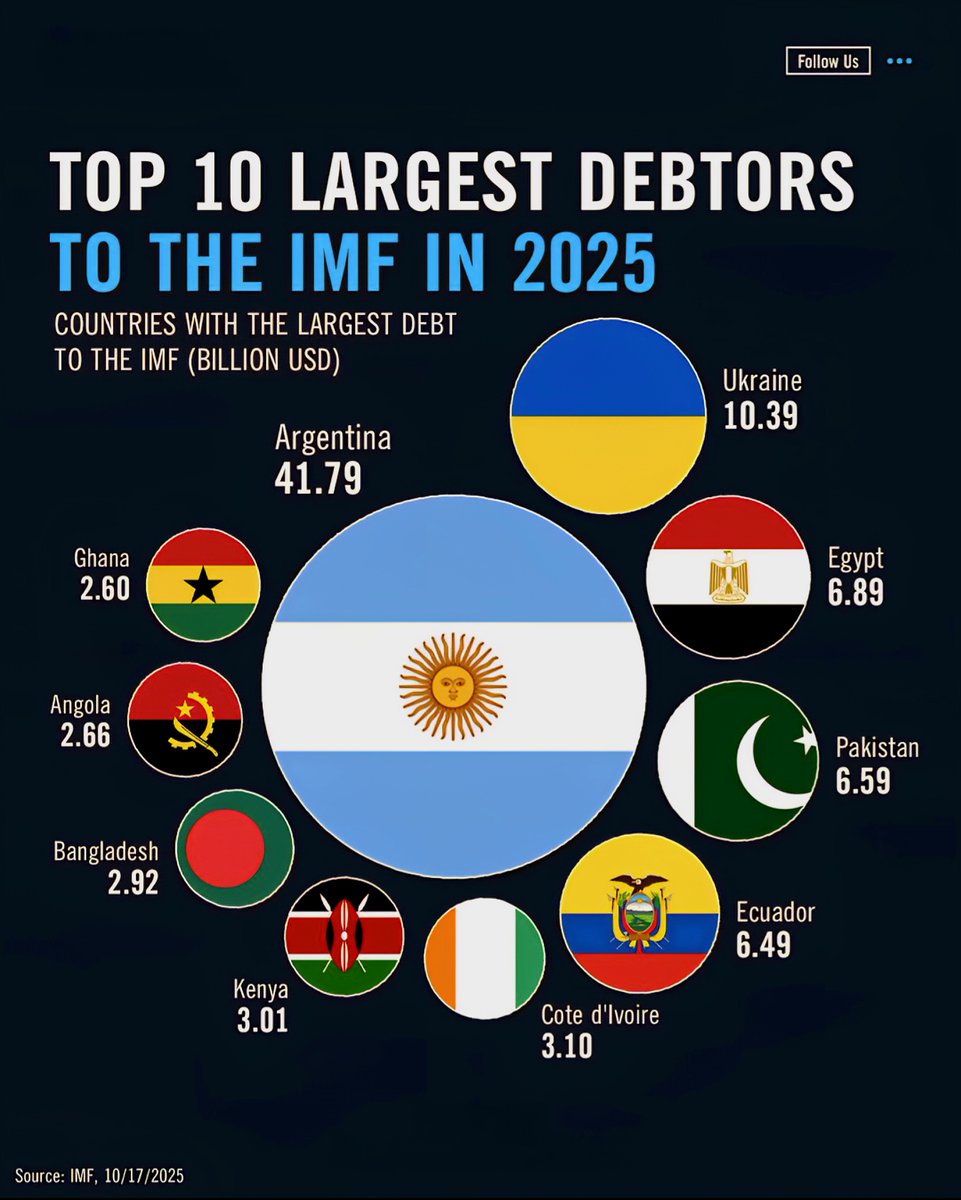
1. Argentina: A Persistent Struggle with Debt
Argentina continues to top the list as one of the most indebted countries to the International Monetary Fund. Despite multiple debt restructurings over the years, the nation grapples with economic instability, high inflation rates, and ongoing financial crises. In 2025, Argentina owes the IMF nearly $20 billion, making its debt a significant concern for economic stability and future growth prospects. The country’s reliance on IMF programs highlights the ongoing challenges of balancing financial aid with sustainable development.
2. Egypt: Balancing Growth and Debt
Egypt has accumulated a substantial debt to the IMF, amounting to approximately $12 billion in 2025. The country’s economic reforms and infrastructure projects have been partly funded by IMF loans. While these initiatives have led to consecutive years of economic growth, they also place Egypt under considerable financial strain. The government faces the difficult task of repaying debt while boosting employment and maintaining social stability, all amid fluctuating global markets.
3. Pakistan: Navigating Economic Turbulence
Pakistan’s economic situation remains precarious, with the country owing about $10 billion to the IMF in 2025. The nation has depended heavily on IMF bailouts to stabilize its currency and implement reforms amid ongoing political uncertainties. These loans are crucial for managing the country’s balance of payments and inflation issues. However, the debt also raises concerns about long-term debt sustainability and the potential need for further financial assistance.
4. Ukraine: A War-Affected Economy Under Pressure
In 2025, Ukraine’s debt to the IMF is estimated at over $8 billion. The ongoing conflict with Russia has severely impacted Ukraine’s economy, complicating efforts to stabilize and rebuild. The IMF has been a vital partner in providing financial aid to support reforms and aid in recovery efforts. However, the war’s economic toll continues to make debt management a significant challenge, with international aid being pivotal to Ukraine’s economic resilience.
5. Ethiopia: Economic Growth Amid Debt Concerns
Ethiopia owes approximately $7.5 billion to the IMF in 2025 as it pursues rapid economic development. The nation’s ambitious infrastructure projects, such as hydroelectric dams and transportation networks, are financed through IMF loans. While Ethiopia has experienced swift growth, its debt levels are under scrutiny, raising questions about debt sustainability once these projects are operational. The government emphasizes growth, but financial prudence remains a vital concern.
6. Nigeria: Oil Revenue and Debt Management
Nigeria’s reliance on oil exports makes its economy vulnerable to global price fluctuations, impacting its debt obligations to the IMF, which total about $6.5 billion. The country continues to seek IMF assistance to diversify its economy and improve fiscal management. While oil revenue temporarily cushions the economy, high debt levels and fluctuating oil prices pose risks to economic stability and the country’s ability to meet its IMF commitments.
7. Sri Lanka: Debt Crisis and Recovery Efforts
Sri Lanka’s debt-to-IMF stands at approximately $5.8 billion in 2025. The island nation is navigating a severe debt crisis that has led to widespread economic hardship, inflation, and social unrest. The IMF has stepped in with financial aid and structural reforms aimed at stabilizing the economy. However, the road to economic recovery remains long, with debt repayment and fiscal consolidation as key priorities.
8. Ghana: Managing Growth and Debt Levels
Ghana owes around $5 billion to the IMF in 2025, as it strives to balance economic growth with debt sustainability. The country has implemented reforms aimed at boosting exports, expanding the mining, agriculture, and energy sectors, and improving fiscal policies. The challenge lies in maintaining this growth trajectory without exacerbating debt levels, especially amid global economic uncertainties.
9. Mozambique: Post-Disaster Debt Recovery
Following recent natural disasters and economic shocks, Mozambique’s debt to the IMF has increased to roughly $4.5 billion. The country is working on rebuilding and stabilizing its economy through IMF-supported programs that focus on economic reforms and debt relief. The goal is to restore investor confidence and stimulate sustainable development in the face of ongoing challenges.
10. Lebanon: Economic Collapse and Debt Struggles
Lebanon’s financial crisis has been ongoing for several years, with its IMF debt reaching about $4 billion in 2025. The country faces hyperinflation, banking crises, and a collapse of public services. IMF assistance is crucial for Lebanon’s efforts to restore fiscal stability, but political instability and economic hardship make debt management an uphill battle. The nation continues to seek IMF support to stabilize its economy and lay the groundwork for recovery.
In 2025, the global economic landscape demonstrates that many nations remain heavily dependent on IMF aid, battling high debt levels amidst geopolitical and internal challenges. The balance between leveraging financial assistance for economic growth and maintaining sustainable debt levels remains a critical issue for these countries and the international community alike.
 ChatGPT
 Perplexity
 Gemini AI
 Grok AI