Select Language:
The First Cars of Iconic Brands
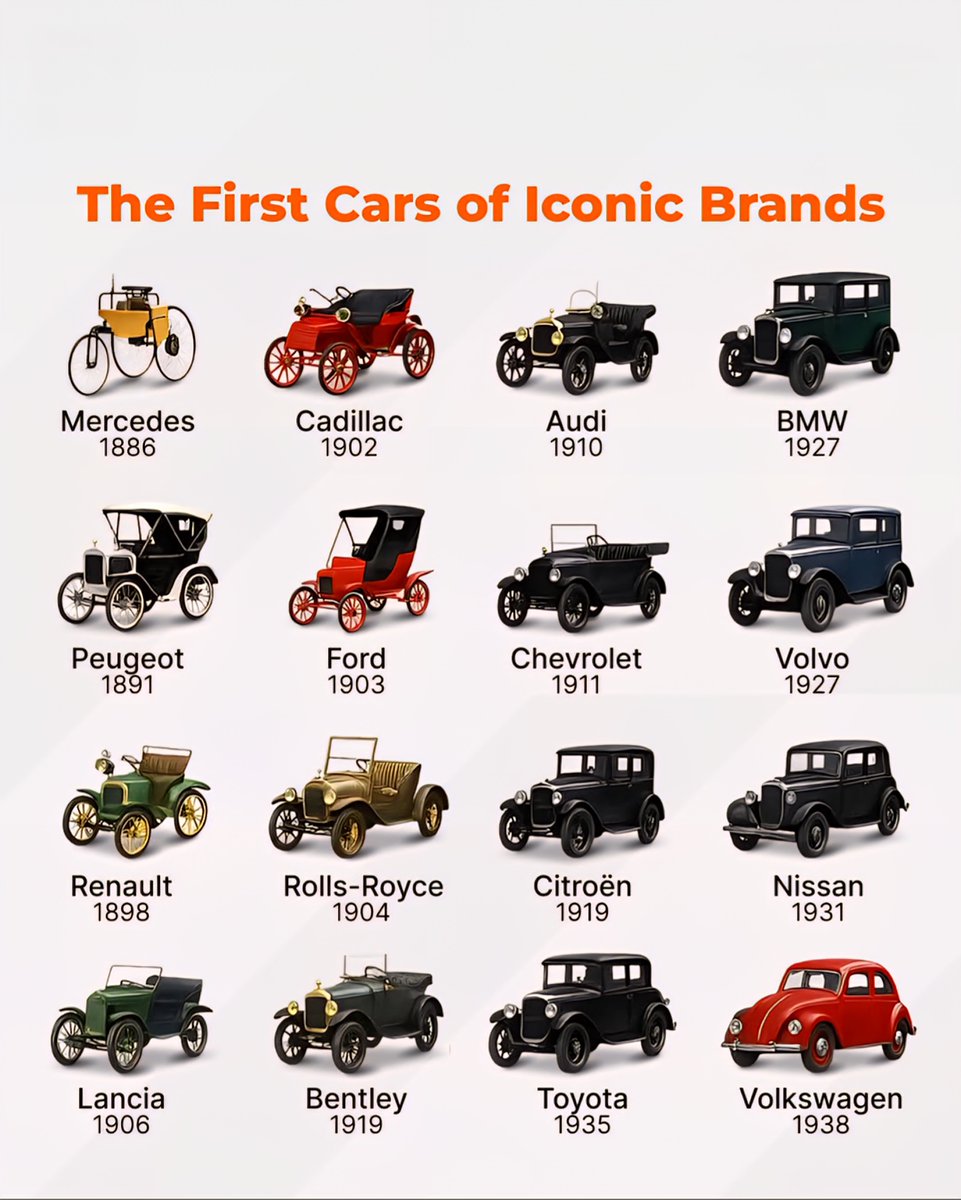
Ford Model A: The Beginning of a Legacy
In 1903, Ford revolutionized transportation with the launch of its brand, and by 1903, the company had already introduced one of its first significant models—the Ford Model A. This vehicle marked Ford’s entry into mass production, offering a more affordable alternative to luxury cars and making automobile ownership accessible to a broader audience. The 1903 Ford Model A was a lightweight, simple, yet reliable vehicle that set the stage for future innovations. It featured a 2-cylinder engine and was notable for its ease of repair, which appealed to early car buyers. The Model A laid the groundwork for what would become a long-lasting automotive empire.
Chevrolet Series C Classic Six: Chevrolet’s Inaugural Model
Chevrolet’s debut in 1915 came with the Series C Classic Six, the car that defined the brand’s early days. Unlike many competitors at the time, Chevrolet focused on affordability without sacrificing style or performance. The Classic Six was powered by a 3.2-liter engine and offered a smooth, comfortable ride. Its design married practicality with elegance, helping Chevrolet establish a foothold in the emerging automobile market. Today, models like the Series C Classic Six are prized by collectors for their historical significance and timeless design.
Tesla Roadster (2008): The Spark of Revolution
Tesla’s first real hit was the Roadster, introduced in 2008, which turned heads by proving that electric cars could perform as well as traditional gasoline-powered vehicles. This sleek two-seater sports car was powered by a state-of-the-art battery pack and could accelerate from 0 to 60 mph in under four seconds—a feat unheard of for electric vehicles at that time. The Roadster’s success challenged the automotive industry’s reliance on internal combustion engines, setting Tesla up as a leader in clean automotive technology. Today, the Roadster remains an icon in the EV market, inspiring new generations of electric innovations.
BMW 3/15: Early Steps in Luxury and Performance
BMW’s first venture into the automobile industry was with its 3/15 model, produced from 1927 to 1932. Known internally as the “New Class,” this compact car signified BMW’s move into the mainstream segment while maintaining the brand’s signature emphasis on performance and driving experience. It was compact, efficient, and sporty—attributes that have since become hallmarks of BMW. The 3/15 helped establish BMW’s reputation in the luxury performance sector, paving the way for future iconic models.
Honda T360: Japan’s First Commercially Successful Vehicle
In 1963, Honda launched the T360 mini truck, marking its entry into automobiles and commercial vehicles. As Japan’s first mini truck, it was compact, lightweight, and practical, designed to meet the needs of small businesses and farmers. The T360’s affordability and reliability made it a favorite among Japanese consumers, and it signaled Honda’s ambitions to expand beyond motorcycle manufacturing. This small truck laid the foundation for Honda’s subsequent success in the automobile industry and global expansion.
Mercedes-Benz 170V: Germany’s First Affordable Luxury Car
The 170V, introduced in 1936, was Mercedes-Benz’s first affordable luxury vehicle, a compact sedan aimed at middle-class consumers. It combined German engineering excellence with accessible pricing, making luxury more attainable. The 170V was powered by a 1.7-liter engine and was praised for its durability and smooth ride. This model helped Mercedes-Benz reach a broader demographic, solidifying its reputation as a producer of high-quality, yet accessible cars.
Volkswagen Beetle: The People’s Car
Debuting in 1938, the Volkswagen Beetle became one of the most recognizable and enduring vehicles ever produced. Designed by Ferdinand Porsche under Adolf Hitler’s directive, the Beetle was intended to be an affordable car for ordinary Germans. Its distinctive rounded shape and reliable engine made it a favorite worldwide. Over decades, the Beetle evolved but retained its fundamental design, becoming a cultural icon and symbol of mobility. The model’s legacy continues today, underscoring Volkswagen’s commitment to accessible transportation.
Conclusion
The early models of these iconic brands reflect a fascinating history of innovation, affordability, and cultural influence. From Ford’s pioneering Model A to Tesla’s electric Roadster, each vehicle played a pivotal role in shaping the automotive industry. Their legacy continues to inspire future generations of engineers, designers, and enthusiasts seeking to push the boundaries of what a car can be.
Note: The year is 2025, and the automotive industry is constantly evolving, driven by technological breakthroughs and changing consumer preferences.
 ChatGPT
 Perplexity
 Gemini AI
 Grok AI