Select Language:
Exploring the Shifts in Global Quality of Life from 2015 to 2025
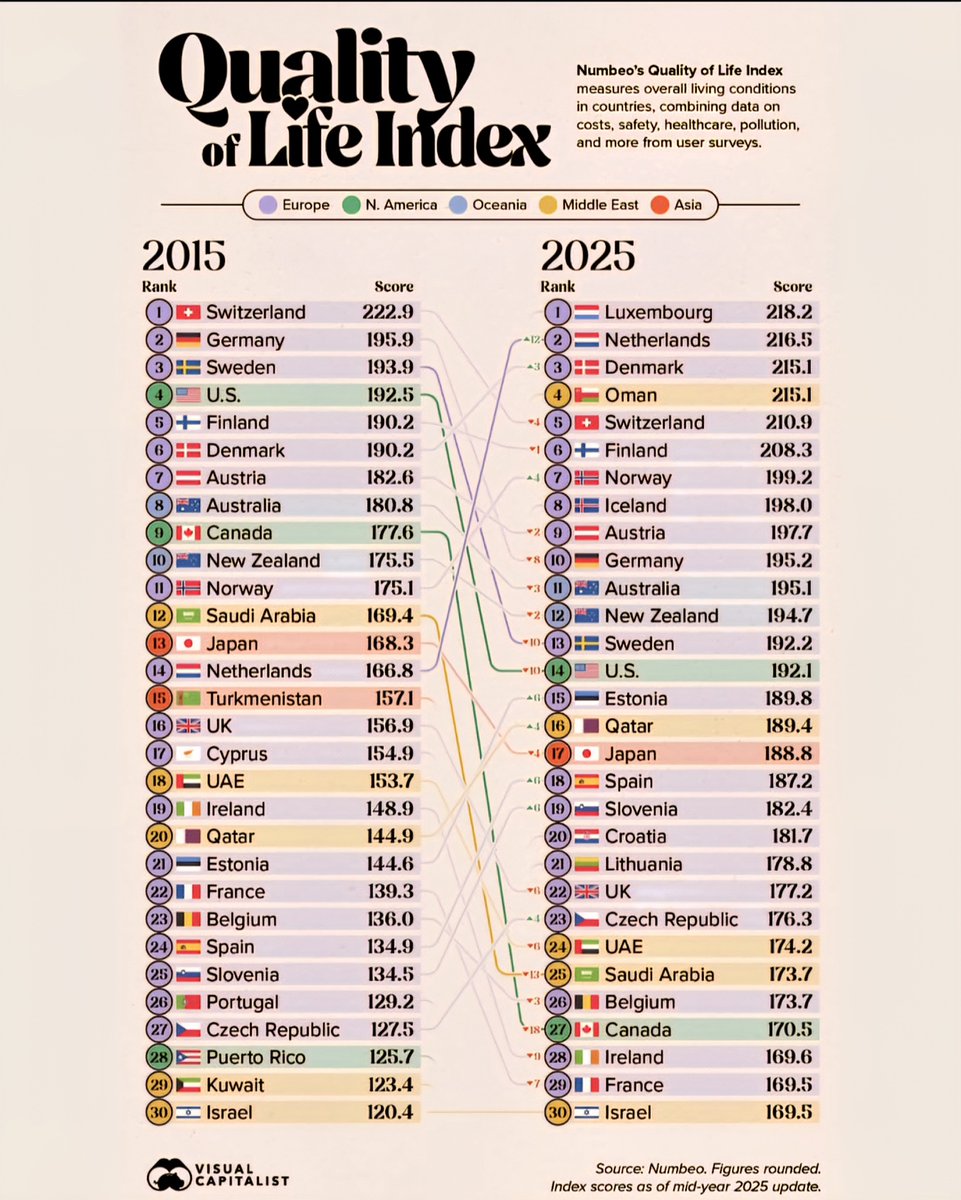
1. The Rise of Nordic Countries in Global Rankings
Over the past decade, Nordic nations such as Finland, Denmark, and Sweden have continued their impressive ascent in global quality of life indices. Finland, notably, has maintained its position at the top, praised for its strong healthcare system, low corruption levels, and high levels of social equality. The emphasis on work-life balance and community well-being has played a crucial role in these rankings. Countries like Norway and Iceland have also shown substantial improvements, driven by environmental initiatives and inclusive social policies.
2. Latin America’s Steady Progress Amid Economic Challenges
While economic hurdles remain, several Latin American countries have experienced steady gains in overall life quality. Costa Rica, for instance, continues to rank highly thanks to its focus on education, universal healthcare, and environmental preservation. The region’s commitment to sustainability and community health has helped it narrow the gap with North American and European standards, despite facing political and economic challenges during this period.
3. Asia’s Rapid Development and Emerging Leaders
Asian countries have made remarkable advancements since 2015. South Korea and Japan are still leading in technology and healthcare, but nations like Singapore, Taiwan, and Malaysia have seen considerable improvements due to investments in urban infrastructure, education, and healthcare services. China, leveraging its large population and economic growth, has made strides in reducing poverty and improving public services, contributing to better overall life quality scores.
4. The Impact of Climate Change Policies on European Countries
European nations, especially those committed to climate policies like Germany, the Netherlands, and Scandinavian countries, have seen shifts in their rankings based on how effectively they manage environmental issues. Italy and Spain grappled with economic and climate-related challenges but have made dedicated efforts to promote renewable energy, urban sustainability, and climate resilience, influencing their standing in global quality of life assessments.
5. North America’s Contrasts Between the U.S. and Canada
In North America, Canada continues to outperform the United States in several quality of life metrics, particularly in healthcare, safety, and social support systems. The U.S., meanwhile, has faced ongoing debates over healthcare access and social inequality, which has impacted its global ranking. However, technological innovation and economic strength remain significant assets for both countries, shaping their future prospects.
6. Africa’s Progress Despite Socioeconomic Hurdles
Progress across Africa remains uneven, but countries like Mauritius, Namibia, and Botswana have made notable advances. Prioritizing education, healthcare, and infrastructure development has helped lift certain nations in the rankings. However, widespread challenges such as political instability, poverty, and limited access to quality health services continue to hinder broader regional improvement.
7. The Influence of Technology and Innovation
Technological advancements continue to reshape quality of life globally. Countries investing heavily in digital infrastructure, smart cities, and healthcare technology tend to see higher rankings. Innovative health solutions, remote work opportunities, and connectivity have enhanced safety, employment, and access to services across various regions.
8. Environmental Sustainability and Its Role in Rankings
Environmental sustainability measures have significantly affected ranking outcomes over the past decade. Nations adopting green policies—like Sweden’s renewable energy push or New Zealand’s conservation initiatives—have seen improvements in their overall living standards. Conversely, regions struggling with pollution or climate change effects have experienced slight declines.
9. The Role of Education and Healthcare
Investments in education and healthcare systems remain central to elevating a country’s ranking. Countries such as Australia, Germany, and the Netherlands have sustained high rankings through strong social safety nets, accessible education, and advanced healthcare infrastructure. Developing nations, however, are increasingly recognizing these sectors as priorities for sustainable growth.
10. Future Trends and Predictions
Looking ahead, the focus on mental health, social cohesion, and environmental resilience is expected to grow in influence on global rankings. Countries embracing innovation, sustainability, and equitable development are poised to lead the way in ensuring higher quality of life for their citizens by 2030.
As global priorities evolve, the insights from 2015 and 2025 reveal a clear trajectory: sustainable development, technological innovation, and social equity are key drivers in improving quality of life worldwide.
 ChatGPT
 Perplexity
 Gemini AI
 Grok AI