Select Language:
Top 10 Most Common Birthdays in the United States
1. September 16
September 16 continues to be the most popular birthday in the U.S., with millions celebrating their big day around this date. This trend suggests that many babies conceive during winter months, possibly around the holiday season, leading to an increase in births in late September.
2. September 9
Following closely behind September 16, September 9 ranks as one of the most common birthdays. Its popularity also aligns with the trend of late fall conceptions, making it a favorite among new parents.
3. September 23
The first day of autumn is a surprisingly popular birthday, with many babies born on this date. The popularity may be linked to the timing of conception during the holiday season as well, accentuating fall as a favored season for birthdays.
4. September 17
Another September birthday making the list, September 17 has seen consistent growth in birth rates, possibly due to family planning choices and seasonal influences favoring late summer and early fall conceptions.
5. September 10
Rounding out the top five, September 10 continues the trend of September surges, emphasizing the holiday season’s influence on conception patterns.
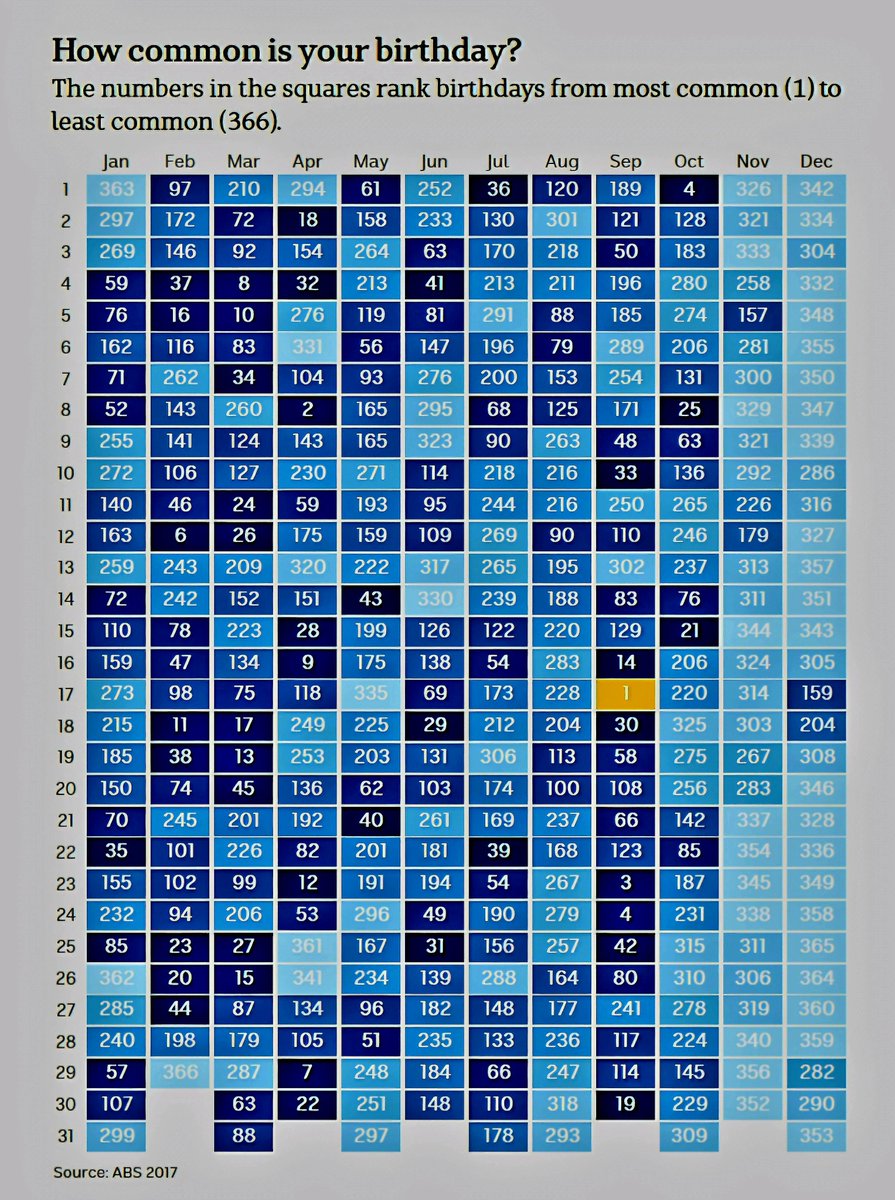
Top 10 Least Common Birthdays in the United States
1. December 25
Christmas Day is the least common birthday, probably due to logistical reasons like scheduling surgeries or births around the holiday, as well as less likelihood of conflicting schedules for parents planning a baby’s arrival.
2. December 24
Christmas Eve is also rare for birthdays, often because many hospitals and birthing centers prefer scheduled deliveries to avoid holiday disruptions, resulting in fewer babies born on this date.
3. December 26
The day after Christmas sees a dip in births, likely due to the same scheduling and holiday planning reasons as Christmas Day and Christmas Eve.
4. December 25 (Christmas)
Celebrated globally, Christmas remains the least common birthday, with data consistently showing fewer births on this holiday.
5. January 1
New Year’s Day tends to have fewer births, attributed to scheduled cesarean sections and inductions. Many hospitals avoid scheduling births on this holiday, leading to lower birth counts.
6. July 4
Independence Day sees a significant drop in births. Families and hospitals often plan around the holiday, resulting in fewer scheduled deliveries.
7. December 31
The last day of the year is also less common for births due to similar scheduling preferences and holiday-related planning.
8. December 23
Leading into Christmas, December 23 often has reduced birth rates, possibly due to hospital policies or parental preferences.
9. November 1
Post-Halloween, November 1 is less common, with some expecting parents choosing to avoid scheduling births immediately following the holiday or during the fall due to seasonal factors.
10. February 29
A leap year favorite, February 29 has a naturally lower birth count because it occurs only once every four years, making it an uncommon birthday.
While the specific reasons for these trends can vary, seasonal, logistical, and cultural factors all play vital roles in shaping when babies are born in the U.S. The consistent popularity of September birthdays highlights the impact of conception timing, especially around the holiday season, whereas holidays like Christmas and New Year’s are less common for birthdays, often because of scheduling considerations and hospital policies. Recognizing these patterns is instrumental in understanding broader demographics and reproductive trends.
Note: Birth data for 2025 continues to be analyzed for further insights, emphasizing how societal factors, healthcare policies, and personal preferences influence birth timings nationwide.
 ChatGPT
 Perplexity
 Gemini AI
 Grok AI