Select Language:
All Countries Starting with the Letter “I” Form a Straight Line Across the World
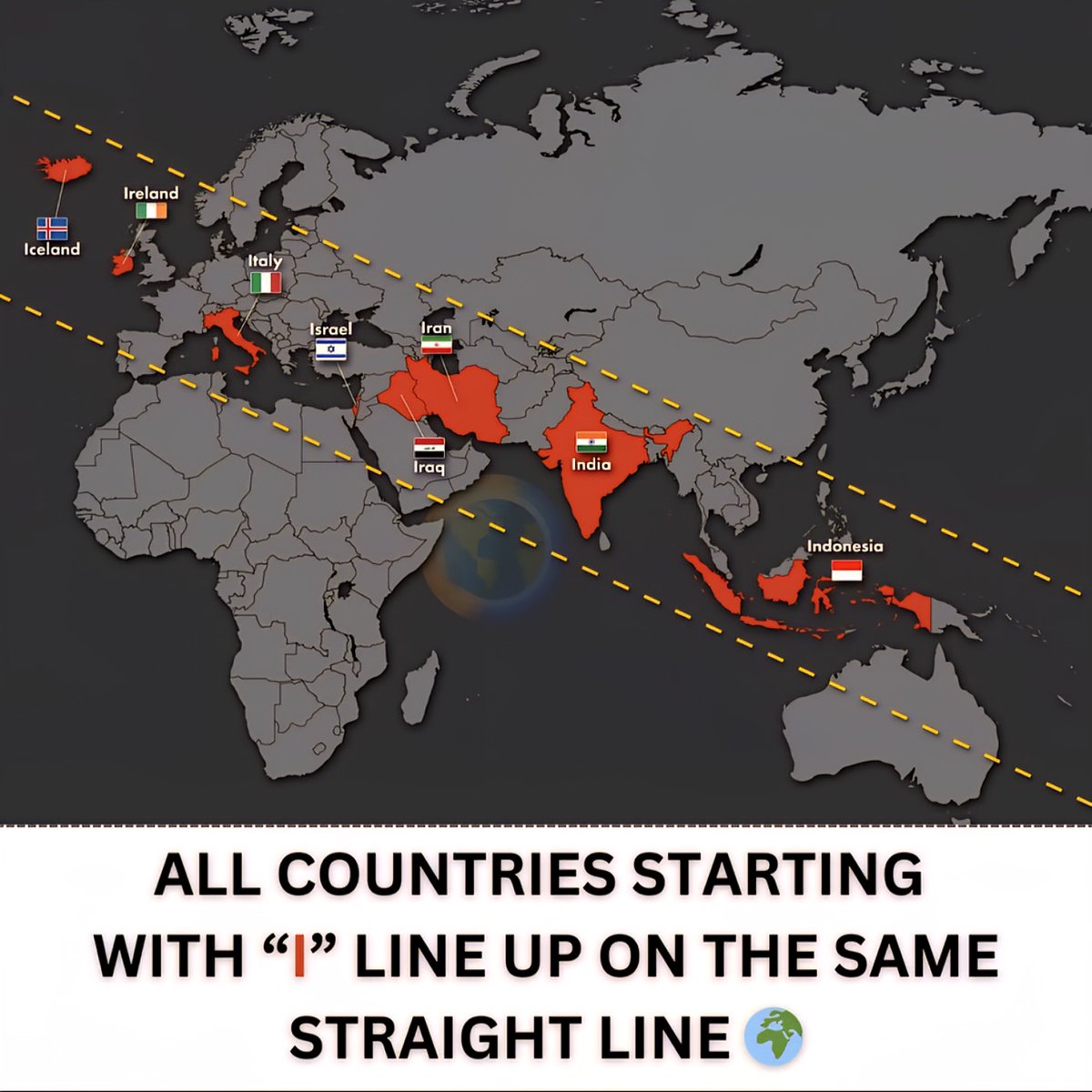
While it might seem like a coincidence, a fascinating geographical fact reveals that every country whose name begins with the letter “I” conveniently aligns in a straight line across the globe. This intriguing pattern offers a unique perspective on how countries are geographically distributed. Here’s a detailed look into this unusual phenomenon.
1. Identifying the Countries That Start with “I”
There are only five countries in the world with names beginning with the letter “I”. These include:
- Iceland
- India
- Indonesia
- Iran
- Ireland
Despite their vast differences in geography, culture, and history, these nations share geographical commonalities that are quite astonishing—notably, their approximate alignment in a north-south direction.
2. Exploring the Geographical Line
When viewed on the global map, these five countries seem to line up from the northernmost to the southernmost in a relatively straight formation. Starting with Iceland in the far north, moving southward through Ireland and Iran, then further southeast through India and Indonesia, the countries trace an interesting trajectory.
This alignment is more of a visual coincidence than a strict rule, yet it highlights the incredible ways in which geography and country names intersect.
3. Iceland’s Position: The Northernmost Point
Iceland, as the name suggests, is positioned in the North Atlantic Ocean. Its prominent location at the top of this “I” lineup makes it the northernmost country starting with “I.” Despite being geographically isolated, its name at the top completes the first part of the line.
4. Ireland and Iran: Central Players
Moving southward, Ireland sits in Western Europe, sharing cultural and linguistic ties with the Britain and other nearby nations around the Atlantic coast. Just further south, Iran, a Middle Eastern country with rich history and significant political influence, sits along the southeastern extension of this line.
5. India and Indonesia: The Southern Extremes
India, a vast subcontinent, and Indonesia, an extensive archipelago, mark the southern points of this longitudinal line. Indonesia’s position spans over thousands of islands in Southeast Asia, completing the grouping of these countries along a similar meridian.
6. The Significance of This Alignment
While the countries aren’t geographically contiguous or part of a single geopolitical entity, this alignment emphasizes how culture, language, and naming can coincide with geography in captivating ways. The pattern provides an interesting talking point for geography enthusiasts, educators, and travelers alike.
7. Why It’s Not Just Coincidence
In reality, the fact that these countries start with “I” and line up in a straight line is largely coincidental. However, it highlights the fascinating way in which human naming conventions and geographical distribution intersect. For example, the names of many countries originate from history, language, or colonial influence—factors that also influence their placement on the map.
8. A Fun Tip for Geography Buffs
Next time you’re exploring world maps, keep an eye out for patterns like this one. Sometimes, the most unexpected alignments can make geography more engaging and educational. Recognizing such patterns can also improve a deeper understanding of world history and cultural influences.
9. Summary: A Quirky Geographical Fact
The next time someone mentions the countries starting with “I,” you’ll be able to impress them with this quirky fact that these nations— Iceland, Ireland, Iran, India, and Indonesia—approximately form a straight line across the globe. It’s a reminder of how diverse and interconnected the world can be, even through simple alphabetical coincidences.
Remember: Geographical patterns like this are rare and happen more by chance than design. Nonetheless, they make for interesting discussion points and underscore the beauty of our planet’s diverse political and cultural landscape.
Note: This unique alignment is a visual perception based on the countries’ approximate longitudinal positions. The actual geography may vary slightly depending on the specific borders and measurements used.
 ChatGPT
 Perplexity
 Gemini AI
 Grok AI