Select Language:
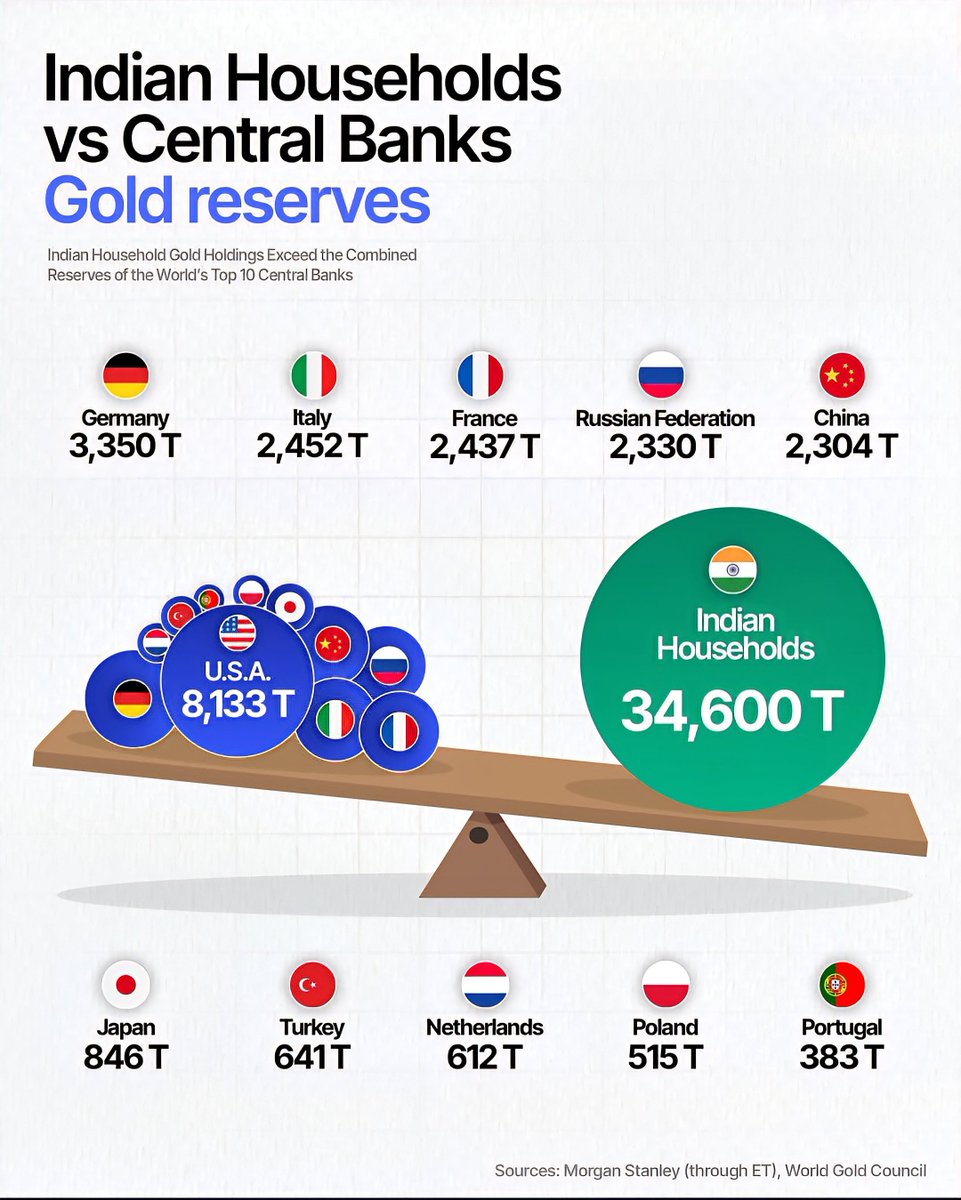
Indian Households vs Central Banks Gold Reserves 🪙
The Growing Role of Indian Household Gold Investments
India has long been known as a nation where gold isn’t just a precious metal but a cultural symbol of prosperity, tradition, and security. In 2025, this sentiment remains unchanged, but the landscape of gold ownership has evolved significantly with more households investing in gold than ever before. According to recent reports, Indian families collectively hold over 25,000 tonnes of gold in various forms—jewelry, coins, bullion, and digital assets.
This robust household gold stockpile plays a critical role in the country’s economy, often acting as a hedge against inflation and economic uncertainties. Unlike in many Western countries, where reliance on bank savings or equity markets has increased, Indians tend to favor physical gold, passed down through generations. This cultural affinity results in a decentralized gold reserve, which complements the much larger centralized holdings by the Reserve Bank of India (RBI).
Central Bank Gold Reserves: A State-Controlled Asset
Contrary to the widespread individual gold holdings, the Reserve Bank of India (RBI) holds official gold reserves primarily for strategic and monetary purposes. As of 2025, the RBI has accumulated approximately 750 tonnes of gold, making India the world’s eighth-largest official holder. These reserves serve as a financial buffer, help maintain currency stability, and are used in international trade and financial negotiations.
In recent years, the RBI has increased its gold holdings by acquiring under IMF agreements and international market operations, signaling confidence in gold’s role as a stable asset. Unlike households, central banks such as India’s reserve authorities prefer bullion in secure vaults, managed with precise policies aligned with global standards.
Comparing Household Gold vs Central Bank Reserves: A Different Scale, Different Purposes
While individual families might collectively hold vastly more gold in total weight than the RBI’s official reserve, the nature of these holdings is fundamentally different:
-
Ownership and Control: Households own their gold privately, often as heirlooms or savings, whereas central banks hold gold for strategic national purposes and manage reserves transparently.
-
Form of Gold: Indian households typically possess gold in jewelry, which carries cultural significance but is less liquid compared to the bullion stored in vaults. Central banks hold gold in highly refined, standardized bars suitable for international transactions and monetary policy use.
-
Impact on Economy: The large-scale physical gold holdings by Indian households influence domestic markets and inflation hedging strategies more directly than official reserves do. Central bank gold holdings, however, serve as insurance against economic crises and bolster international financial credibility.
ADVERTISEMENT
Trends and Prospects for Gold Investment in India
The appetite for gold in India continues to expand, driven by rising disposable incomes, urbanization, and a growing middle class eager to diversify savings. Digital gold platforms have democratized access, especially among the younger population, pushing household gold holdings into record territory.
Furthermore, government initiatives aimed at formalizing gold trading and reducing illegal imports—such as the introduction of gold deposit schemes and enhanced transparency—are expected to shape future trends. Experts predict that by 2030, Indian household gold reserves could surpass 30,000 tonnes, making the country a dominant force in global gold markets.
The Balancing Act—Households and Central Banks
Ultimately, India’s gold scenario embodies a complex interplay between individual wealth preservation and national economic strategy. While households contribute to a vibrant gold economy through their personal holdings, the central bank’s strategic reserves underscore the importance of gold at the macroeconomic level.
In a world increasingly leaning toward digital and paper assets, gold remains a timeless safeguard—anchored both in cultural tradition and financial prudence. Indian households, with their vast gold reserves, continue to uphold this legacy, complementing state holdings and reinforcing India’s stature as a leading global player in gold investment.
Note: The data and projections mentioned are reflective of developments in 2025 and based on ongoing trends in Indian gold markets.
 ChatGPT
 Perplexity
 Gemini AI
 Grok AI