Select Language:
1. Nominal Gross Domestic Product (GDP)
India’s economy continues its rapid expansion, now valued at approximately $4.2 trillion. In contrast, the United States maintains its position as the world’s largest economy, with a GDP of about $28.8 trillion. This stark difference highlights the vast economic scale gap between the two nations.
2. Purchasing Power Parity (PPP) Adjusted GDP
When accounting for cost of living and purchasing power, India’s GDP reaches roughly $17.7 trillion, whereas the United States remains dominant at approximately $28.9 trillion. Despite India’s significant growth, the gap in economic buying power still favors the U.S.
3. GDP Per Capita
Per capita income reveals the standard of living differences: Americans enjoy an average income of about $89,100. Meanwhile, India’s average GDP per person stands at approximately $2,900, underscoring the substantial economic disparity at the individual level.
4. Real GDP Growth Rate
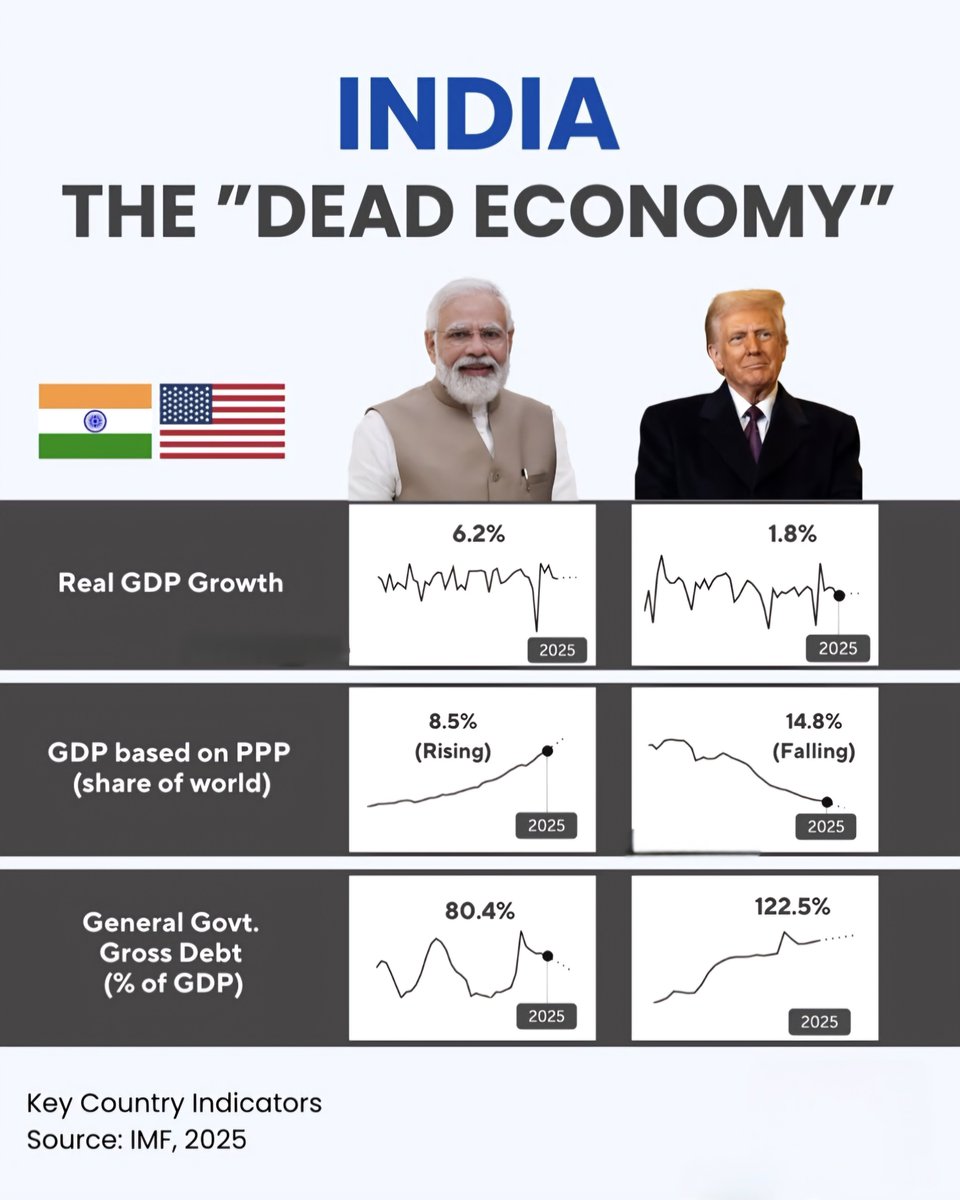
India’s economy is experiencing a robust annual growth rate of around 6.2%, reflecting rapid development and industrial expansion. Conversely, the United States’ growth has slowed to approximately 1.8%, showing a mature economy with steady but slower growth.
5. Share of Global GDP Based on PPP
India’s share of the world’s economy via PPP is approaching 8.5%, with consistent growth propelings its global influence. The United States’ share, at about 14.8%, is declining slightly as emerging economies grow faster, shifting the global economic balance.
6. Government Debt to GDP Ratio
India’s government debt remains manageable at approximately 80.4% of its GDP. Conversely, the U.S. faces a higher debt burden, with government debt reaching about 122.5% of its GDP, raising concerns over fiscal sustainability.
7. Inflation Rates
Both countries are maintaining low inflation, with India at 2.5% and the U.S. at 2.6%. Such stability is vital for economic planning and indicates effective monetary policies in both nations.
8. Unemployment Figures
The United States reports an unemployment rate of approximately 4.1%, signaling a relatively healthy labor market. India’s unemployment rate is slightly higher at about 5.6%, but its job market continues to evolve rapidly with technological advancements and demographic shifts.
9. Urban Population Share
Urbanization levels differ markedly: nearly 83% of Americans live in urban areas, reflecting long-standing urban development. In India, urban dwellers make up roughly 36% of the population, a figure expected to rise as cities expand and modernization progresses.
10. Population Sizes
India remains the second most populous country, with approximately 1.46 billion people. The United States has a population of about 347 million, making it the third most populous country but with a significantly smaller demographic base.
Sources: IMF, World Population Review, Wikipedia (2025 estimates)
This stark contrast in economic metrics demonstrates how two of the world’s largest nations are evolving distinctly—India experiencing rapid growth and expanding influence, while the US consolidates its global economic supremacy despite slowing growth and rising debts. As 2025 unfolds, these figures provide a snapshot of the ongoing shifts in the global economic landscape, shaping international relations and economic policies for years to come.
 ChatGPT
 Perplexity
 Gemini AI
 Grok AI