Select Language:
India Leads South Asia with the Lowest Tariff Rates in 2025
- India Reduces Tariffs to 18%
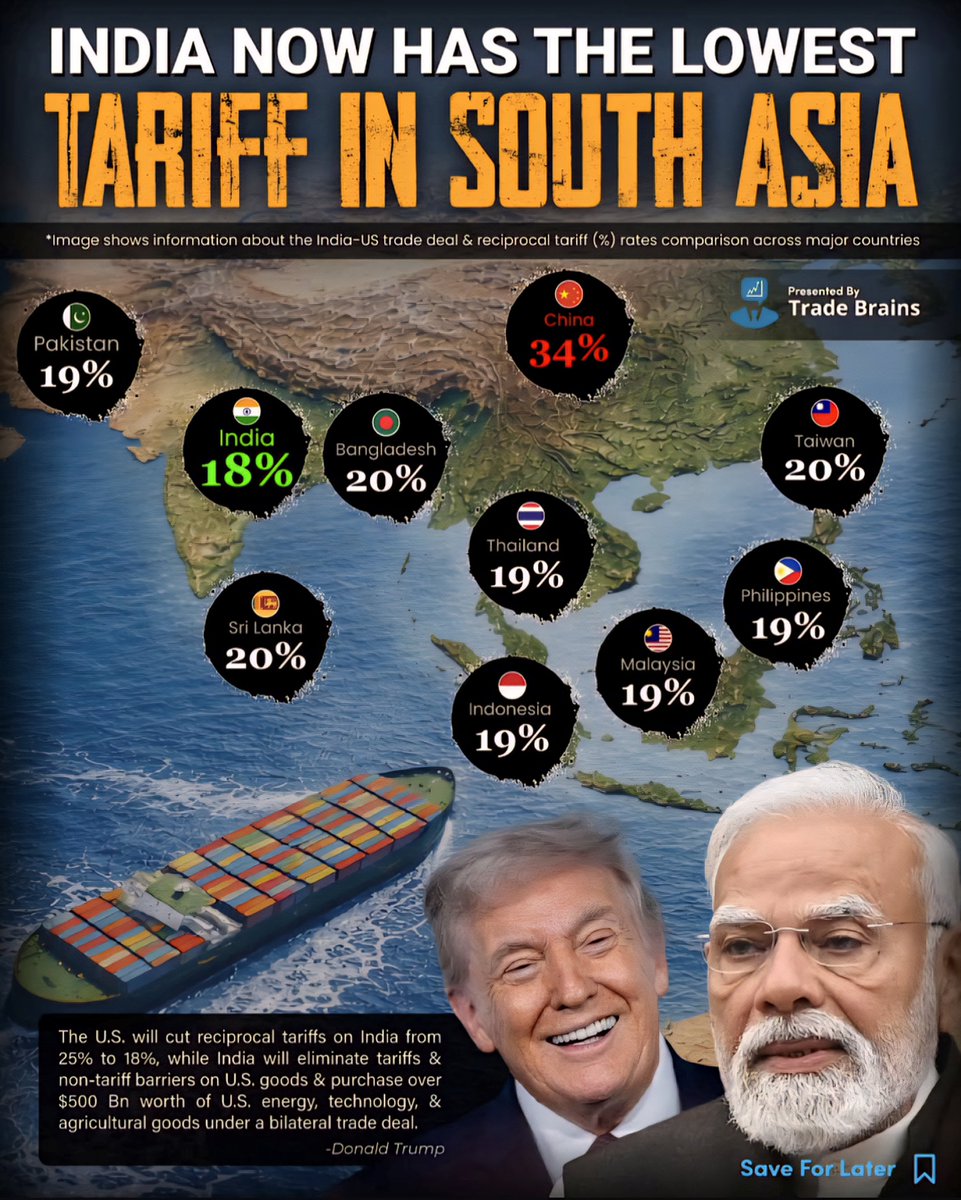
In a move highlighting its growing economic influence, India has now established itself as South Asia’s frontrunner with the lowest tariff rate at 18%. This significant reduction indicates the country’s shift toward more open trade policies, aiming to boost imports, attract foreign investment, and foster economic growth.
- Neighboring Countries Follow Suit but Remain Higher
Despite India’s advancements, its neighboring nations still maintain relatively higher tariffs:
-
Pakistan and Thailand: Both countries have a tariff rate of 19%, slightly above India. This minor difference suggests they are gradually aligning their trade policies but still face challenges in liberalizing trade frameworks.
-
Philippines, Malaysia, and Indonesia: These Southeast Asian nations keep their tariffs at 19%, reflecting their ongoing efforts to balance protectionism with openness.
-
Bangladesh and Sri Lanka Keep Tariffs at 20%
Traveling further east, Bangladesh and Sri Lanka sustain a tariff rate at 20%, indicating a cautious approach to tariff reductions. Their strategies seem tailored to safeguard local industries while trying to remain competitive in regional markets.
- Taiwan’s Tariff Strategy
Taiwan trails closely with a 20% tariff rate, reinforcing its position as an important trade hub in East Asia. The island nation continues to utilize tariffs as a tool to strengthen domestic sectors while engaging robustly in regional trade agreements.
- China’s Tariffs Significantly Higher at 34%
China still maintains a notably higher tariff rate at 34%, reflecting its complex trade policies and efforts to protect its manufacturing sector amid global competitive pressures. Despite these tariffs, China’s trade remains vigorous, driven by its vast domestic market and manufacturing prowess.
- Implications for Global Trade Dynamics
India’s move to lower tariffs to 18% not only positions it as the most accessible market in South Asia but also signals a broader regional trend towards trade liberalization. As tariffs decrease, countries are expected to experience increased trade volumes, better supply chain integration, and enhanced foreign investments.
- Future Outlook
Analysts believe that India’s tariff cuts could prompt peer nations to further reduce their tariffs in a bid to remain competitive and attract foreign business. However, some countries may hold back due to domestic protectionist sentiments or strategic industries requiring safeguarding.
- Impact on Consumers and Businesses
Lower tariffs often translate to cheaper goods for consumers and more opportunities for local businesses to access international markets. As India continues to reduce tariffs, consumers may see a broader array of affordable imports, while local industries could face increased competition, prompting innovation and efficiency.
In Summary:
India’s recent tariff reductions position it as a leader in trade openness within South Asia, setting a precedent for neighboring countries to follow. As the region moves toward more liberalized trade policies, the landscape of regional commerce is poised for significant transformation in 2025.
 ChatGPT
 Perplexity
 Gemini AI
 Grok AI