Select Language:
Huawei Unveils Revolutionary Solid-State Battery Technology
In a groundbreaking move for the electric vehicle (EV) industry, Huawei has filed a pioneering patent for a sulfide-based solid-state battery that could potentially transform the landscape of energy storage. This innovative technology boasts an astounding driving range of up to 3,000 kilometers (1,864 miles) and ultra-fast charging capabilities, allowing drivers to charge their vehicles in just five minutes. Let’s delve into the details of this game-changing development.
Unprecedented Energy Density
One of the standout features of Huawei’s new battery technology is its energy density, which ranges between 400-500 Wh/kg. This marks a significant leap compared to conventional lithium-ion batteries, which are currently the standard in most electric vehicles on the market. With energy densities that are potentially two to three times higher, the new sulfide-based batteries could offer more power and range without the increased weight that often comes with larger battery packs.
Overcoming Technical Challenges
Huawei’s patent addresses numerous technical challenges that have hindered the commercialization of solid-state batteries in the past. It incorporates nitrogen-doped sulfide electrolytes designed to enhance electrochemical stability. This crucial advancement helps minimize degradation at the lithium interface, which has historically been a major obstacle to the practical implementation of solid-state batteries. By tackling these issues head-on, Huawei is paving the way for more durable and efficient energy solutions.
The Need for Infrastructure
While the features and theoretical capabilities of the new battery technology are remarkable, industry experts caution that the implementation of this innovation is not without hurdles. A significant challenge lies in the required charging infrastructure. For this sulfide-based battery to reach its full potential, charging stations with megawatt-level power capabilities are essential. Unfortunately, such infrastructure is not yet available for widespread commercial use. This raises important questions about the timelines and feasibility of adopting this new technology across the existing electric vehicle market.
The Rise of Solid-State Battery Patents in China
The development of Huawei’s solid-state battery is part of a broader trend in China, where the race for next-generation battery technology is gaining momentum. In the past year, Chinese companies collectively filed over 7,600 patents related to solid-state battery technologies, which accounts for an impressive 36.7% of global patent activity in this sector. This rapid increase in patent filings underscores China’s determination to lead the charge in battery innovation and reduce reliance on established suppliers like CATL and BYD.
Implications for the Future of Electric Vehicles
The implications of Huawei’s patented technology could be far-reaching. If brought to market successfully, this sulfide-based solid-state battery could redefine customer expectations around driving range and charging times. With the possible elimination of "range anxiety" and significantly reduced downtime for charging, electric vehicles could become much more appealing to a broader audience.
Conclusion
Huawei’s recent patent filing marks a monumental step forward in the search for better, faster, and more efficient battery technology for electric vehicles. While the theoretical aspects of the sulfide-based solid-state battery are revolutionary, its practicality and implementation remain to be seen. As the world watches, the question remains: will this technology fly, or will the barriers prove too great?
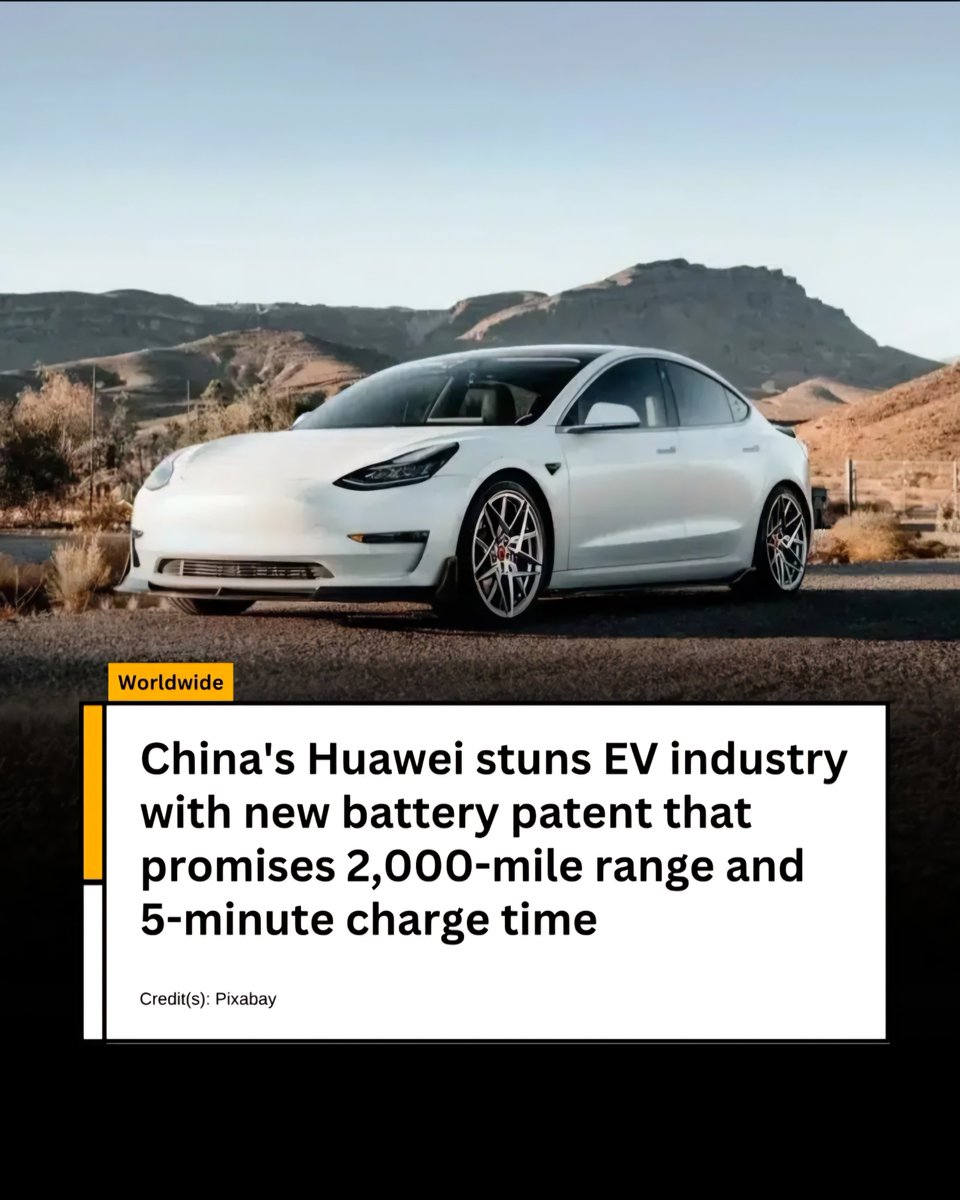
With ongoing advancements and significant investments, the future of electric vehicles may be brighter than ever, thanks in part to innovations like Huawei’s sulfide-based solid-state battery.
 ChatGPT
 Perplexity
 Gemini AI
 Grok AI