Select Language:
The Egg Puzzle: How Many Are Left After Breaking, Cooking, and Eating?
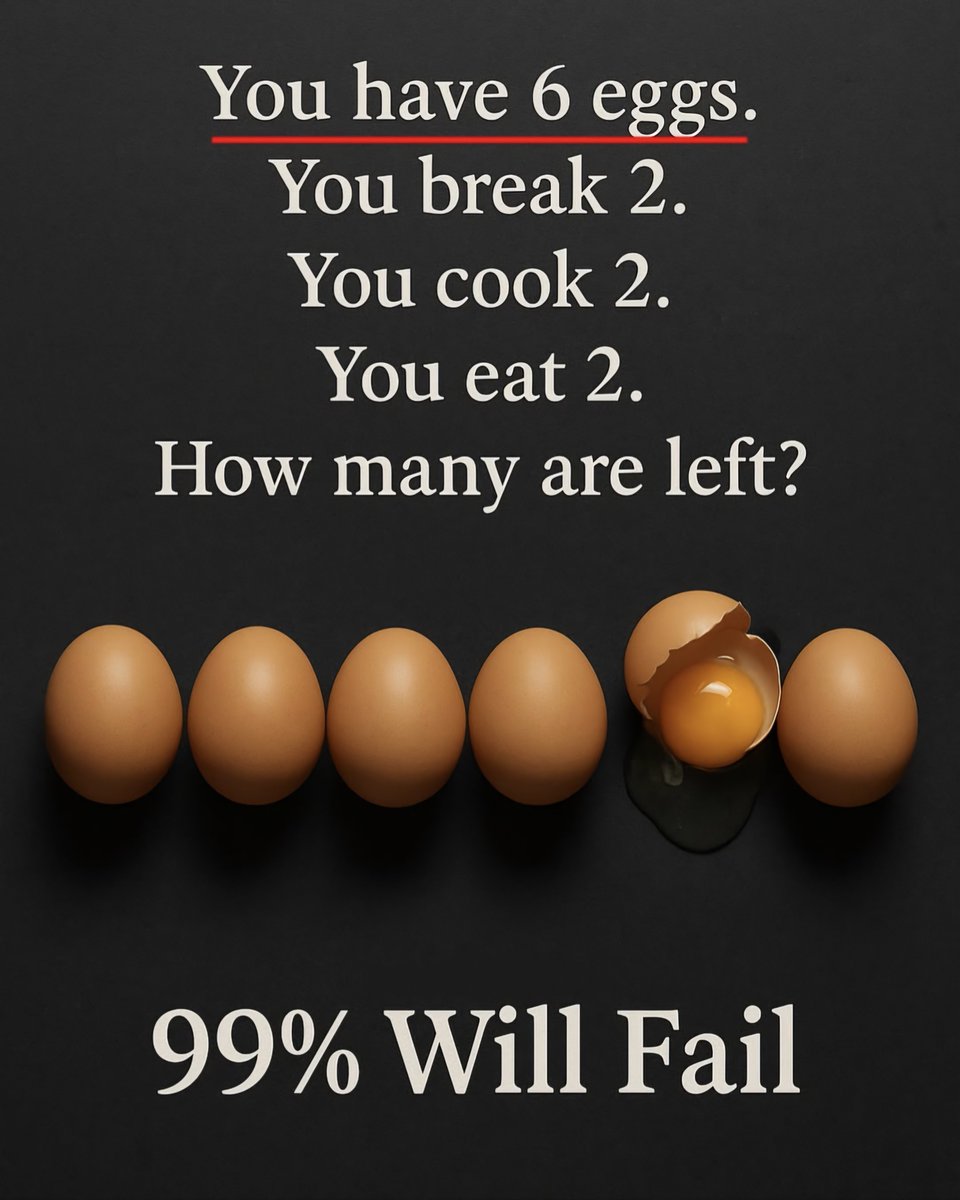
This classic brainteaser has puzzled many for years, and its simplicity is part of its charm. In 2025, it remains a popular question in riddles and mental exercises worldwide. Let’s break down the scenario step by step to see how many eggs are left after the series of actions.
1. Initial Count: The Starting Point
The puzzle states you begin with 6 eggs. It’s important to remember this initial number as your baseline.
Total Eggs at Start: 6 eggs
2. Step One: Breaking Eggs
You break 2 eggs. Breaking the eggs doesn’t necessarily mean they are consumed or gone—they might still be intact, just cracked open. In most interpretations of this riddle, the action of breaking implies preparing the eggs for the next steps.
Eggs broken: 2 eggs
Remaining eggs unbroken: 6 – 2 = 4 eggs
3. Step Two: Cooking the Eggs
Next, you cook 2 eggs. Usually, when cooking eggs in such riddles, the assumption is you cook the eggs that you have already broken. Since you broke 2 eggs earlier, it’s reasonable to infer that these are the same eggs being cooked — just as in real life, you crack eggs before cooking.
Eggs cooked: 2 eggs (which are the same ones broken earlier)
Remaining eggs that are unbroken and uncooked: 4 eggs
4. Step Three: Eating the Eggs
Finally, you eat 2 eggs. Typically, it’s understood you’re consuming the eggs that you cooked. Eating the eggs means they are gone from your inventory.
Eggs eaten: 2 eggs (which are the cooked eggs as well)
Eggs remaining:
- You initially had 6.
- You broke 2 and cooked those same 2, then ate those same 2.
- The other 4 eggs remained untouched.
Number of eggs left: Remaining unbroken and uneaten eggs — 4 eggs
5. The Final Count: How Many Are Still There?
Based on the logical deductions:
- Total eggs initially: 6
- Eggs broken, cooked, and eaten: 2 (all considered the same eggs)
- Eggs left untouched: 4
Answer: 4 eggs are still left unbroken and uneaten.
6. Why This Riddle Remains Engaging
This puzzle illustrates how language and assumptions influence our understanding. Many might think all eggs, including the broken or cooked ones, are gone, but the key is understanding the sequence:
- Breaking, cooking, and eating are sequential actions on the same eggs.
- The untouched eggs remain whole and uneaten.
It’s a simple yet effective reminder to read carefully and think critically about what’s being asked.
7. Extra Fun Fact: Variations of the Puzzle
Different versions of this riddle might challenge you further:
- What if you break more eggs than you cook or eat?
- What if you cook eggs that weren’t broken?
- How does the answer change if you eat raw eggs instead?
These variations stimulate creative thinking and problem-solving skills, making them perfect for classrooms, team-building activities, or just passing the time.
8. Final Thought
In 2025, this classic egg puzzle continues to amuse and educate, reminding us that sometimes, the most straightforward logic provides the correct answer. The next time you encounter a simple yet tricky question, remember: carefully considering what actions imply can reveal the true answer.
Total eggs remaining: 4
And that’s the resolution to the egg puzzle!
 ChatGPT
 Perplexity
 Gemini AI
 Grok AI