Select Language:
Top Earning Communities in the United States in 2025
- Indian-American Communities Lead the Earnings Chart
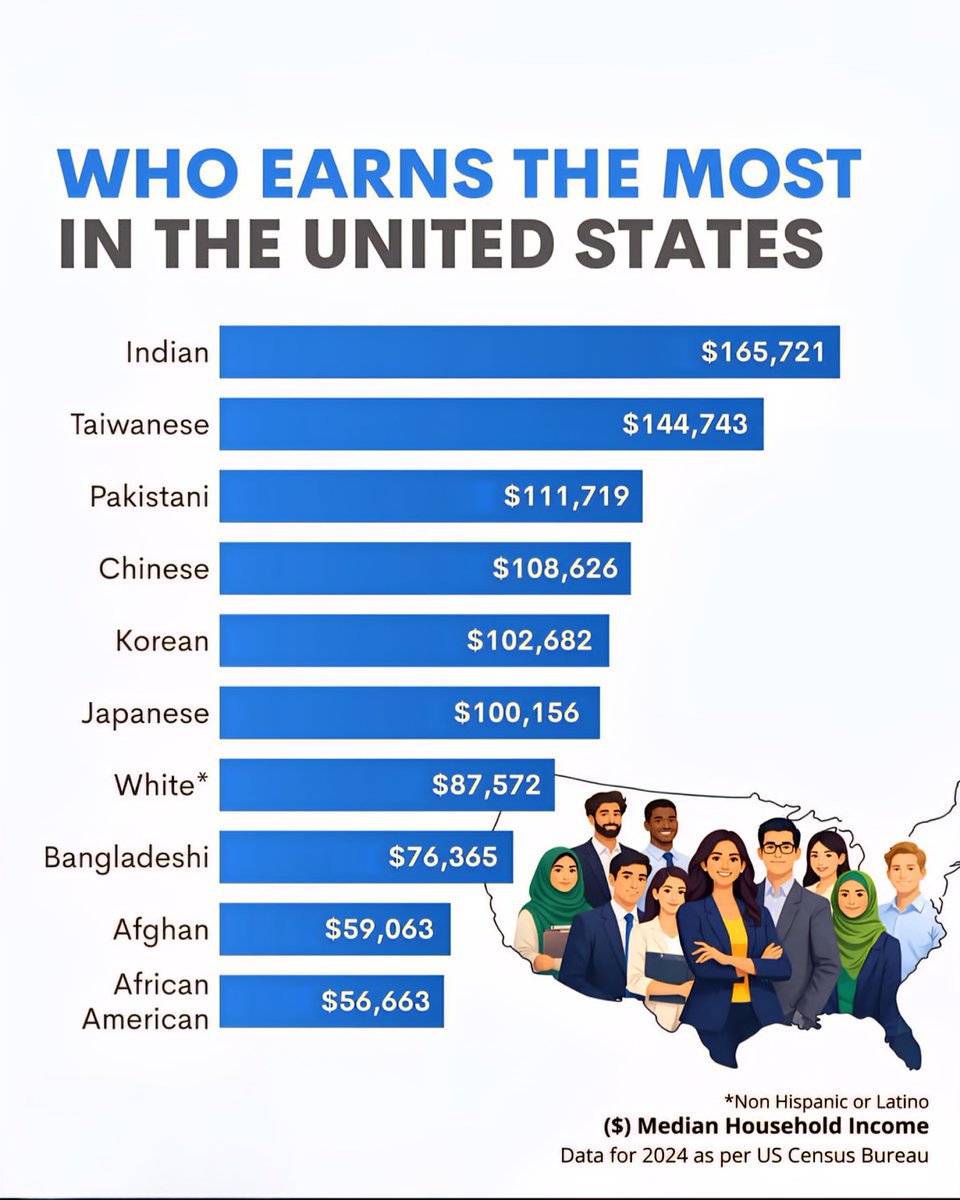
Indian-American households continue to dominate the income landscape, with an average household income of approximately $165,721 in 2025. Their representation in high-skilled professions such as technology, medicine, and finance contributes significantly to this impressive figure. The strong emphasis on education and entrepreneurship within the community fuels their financial success, making them the highest-earning demographic group in the country this year.
- Taiwanese-American Communities Near the Top
Following closely, Taiwanese-American households boast an average income of around $144,743. The community’s robust presence in fields like technology, engineering, and academia plays a crucial role in maintaining high household earnings. Many members have established successful businesses or hold executive roles in major corporations, reinforcing their economic stature in 2025.
- Pakistani-American Households Break the $110K Barrier
Pakistani-American communities have continued their upward earning trend, with average household incomes of approximately $111,719. A significant portion of this community excels in healthcare, engineering, and IT sectors. Educational attainment remains a key driver of economic mobility, and an increasing number of entrepreneurs contribute to the community’s rising income levels.
- Chinese-American Income Levels Remain Strong
Chinese-American households earn an average of $108,626, maintaining their position among the top earners. Their presence in industries like technology, finance, and academia sustains this high-income average. Additionally, the community’s emphasis on higher education continues to be a major factor behind their economic prosperity in 2025.
- Korean-American Communities Show Consistent Growth
With an average household income of $102,682, Korean-American communities showcase resilience and growth. Their extensive involvement in small business ownership, healthcare, and engineering sectors supports this earning level. Many Korean-American families invest in education and professional development, facilitating continued economic success.
- Japanese-American Households Stay in the Upper Range
Japanese-American households earn around $100,156 on average. Known for their strong work ethic and high educational attainment, this community sustains their place among the higher-income groups. A focus on professional careers and entrepreneurship helps maintain their status in 2025.
- White Non-Hispanic Communities: Steady but Slightly Lower Income
White (Non-Hispanic) households have an average income of roughly $87,572. While they remain a substantial demographic in the workforce, their earnings have seen slower growth compared to other communities. Factors influencing this include shifts in job market trends and generational income mobility patterns.
- Bangladeshi-American Communities on the Rise
Bangladeshi-American households report an average income of around $76,365. The community’s increasing prominence in healthcare, tech, and entrepreneurship sectors fosters economic growth. Integration into broader professional networks has been key to their rising earnings.
- Afghan-American Households Increasingly Financially Stable
Afghan-American households have an average income of about $59,063. Despite historical challenges, recent trends indicate improvements driven by increased educational opportunities and workforce participation in sectors like construction, healthcare, and small business ownership.
- African American Communities Make Significant Gains
African American households report an average income of $56,663 in 2025. Focused initiatives around education, entrepreneurship, and workforce development have contributed to this upward trajectory. While still below national averages, these growing earnings reflect ongoing progress toward economic equality.
The shifting financial landscape signifies a dynamic interplay of education, industry presence, entrepreneurship, and community integration shaping the earning potential across different demographics in the U.S. in 2025.
 ChatGPT
 Perplexity
 Gemini AI
 Grok AI