Select Language:
Global Car Production in 2025: Analyzing the Breakdown
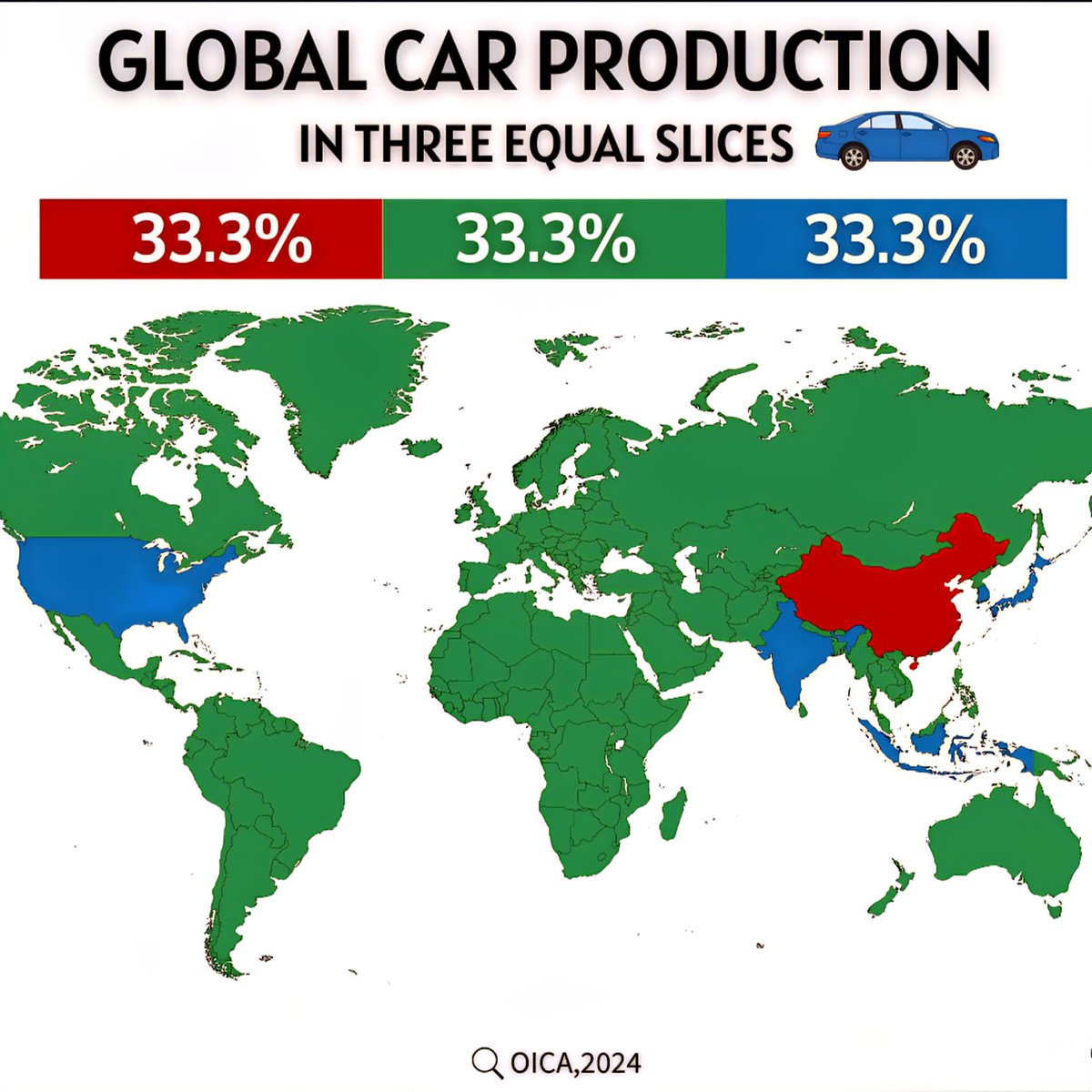
1. Asia Dominates the Automotive Market
Asia continues to be the powerhouse of vehicle manufacturing, accounting for approximately 60% of global car production in 2025. Countries like China, Japan, South Korea, and India remain key players, with China leading the way by producing nearly 40% of the world’s vehicles. The shift toward electric vehicles (EVs) has accelerated in Asia, with China and South Korea investing heavily in EV manufacturing and infrastructure. The massive consumer base and supportive government policies have solidified Asia’s dominance in the industry, making it a critical hub for both traditional and electric vehicle production.
2. North America’s Steady Growth in Electric Vehicle Production
North America, especially the United States and Mexico, has seen a significant rise in vehicle output, contributing around 20% to global production. The push towards EV adoption has steered manufacturers to expand their electric offerings. Major automakers, including Tesla, GM, Ford, and Rivian, are ramping up EV production plants across the continent. The shift is driven by consumer demand for cleaner transportation, government incentives, and stricter emissions regulations. Notably, the U.S. slowdown earlier in the decade has given way to resilient growth, as automakers shift their focus to sustainability and innovation.
3. Europe’s Position in the Global Automotive Scene
Europe holds approximately 20% of global car production, with Germany, France, Spain, and the Czech Republic leading the charge. The continent’s automotive industry is undergoing a transformation, with a focus on electrification, automation, and sustainable manufacturing. Europe is also home to several luxury automakers like BMW, Mercedes-Benz, and Audi, which are heavily investing in electric and hybrid vehicles. Moreover, stringent emissions standards and urban mobility policies continue to push European automakers toward greener technologies, although total production growth in the region is moderate compared to Asia and North America.
4. The Impact of Technological Innovation on Production Trends
Innovations in automotive technology are reshaping production worldwide. The rise of autonomous vehicles, electric drivetrains, and advanced manufacturing methods such as robotics and AI are influencing how and where cars are made. Countries investing in research and development—like Japan, South Korea, and Germany—are leading the charge. For example, electric vehicle production lines are becoming more integrated with AI-driven quality control, and smart factories are reducing waste and increasing efficiency. This technological advancement not only boosts production capabilities but also redefines the skill set needed for workers across the industry.
5. Challenges Facing Global Car Production in 2025
Despite positive growth, the industry faces several hurdles. Supply chain disruptions continue to threaten production volumes, especially with shortages of semiconductor chips and raw materials like lithium and cobalt used in EV batteries. Political tensions, trade policies, and tariffs also pose risks to international manufacturing alliances. Additionally, the rising costs of sustainable materials and eco-friendly manufacturing practices challenge automakers to balance profitability with environmental responsibility. The industry’s transition to electric mobility demands massive capital investments, which could impact long-term production plans.
6. Future Outlook: Moving Toward Sustainable and Smart Transportation
The outlook for global car production in 2025 suggests an industry that is rapidly evolving with sustainability at its core. Companies are increasingly focusing on producing green vehicles, with electric and hybrid models expected to constitute over 80% of new vehicle sales by 2030. With advancements in battery technology, charging infrastructure, and autonomous systems, the way cars are built and consumed will continue to change drastically. The industry is also embracing circular economy principles, focusing on recycling and sustainable sourcing to minimize environmental impact. As nations implement stricter emissions targets, automakers are incentivized to innovate and expand their sustainable fleets, ensuring that the global automotive landscape remains dynamic and forward-looking.
In conclusion, 2025 marks a pivotal year in the global automotive industry, with Asia continuing its dominance, North America surging in EVs, and Europe focusing heavily on electrification and innovation. Challenges remain, but technological advancements and committed investments are paving the way for a more sustainable future in car manufacturing.
 ChatGPT
 Perplexity
 Gemini AI
 Grok AI