Select Language:
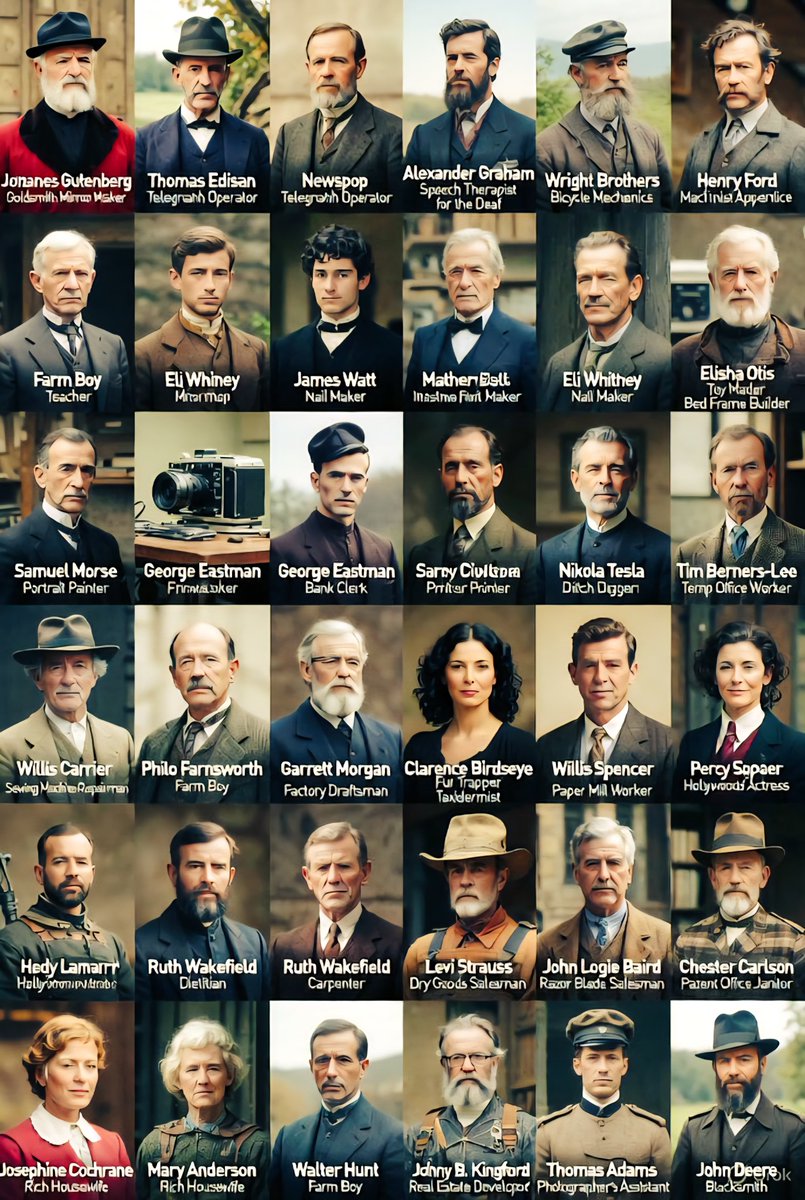
Uncovering the Roots: The Early Careers of Legendary Inventors
Johannes Gutenberg: From Goldsmith to Mirror Maker
Before revolutionizing printing with movable type, Johannes Gutenberg worked as a goldsmith and mirror maker in Germany. His craftsmanship skills laid the groundwork for his later innovations in typography and printing technology.
Thomas Edison: The Young Paperboy and Telegraph Enthusiast
Edison’s early jobs included delivering newspapers and working as a telegraph operator. These experiences sparked his interest in electrical communication, leading to numerous inventions including the phonograph and the light bulb.
Alexander Graham Bell: Serving as a Speech Therapist for the Deaf
Bell initially worked as a speech therapist for deaf clients. This role deepened his understanding of acoustics and sound transmission, fueling his pursuit of the telephone.
Wright Brothers: From Bicycle Mechanics to Printing Experts
Orville and Wilbur Wright started as bicycle shop owners and repaired bicycles. Their mechanical expertise eventually transitioned into developing the world’s first successful airplane.
Henry Ford: Farm Boy Turned Machinist Apprentice
Growing up on a farm, Ford’s early work as a machinist apprentice in Detroit enabled him to develop his manufacturing skills, later transforming the automobile industry.
Eli Whitney: Serving as a Teacher and Nail Maker During Wartime
Whitney’s diverse early pursuits included teaching and making nails during the War of 1812, which childhood experiences likely influenced his groundbreaking invention of the cotton gin.
James Watt: Maker of Mathematical Instruments
Watt began his career crafting precision mathematical instruments, sharpening his skills that would later influence his improvements on the steam engine.
Samuel Morse: Portrait Painter Turned Telegraph Pioneer
Initially a portrait painter, Morse’s artistic background eventually connected with his pioneering work on the electric telegraph, revolutionizing communication.
George Eastman: Bank Clerk to Camera Innovator
Eastman’s first job was as a bank clerk. He later founded Kodak, transforming photography into a consumer-friendly industry.
Nikola Tesla: Ditch Digger and Draftsman
Tesla’s early work included manual labor as a ditch digger and work as a draftsman, both of which helped shape his inventive genius in electrical engineering.
Elisha Otis: Toy Maker and Bed Frame Builder
Otis started with woodworking projects, manufacturing toys and bed frames in his youth — skills that contributed to his development of the safety elevator.
Tim Berners-Lee: Office Temp Worker
Before inventing the World Wide Web, Berners-Lee was a temporary office worker, a job that likely provided insight into collaborative solutions.
Philo Farnsworth: Farm Boy Who Invented TV at 14
Growing up on a farm, Farnsworth built his first television prototype at age 14, driven by curiosity and resourcefulness.
Garrett Morgan: Sewing Machine Repairman
Morgan repaired sewing machines in his early career, which honed his mechanical skills leading to innovations like the traffic light.
Willis Carrier: Draftsman in a Factory
Carrier worked as a factory draftsman, a role that contributed to his later invention of modern air conditioning.
Clarence Birdseye: Fur Trapper and Taxidermist
Birdseye’s early experience with trapping and taxidermy generated insights into freezing techniques, leading to frozen food innovations.
Hedy Lamarr: Hollywood Actress and Inventor
While famous as a Hollywood star, Lamarr was also an inventor, working on frequency-hopping technology during her acting career.
Percy Spencer: Paper Mill Worker and Microwave Inventor
Spencer’s exposure to mill machinery inspired his invention of the microwave oven, revolutionizing cooking.
Ruth Wakefield: Dietitian and Chocolate Chip Cookie Inventor
Wakefield’s background in nutrition influenced her creation of the beloved chocolate chip cookie, mixing science and culinary artistry.
Levi Strauss: Dry Goods Salesman
Strauss’s experience selling dry goods helped him understand fabrics, leading to the creation of durable denim jeans.
Johny B. Kingsford: Carpenter and Cornstarch Innovator
Kingsford’s carpentry background contributed to his development of the popular charcoal briquettes.
John Logie Baird: Razor Blade Salesman
Baird’s sales experience helped him market television technology, along with his background in razor blades.
Chester Carlson: Patent Office Janitor and Xerox Pioneer
Working as a janitor in a patent office, Carlson invented xerography, transforming photocopying.
Josephine Cochrane: Dishware Enthusiast and Inventor
Cochrane, a wealthy housewife, invented the first practical dishwasher after frustrations with handwashing dishes.
Mary Anderson: Windshield Wiper Developer
A real estate developer by trade, Anderson invented the windshield wiper to improve visibility during storms.
Walter Hunt: Farm Boy and Safety Pin Creator
Hunt used his rural woodworking skills to invent the safety pin, making fastening safer and easier.
Thomas Adams: Photographer’s Assistant and Chewing Gum Innovator
Adams began as a photographer’s assistant before developing bubble gum and chewing gum products.
John Deere: Blacksmith Turned Agricultural Innovator
Deere’s blacksmithing expertise led to the creation of the steel plow, a critical advancement in farming.
Samuel Colt: Sailor and Fireworks Maker
Colt’s early interests in pyrotechnics and firearms led to the invention of the Colt revolver.
Cyrus McCormick: Son of a Blacksmith and Harvest Pioneer
McCormick, from a farming family, invented the mechanical reaper, transforming agriculture.
Isaac Singer: Actor and Theater Manager
Singer’s background in theater management contributed to his understanding of manufacturing sewing machines.
Christopher Sholes: Newspaper Editor and Typewriter Inventor
Sholes’ experience as a newspaper editor fostered ideas for the modern typewriter.
Granville Woods: Railroad Fireman and Inventor
Woods’s work as a fireman helped him develop innovations in railway telegraphy.
Lewis Latimer: Office Boy and Patent Law Assistant
Latimer’s early role in a patent law firm helped him advance inventions, including improvements to electric lamps.
Alexander Parkes: Chemist’s Assistant and Plastic Pioneer
Parkes’s early chemistry work led to the development of one of the first plastics — Parkesine.
James Ritty: Saloon Owner and Cash Register Inventor
Ritty’s experience running a bar inspired him to invent the cash register to prevent theft.
Margaret Knight: Young Paper Bag Maker
At age 12, Knight designed machines for making paper bags, pioneering an entire industry.
Bette Nesmith Graham: Bank Secretary and Liquid Paper Inventor
Graham, a secretary, invented liquid correction fluid to fix typing errors, a product now known as Liquid Paper.
Lonnie Johnson: Nuclear Engineer and Super Soaker Developer
Johnson’s engineering background led to inventing the popular Super Soaker water gun for fun and science.
Stephanie Kwolek: Lab Dishwasher and Kevlar Innovator
Kwolek’s work washing lab glassware eventually led to the creation of Kevlar, a revolutionary fiber.
Marion Donovan: Housewife and Disposable Diaper Pioneer
Donovan developed the first waterproof disposable diaper, revolutionizing childcare.
Joy Mangano: Resolutions Agent and Miracle Mop Inventor
Mangano transformed cleaning with her innovative Miracle Mop, from her experiences as a flight attendant.
George de Mestral: Engineer & Hunter Behind Velcro
De Mestral’s hobby of collecting burrs inspired the creation of Velcro fasteners.
Sakichi Toyoda: Carpenter and Weaver
Toyoda’s early woodworking and weaving work laid the foundation for the Toyota automotive empire.
Whitcomb Judson: Zipper Inventor and Traveling Salesman
Judson’s work with fasteners and zipper mechanisms changed clothing and fashion industries.
King Camp Gillette: Cork Salesman and Safety Razor Pioneer
Gillette’s travels and salesmanship inspired his development of the safety razor with replaceable blades.
Melitta Bentz: Coffee Enthusiast and Filter Inventor
Bentz’s frustration with bitterness led her to invent the paper coffee filter.
Earl Tupper: Tree Surgeon and Tupperware Creator
Tupper’s background in woodworking influenced his invention of Tupperware containers.
Frank Zamboni: Ice Delivery Driver and Rink Innovator
Zamboni’s ice delivery route led to the invention of the ice-resurfacing machine, vital for hockey.
Wilson Greatbatch: TV Repairman and Pacemaker Developer
Greatbatch’s electrical skills, gained from repairing TVs, led to the creation of the implantable pacemaker.
This list showcases the fascinating journeys of inventors from humble beginnings and early jobs to groundbreaking innovations that changed the world.
 ChatGPT
 Perplexity
 Gemini AI
 Grok AI