Select Language:
Top Countries Located Across Two Continents in 2025
1. Russia: The Largest Transcontinental Nation
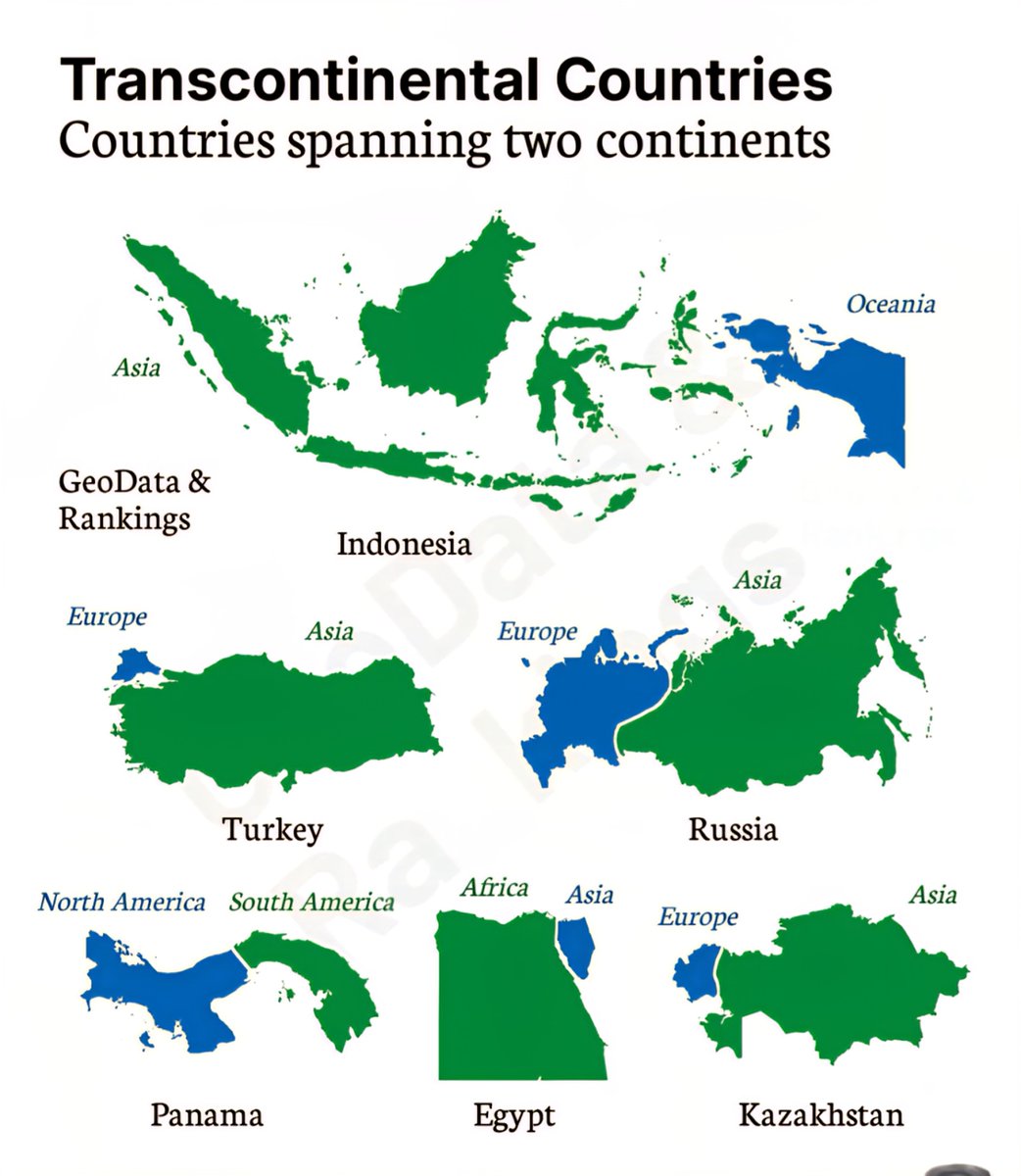
Russia remains the most prominent country that straddles both Europe and Asia. Covering vast territories across Eurasia, Russia’s European part includes major cities like Moscow and Saint Petersburg, while its Asian side extends into Siberia and the Far East. This unique geographical positioning gives Russia a blend of diverse cultures, climates, and economic influences.
2. Turkey: The Crossroads of Continents
Turkey continues to serve as a bridge between Europe and Asia. The country’s city of Istanbul, straddling the Bosporus Strait, is renowned for its cultural diversity and historical significance. While a portion of Turkey lies in southeastern Europe, the majority of its land area extends into Western Asia. This dual identity influences everything from politics to cuisine within the nation.
3. Kazakhstan: Central Asian Powerhouse
Kazakhstan, the world’s largest landlocked country, stretches across the vast Eurasian steppe. Its western regions are considered part of Europe, while most of the country lies in Asia. Despite its enormous size, Kazakhstan maintains a distinct national identity rooted in nomadic traditions and modern economic growth, especially through energy resources.
4. Egypt: Africa’s Gateway into Asia
Egypt is a unique transcontinental nation with its territory spanning North Africa and stretching into the Middle East via the Sinai Peninsula. The Suez Canal, a crucial global shipping route, lies within Egypt and links the Mediterranean Sea to the Red Sea, reinforcing Egypt’s central geographic role bridging two continents.
5. Panama: Connecting North and South America
While geographically part of Central America, Panama’s strategic position connects North and South America. The nation is renowned worldwide for the Panama Canal, a marvel of engineering that has historically facilitated international maritime trade between the Atlantic and Pacific oceans.
6. Indonesia: Asia and Oceania
Indonesia sits between the Indian and Pacific Oceans, comprising over 17,000 islands. Its geographic placement straddles the boundary between Asia and Oceania, making it a cultural and ecological melting pot. The nation is a vital player in maritime trade and environmental conservation efforts in the region.
7. Azerbaijan: A Tech Bridge in the Caucasus
Azerbaijan lies at the crossroads of Eastern Europe and Western Asia. Its strategic location in the Caucasus region connects Russia, Turkey, and Iran, fostering diverse cultural influences. Baku, the capital, is known for its modern skyline blended with ancient history, reflecting its transcontinental character.
8. Georgia: A Cultural Crossroads
Similar to Azerbaijan, Georgia’s position in the Caucasus makes it a bridge between Europe and Asia. Historically part of the Silk Road, Georgia boasts a rich history of diverse influences, from the kingdoms of ancient times to modern tourism and wine production.
9. Armenia: An Ancient Nation on Two Continents
Armenia, a nation with a deeply rooted history, straddles the border between Eastern Europe and Western Asia. Despite its relatively small size, Armenia’s cultural heritage links it to both continents, offering an intriguing blend of traditions, religious sites, and landscapes.
Note: These countries are classified as transcontinental based on widely accepted geographic definitions. However, classifications can vary, especially for nations like Indonesia and Armenia, where debates about continental boundaries continue to exist in academic and geopolitical discussions.
 ChatGPT
 Perplexity
 Gemini AI
 Grok AI