
Select Language:
Understanding the Decline in Consumer Confidence
Consumer confidence serves as a crucial indicator of the economic health of a nation. It reflects the optimism or pessimism that consumers feel about their financial situation and the overall state of the economy. Recently, data from the University of Michigan revealed a significant decline in consumer sentiment in the United States, marking a worrying trend.
The Current State of Consumer Sentiment
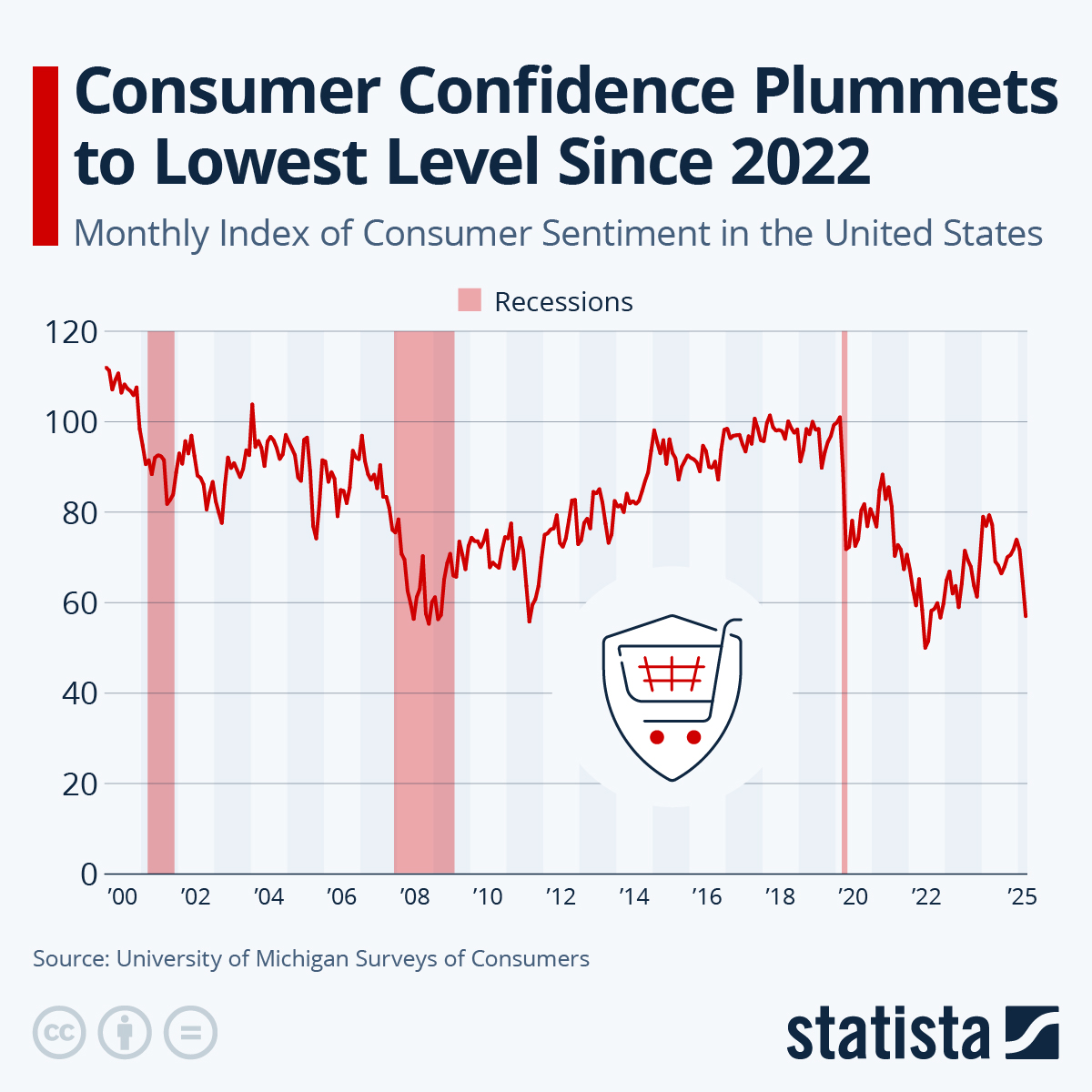
In March, consumer sentiment fell to the lowest level seen in over two years, signaling increasing anxiety among Americans regarding economic conditions. The decline has been consistent over the past three months, with the overall Index of Consumer Sentiment dropping substantially. This index, derived from at least 600 telephone interviews each month, evaluates people’s perceptions of personal finances, current business conditions, and buying conditions.
Key Indicators of Decline
Historical Comparison
As of now, the consumer confidence index is nearing its all-time low, which was recorded in June 2022, when inflation rates soared to nearly 9%. The latest drop in sentiment emphasizes how recent economic developments, particularly concerns over tariffs and their potential impact on inflation, are dominating public perceptions.
The Index for Consumer Expectations
One of the most alarming aspects of the recent data is the significant 18 percent drop in the Index for Consumer Expectations. This particular index measures future outlooks based on consumers’ beliefs regarding their financial situations in the next year and the subsequent five years. Such a steep decline suggests that consumers are losing faith not just in their current situation, but also in their prospects moving forward.
Factors Contributing to Reduced Confidence
Economic Policy and Tariffs
The uncertainty surrounding economic policies, notably tariffs, has contributed to declining consumer confidence. With rising concerns over the ramifications of these policies on the overall economy, consumers are naturally apprehensive about their spending and investment decisions.
Inflation Anxiety
Inflation continues to be a prevalent concern. The specter of rising prices creates an environment of insecurity for consumers, making them hesitant to make large purchases or investments. This fear can cause a ripple effect, subsequently impacting businesses and investment markets.
Bipartisan Concerns
Interestingly, the drop in consumer sentiment is not limited to a particular demographic or political affiliation. According to Joanne Hsu, the Survey of Consumer Director, there is a notable consensus across Republicans, independents, and Democrats regarding worsening expectations for personal finances, business conditions, and inflation. This collective anxiety highlights a broader economic sentiment that transcends political divides.
Future Implications of Consumer Confidence
Understanding consumer confidence is essential for stakeholders, from policymakers and businesses to average consumers. As confidence dwindles, the potential for reduced consumer spending grows, which could impose further strains on the economy. Monitoring the developments around tariffs, inflation, and economic policies will be crucial in discerning how these factors will shape consumer behavior and overall economic health moving forward.
Navigating Economic Uncertainty
In uncertain times, consumers may need to reassess their financial strategies and adapt accordingly. The current landscape emphasizes the importance of staying informed and prepared to respond to changing economic conditions. Keeping a close eye on economic indicators and trends can aid consumers in making more informed decisions that can mitigate risks associated with declining confidence levels.
 ChatGPT
 Perplexity
 Gemini AI
 Grok AI