Select Language:
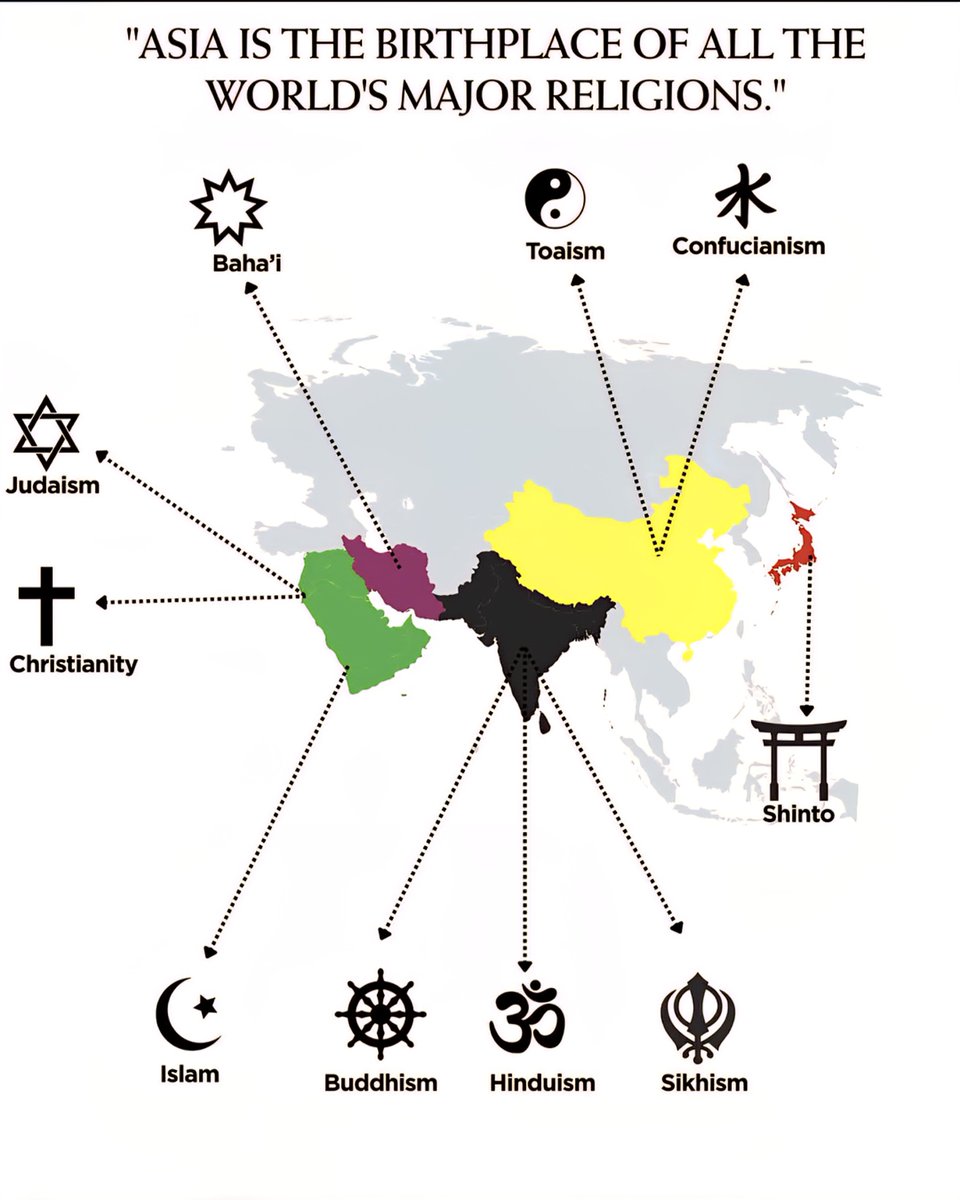
Asia’s Rich Religious Heritage: Key Religions Originating from the Continent
1. Hinduism: The Oldest Major Religion Originating in India
Hinduism is widely regarded as one of the world’s oldest religions, with roots stretching back over 4,000 years. Originating in the Indian subcontinent, Hinduism encompasses a wide range of beliefs, practices, and rituals. It’s characterized by its polytheistic nature, worship of spiritual entities like Brahma, Vishnu, and Shiva, and its sacred texts such as the Vedas and Upanishads. Today, Hinduism remains the dominant faith in India, influencing numerous aspects of daily life, culture, and philosophy.
2. Confucianism: A Philosophical System from China
Confucianism, founded by Confucius in the 5th century BCE, isn’t a religion in the traditional sense but a philosophical and ethical system that has profoundly shaped Chinese culture and governance. Its core principles emphasize morality, social harmony, filial piety, and respect for elders. Though it doesn’t center around worship, Confucian ideals continue to influence societal values, education, and political thought in China and beyond.
3. Shinto: Indigenous Beliefs of Japan
Native to Japan, Shinto focuses on ritual practices and worship of kami—spirits residing in natural elements, ancestors, and sacred sites. Rooted in ancient Japanese tradition, Shinto emphasizes purity, harmony with nature, and reverence for ancestors. Many Japanese festivals and rituals are Shinto in origin, blending seamlessly with Buddhist practices in modern times.
4. Judaism: Ancient Faith with Deep Roots in Israel
Judaism is one of the world’s oldest monotheistic religions, originating over 3,000 years ago in the Land of Israel. It centers on the worship of Yahweh and a set of religious laws outlined in the Torah. Jewish communities have a rich history of spiritual, cultural, and social traditions, enduring numerous challenges over millennia. Israel remains a pivotal spiritual homeland for Jews worldwide.
5. Zoroastrianism: Iran’s Ancient Religion
Founded by the prophet Zoroaster in ancient Iran, Zoroastrianism once served as the dominant faith of the Persian Empire. It emphasizes the duality of good and evil, the importance of individual choice, and reverence for fire as a symbol of purity. Today, Zoroastrian communities are small but continue to preserve their sacred traditions mainly in Iran and India.
6. Islam: The Fastest-Growing Religion in Saudi Arabia and Beyond
Originating in the Arabian Peninsula, Islam was founded in the 7th century CE by Prophet Muhammad. It has since grown into one of the world’s largest religions, with millions of followers across Asia and the globe. The Quran, considered the holy book of Islam, guides its followers in faith, law, and daily practice. Saudi Arabia remains the birthplace of Islam and home to its two holiest cities, Mecca and Medina.
7. Buddhism: A Major Spiritual Path from India
Founded by Siddhartha Gautama, known as the Buddha, over 2,500 years ago in India, Buddhism teaches the path to enlightenment through mindfulness, ethical conduct, and wisdom. It has diversified into numerous schools, including Theravāda, Mahāyāna, and Vajrayāna, influencing millions across Asia and globally. Its principles continue to promote peace, compassion, and understanding.
8. Taoism: A Philosophical and Spiritual Tradition from China
Taoism, rooted in the teachings of Laozi and the classic text “Tao Te Ching,” emphasizes living harmoniously with the Tao—meaning “the Way.” It advocates simplicity, humility, and spontaneity. Taoism influences Chinese medicine, martial arts, and spiritual practices, and remains a significant aspect of Chinese cultural identity.
9. Christianity: The Religion of Israel and Its Influence Globally
While Christianity originated in the Middle East, it has deep historical ties to the land of Israel. It is based on the life and teachings of Jesus Christ. Despite being a minority religion within Israel, Christianity’s influence extends worldwide, with diverse denominations and practices globally. Its principles of love, redemption, and salvation shape billions of lives.
10. Jainism: An Ancient Indian Religion of Nonviolence
Jainism, founded around the 6th century BCE in India, emphasizes nonviolence (ahimsa), truth, and asceticism. Jains believe in the interconnectedness of all living beings and strive to cause minimal harm. While relatively small in numbers, Jain communities are notable for their ethical lifestyle, elaborate rituals, and commitment to environmental sustainability.
11. Bahá’í Faith: A Universal Faith from Iran
Emerging in the 19th century Persia, the Bahá’í Faith teaches global unity, equality, and peace. Its followers believe in the unity of all religions and seek harmony among diverse cultures. With a strong presence in Iran and growing communities worldwide, the Bahá’í Faith advocates for social justice and universal education.
12. Sikhism: A Distinct Religious Identity from India
Founded in the 15th century by Guru Nanak in the Indian subcontinent, Sikhism emphasizes devotion to one God, equality, and community service. Sikhs are known for their distinct identity—wearing turbans and maintaining uncut hair as symbols of faith and discipline. Sikh communities flourish both in India and across the world, contributing significantly to social and cultural life.
This overview highlights Asia’s incredible religious diversity, with each faith rooted in history yet continuously evolving to meet the spiritual needs of each generation. These traditions not only shape individual beliefs but also influence regional cultures, politics, and social norms across the continent and beyond.
 ChatGPT
 Perplexity
 Gemini AI
 Grok AI