Select Language:
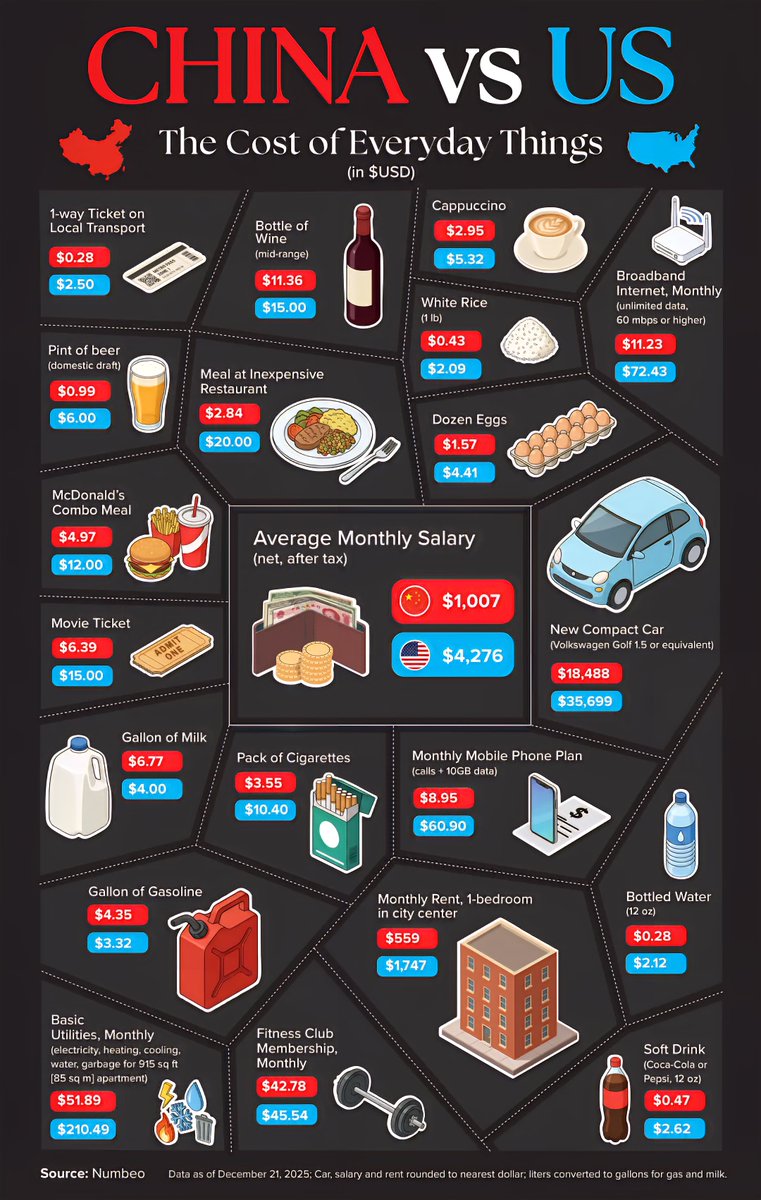
1. Americans Enjoy Higher Salaries Compared to Chinese Counterparts
In 2025, the average net monthly income for residents in the United States has surged to approximately $4,276, significantly outpacing China’s average of around $1,007. This stark difference underscores the economic disparity between the two nations, affecting everything from purchasing power to living standards. The higher salaries in the U.S. facilitate more comfortable lifestyles, though they are often offset by higher living expenses.
2. Car Prices Highlight Market Differences
Owning a new compact car remains a substantial investment in both countries, but the price gap is sizeable. While a compact vehicle in China costs roughly $18,448, the same in the U.S. is priced at about $35,699. These figures reflect differences in manufacturing, tariffs, and market demand, making vehicles significantly more affordable in China for consumers and possibly fueling higher vehicle ownership rates.
3. Rents Are More Affordable in China
Living in a city center in China is considerably cheaper, with the average one-bedroom apartment costing around $559 monthly. In contrast, similar living spaces in the U.S. reach up to $1,747. The lower rent costs in China contribute to overall affordability, allowing residents to allocate resources to other essentials or savings.
4. Utilities and Monthly Bills
Basic utilities, such as electricity, water, and gas, are also more budget-friendly in China, averaging about $51.89 per month. Americans pay roughly four times as much, with utility costs around $210.49. The significant difference impacts monthly expenses and can influence lifestyle choices, including home energy use and conservation efforts.
5. Mobile Phone Plans: A Cost Advantage in China
Mobile plans in China are incredibly affordable at approximately $8.95 per month, compared to $60.90 in the U.S. This stark contrast highlights the value consumers receive in China, often including extensive data packages and coverage without breaking the bank. American consumers pay a premium for similar services, which influences overall communication expenses.
6. Dining and Entertainment on a Budget in China
Eating at an inexpensive restaurant is far more economical in China, costing only around $2.84, whereas in the U.S., such meals can be upwards of $20. Similarly, movie tickets are less costly — about $6.39 in China compared to $15 in the U.S. These apparent disparities make leisure activities more accessible for Chinese residents.
7. Alcohol and Tobacco: Price Gaps
A mid-range bottle of wine in China costs roughly $11.36, slightly less than the $15 in the U.S. Pack of cigarettes is 3.55 in China versus 10.40 in America. These differences may influence consumption patterns and public health discussions related to smoking and alcohol.
8. Fast Food and Beverages
A Big Mac combo meal in China is priced at around $4.97, whereas in the U.S., it’s approximately $12.00. Domestic drafts of beer, soft drinks, and bottled water are also markedly cheaper in China, making casual dining and beverages more accessible and affordable for the average citizen.
9. Grocery Prices Reflect Dietary Preferences
Eggs, milk, rice, and other staples vary significantly. A dozen eggs cost about $1.57 in China, but over twice as much in the U.S. at $4.41. Interestingly, milk is less expensive in the U.S., with a gallon costing roughly $4, compared to about $6.77 in China. These differences influence daily diets and shopping habits.
10. Fuel and Transportation Costs
Gasoline is more expensive in China at approximately $4.35 per gallon, versus $3.32 in the U.S. The local transport fare for a one-way ticket is exceptionally low in China at just $0.28, eight times less than the $2.50 charged in American cities. This cost disparity impacts commuting choices and urban mobility.
Overall, 2025 continues to showcase a diverse landscape of economic realities between China and the United States. While the U.S. boasts higher wages, it also faces greater costs for housing, utilities, and dining. Conversely, China offers more affordable everyday items, making life more economical for many of its residents. These differences shape the day-to-day lives of people living in both countries and highlight ongoing economic dynamics.
 ChatGPT
 Perplexity
 Gemini AI
 Grok AI